


















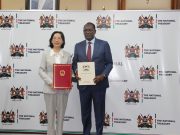




NAIROBI, Kenya – Kenya has received a major boost in its efforts to strengthen preparedness against Ebola Virus Disease (EVD) after the United States committed $14.5 million (approximately KSh1.9 billion) to support measures aimed at preventing, detecting and responding to any potential outbreak.
The funding will support a wide range of preparedness activities being implemented in partnership with the Government of Kenya, county governments and public health agencies. The investment comes as countries across the East and Central African region continue to strengthen surveillance systems against infectious disease threats that can spread rapidly across borders.
According to information released on Thursday, the programme will enhance disease surveillance, laboratory testing capacity, emergency response coordination, healthcare worker training, risk communication, community engagement and health screening at key border entry points.
Kenya’s strategic position as a regional transport, trade and travel hub makes preparedness against highly infectious diseases particularly important. Health experts warn that the country’s extensive regional connections increase the need for robust surveillance systems capable of detecting and containing outbreaks before they spread.
The initiative will focus on 22 counties identified by the Kenyan Government of Kenya as being at high risk for Ebola preparedness interventions, with additional counties expected to benefit as the programme expands.
As part of the preparedness efforts, more than 800 laboratory professionals have already undergone specialised training in biosafety, biosecurity and laboratory testing procedures for viral haemorrhagic fevers such as Ebola.
Two laboratories supported through the programme at the Kenya Medical Research Institute (KEMRI), working alongside the National Virology Reference Laboratory, are currently equipped to test suspected Ebola samples, while two mobile laboratories have been deployed to improve rapid diagnosis in high-risk areas and reduce turnaround time for laboratory results.
The programme has also strengthened Kenya’s outbreak response workforce through the training of more than 1,700 disease detectives under the Field Epidemiology and Laboratory Training Programme (FELTP). In addition, 120 national rapid response personnel have completed specialised training, while over 160 county-level responders have been prepared to respond to potential outbreaks in high-risk border counties.
Emergency preparedness has further been enhanced through the activation of 27 county and national Emergency Operations Centres, with plans underway to establish and operationalise similar centres in 12 additional counties considered vulnerable to disease outbreaks.
The preparedness programme is built around three key areas: strengthening surveillance systems for early detection of disease threats, improving healthcare facility readiness and laboratory capacity, and supporting rapid response mechanisms capable of containing suspected Ebola cases before they escalate into larger public health emergencies.
For the Coast region, the investment is expected to reinforce public health preparedness at strategic entry points, including the Port of Mombasa and Moi International Airport, both of which serve as major gateways for international trade and passenger movement. Enhanced screening and surveillance at these facilities are considered critical in reducing the risk of cross-border transmission of infectious diseases.
Public health specialists have consistently maintained that investing in preparedness remains one of the most effective strategies for preventing widespread outbreaks. Early detection, rapid laboratory testing, trained response teams and effective public communication are widely regarded as essential pillars of outbreak control.
The latest investment reinforces ongoing collaboration between Kenya and the United States in strengthening the country’s public health systems and improving its capacity to respond to emerging and re-emerging infectious diseases while contributing to regional and global health security.