




















KWALE, County—As Kwale County continues to navigate life after the closure of Base Titanium’s mining operations, a fresh debate over the proposed mining project at Mrima Hills has reignited concerns about environmental conservation, community rights and the future of extractive industries along Kenya’s Coast.
During World Environment Day celebrations in Mvindeni, Kinango, environmental activists renewed calls for transparency from the national government regarding plans for mineral exploitation at Mrima Hills in Lungalunga Sub-county, arguing that local communities deserve clear information before any decisions are made.
The calls come against a backdrop of growing global concern over climate change, biodiversity loss and the need for responsible management of natural resources.
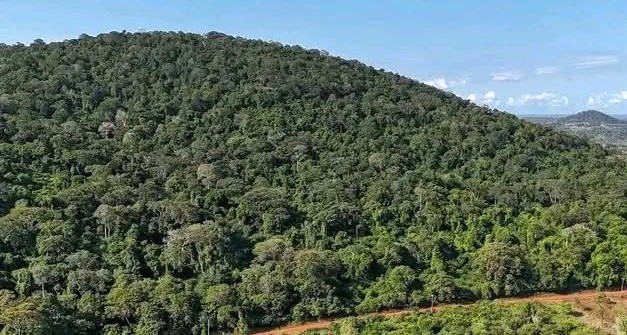
For decades, Mrima Hills has remained one of Kenya’s most environmentally sensitive and mineral-rich landscapes. Located near the Kenya-Tanzania border, the area is known not only for its deposits of rare earth minerals and niobium but also for its rich biodiversity and cultural significance to surrounding communities.
Environmental conservation groups have long argued that any large-scale mining activities in the area must strike a delicate balance between economic development and ecological preservation.
Speaking during the event, Kinango Human Rights Network representative Kilinga Iddi expressed concern over what activists describe as increasing pressure on environmental defenders seeking accountability from investors and government agencies.
According to Iddi, some activists have faced legal challenges after questioning whether investors have honoured environmental and social commitments made to local communities.
“We have seen cases where environmental defenders are taken to court simply for demanding accountability and adherence to agreements made with communities,” he said.
The concerns were echoed by Inform Action Executive Director Winnie Masai, who urged environmental defenders to document incidents encountered during their advocacy work to strengthen accountability efforts and protect themselves from possible intimidation.
“We want a transparent process that places the interests of communities at the centre of any decision regarding the project,” she said.
At the centre of the debate is the proposed mining project at Mrima Hills, whose future remains unclear amid conflicting public statements from political leaders and government officials.
Kwale Mining Alliance Coordinator Elsheba Oketch called on the Ministry of Mining to publicly disclose all information relating to the project, saying uncertainty has fuelled anxiety among residents who could be directly affected by future mining operations.
The discussion carries added significance in Kwale County, where residents are still assessing the long-term environmental and economic impacts of mining activities following the closure of Base Titanium’s mineral sands operations.
For more than a decade, Base Titanium was one of Kenya’s largest mining investments, contributing billions of shillings to the economy and creating employment opportunities for local residents. However, its exit also raised important questions about post-mining land rehabilitation, environmental restoration and sustainable livelihoods for communities that had come to depend on the sector.
Environmental experts argue that lessons from Kwale’s mining experience should inform future projects, particularly in ecologically sensitive areas such as Mrima Hills.
As climate change intensifies pressure on natural ecosystems and communities increasingly demand participation in decisions affecting their environment, activists say transparency, accountability and meaningful public engagement must remain central to any discussions surrounding the future of mining in Kwale.
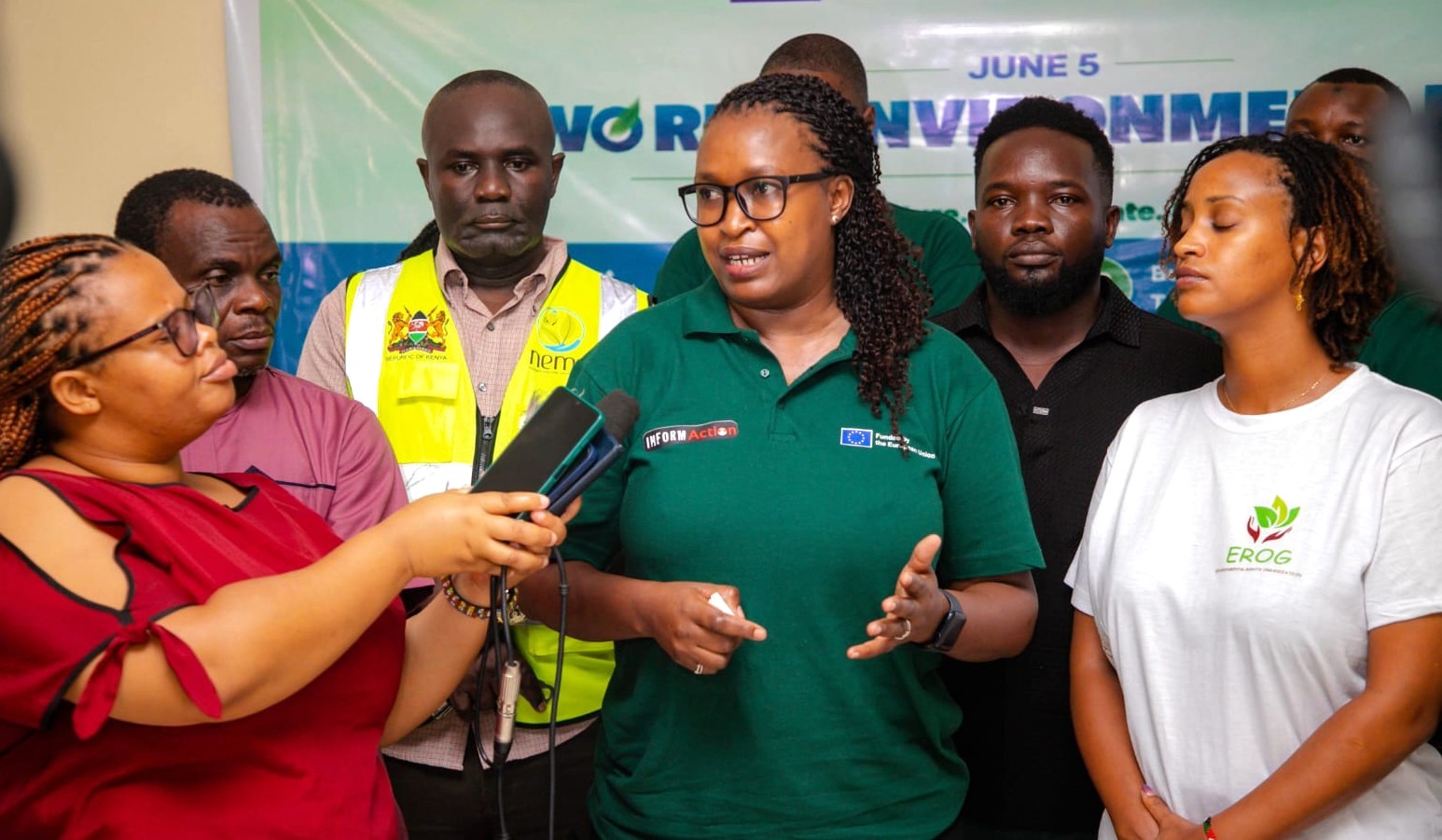
[Inform Action Executive Director Winnie Masai together with other human rights defenders and environmentalists duirng the recent World Environment Day celebrations in Mvindeni, Kwale County. Masai raised concerns over the planned exploration of niobium mining at the Mrima hills in Kwale. Photo/James Kazungu Lamiry/June 07, 2026].
The remarks were made during World Environment Day celebrations organised by Inform Action under the Haki ni Yetu project, an initiative supported by the European Union that seeks to promote environmental justice, community participation and responsible governance of natural resources.
For many residents, the debate over Mrima Hills is about more than minerals. It is about determining whether development can be pursued in a way that protects ecosystems, respects community rights and ensures future generations inherit both economic opportunities and a healthy environment.