


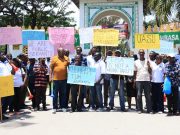















NAIROBI, Kenya — The United States government and Kenya’s Ministry of Health have defended ongoing cooperation on Ebola preparedness and infectious disease response amid growing public debate and a court challenge over a proposed bio-isolation facility in Laikipia County.
In a statement on Wednesday, the U.S. Embassy in Nairobi said it was aware of legal proceedings filed in Kenya and was engaging with authorities to address public concerns surrounding the initiative.
“We are aware of the court action filed in Kenya and are actively working with the Kenyan government to resolve any objections and communicate our shared objectives to the Kenyan people,” the Embassy said.
The U.S. described the Ebola preparedness programme as part of a long-standing health partnership with Kenya, saying the proposed facility is intended to strengthen regional capacity for disease detection, testing, and containment.
According to the Embassy, the bio-isolation facility in Laikipia is designed to support outbreak response systems and does not pose a risk to surrounding communities.
“The bio-isolation facility in Laikipia is part of a holistic response to prevent the spread of disease and lessen health risks for the region as a whole; it does not pose risk to nearby communities,” the statement added.
The Embassy further said it is working with Kenya and international partners to enhance border screening, improve laboratory testing capacity, and strengthen disease surveillance in vulnerable counties.
It also noted that expanded regional capacity to isolate and test asymptomatic individuals, including American personnel involved in response operations, would help preserve Kenya’s clinical resources for local patients.
Heavy funding
The United States disclosed that the Department of State has committed more than $162 million towards Ebola response efforts across Africa, aimed at containing outbreaks at their source and preventing cross-border spread.
An additional $350 million has been channelled through humanitarian funding mechanisms to support broader relief operations in the Democratic Republic of Congo, Uganda, and South Sudan.
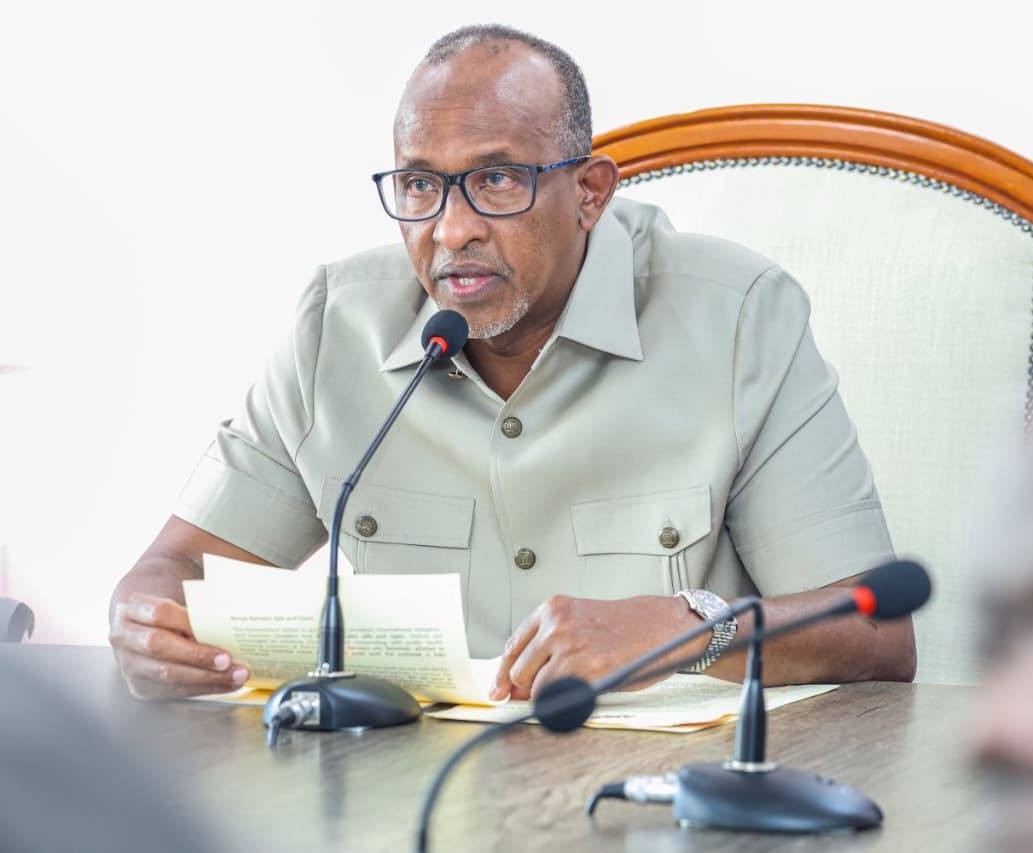
Meanwhile, Health Cabinet Secretary Aden Duale moved to clarify the history of Kenya–U.S. cooperation on biological threat reduction and infectious disease preparedness, saying the framework dates back to 2015.
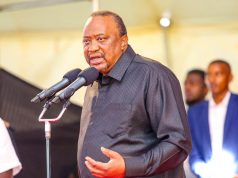
Duale said the agreement was first signed on July 24, 2015, during former U.S. President Barack Obama’s State visit to Kenya under the administration of former President Uhuru Kenyatta.
He added that the deal received Cabinet approval in April 2016 before being tabled in Parliament in July the same year, where it underwent public participation and legislative scrutiny before approval on February 9, 2017.
According to Duale, the agreement came into force on April 6, 2017, for an initial six-year period before being renewed on April 5, 2022, extending its validity to 2029.
He further disclosed that Kenya and the United States signed another cooperation agreement on December 4, 2025, aimed at strengthening Kenya’s health system and enhancing preparedness against infectious disease threats.
Duale said the agreements form part of a broader, long-standing partnership and should not be viewed as isolated arrangements tied solely to current Ebola preparedness efforts.
His remarks come amid heightened public scrutiny of Kenya’s health partnerships with foreign governments, particularly those involving disease surveillance, testing, isolation, and emergency preparedness.
The latest statements from both Nairobi and Washington appear aimed at reassuring the public that the cooperation framework has undergone full legal and parliamentary processes while reinforcing efforts to strengthen Kenya’s capacity to respond to emerging public health threats.