



















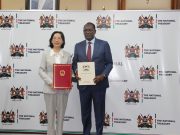





A new multi-billion-dollar startup initiative is aiming to reshape how early-stage businesses are funded and built across Africa, as Treadway Investment Bank, in partnership with Invasion Limited, unveils “Project Falcon,” an incubation platform targeting idea-stage entrepreneurs across the continent.
Unlike traditional accelerators that typically enter at later funding rounds, Project Falcon is designed to step in at the earliest point of company creation—providing capital, mentorship, and operational infrastructure before startups even reach the pre-seed stage.
The program seeks to remove long-standing barriers faced by African entrepreneurs, particularly limited access to startup financing, high setup costs, and the difficulty of entering competitive global markets.
A hybrid model of funding and industrial access
Under the arrangement, Treadway Investment Bank will lead entrepreneur sourcing and business development support, including assistance with product design, investor readiness, and go-to-market strategy. The firm will also connect selected startups to manufacturing partners and investors in China, reflecting a growing trend of cross-border industrial collaboration.
Invasion Limited will supply what it calls “smart capital,” combining financial backing with strategic guidance intended to help startups scale beyond early survival stages.
The fund commits a total of $1.25 billion over five years—about $250 million annually—positioning it among the larger coordinated incubation efforts focused on Africa’s emerging startup ecosystem.
Physical hubs and expansion plans
A notable feature of the program is its physical incubation infrastructure. Startups accepted into Project Falcon will receive free office space and access to shared operational facilities.
The first hub is set to open in Sandton, South Africa, on July 1, with additional centers planned across other African markets. Nairobi is among the cities being considered for future expansion, depending on participation levels and demand.
Focus on consumer and industrial products
Project Falcon will concentrate heavily on consumer-facing industries, including fashion, beauty, electronics, agriculture, renewable energy, gaming, and healthcare-related products. The initiative also includes sectors such as automotive components, packaging, and hardware—positioning itself as a broad industrial pipeline rather than a narrow tech accelerator.
Supporters say this approach is intended to help entrepreneurs move quickly from concept to production, particularly in markets where manufacturing access remains a critical bottleneck.
China–Africa economic alignment
Speaking from Guangzhou, Treadway Investment Bank Chairman Wen Liu described the initiative as part of a wider strategy to deepen economic ties between Africa and China, particularly in manufacturing and trade.
He linked the launch to preparations for the upcoming Africa–China Investment & Trade Conference scheduled for September, calling Project Falcon a natural extension of ongoing collaboration between investors, manufacturers, and African startups.
According to Liu, the platform is structured to support “idea-stage” innovation, a phase he described as underserved in most startup ecosystems.
He also pointed to the appointment of Dr. Lamba as Global CEO as a signal of the firm’s long-term commitment to African markets.
High ambitions, high expectations
Project Falcon arrives amid growing global competition to fund and scale African startups, where investor interest has risen but early-stage support remains uneven.
By combining incubation space, cross-border manufacturing access, and multi-year funding, the initiative positions itself as a vertically integrated startup pipeline—linking idea generation directly to production and global distribution networks.
If successful, it could influence how large-scale incubation programs are structured across emerging markets, particularly those seeking stronger links between innovation hubs and industrial supply chains.