




















NAIROBI, Kenya—Kenya’s political landscape is once again witnessing a familiar cycle of change — a new generation of leaders attempting to break through the dominance of established political structures and redefine how power is contested.
At the centre of this emerging political wave is Nairobi Senator Edwin Sifuna, whose growing national visibility has positioned him as one of the most prominent voices of a youthful political movement seeking to challenge the traditional foundations of Kenyan politics.
Through the Linda Mwananchi movement, Sifuna and like-minded leaders have tapped into a growing public appetite for a different style of politics — one that emphasises citizen empowerment, accountability and resistance to what they describe as a leadership system that has failed ordinary Kenyans.
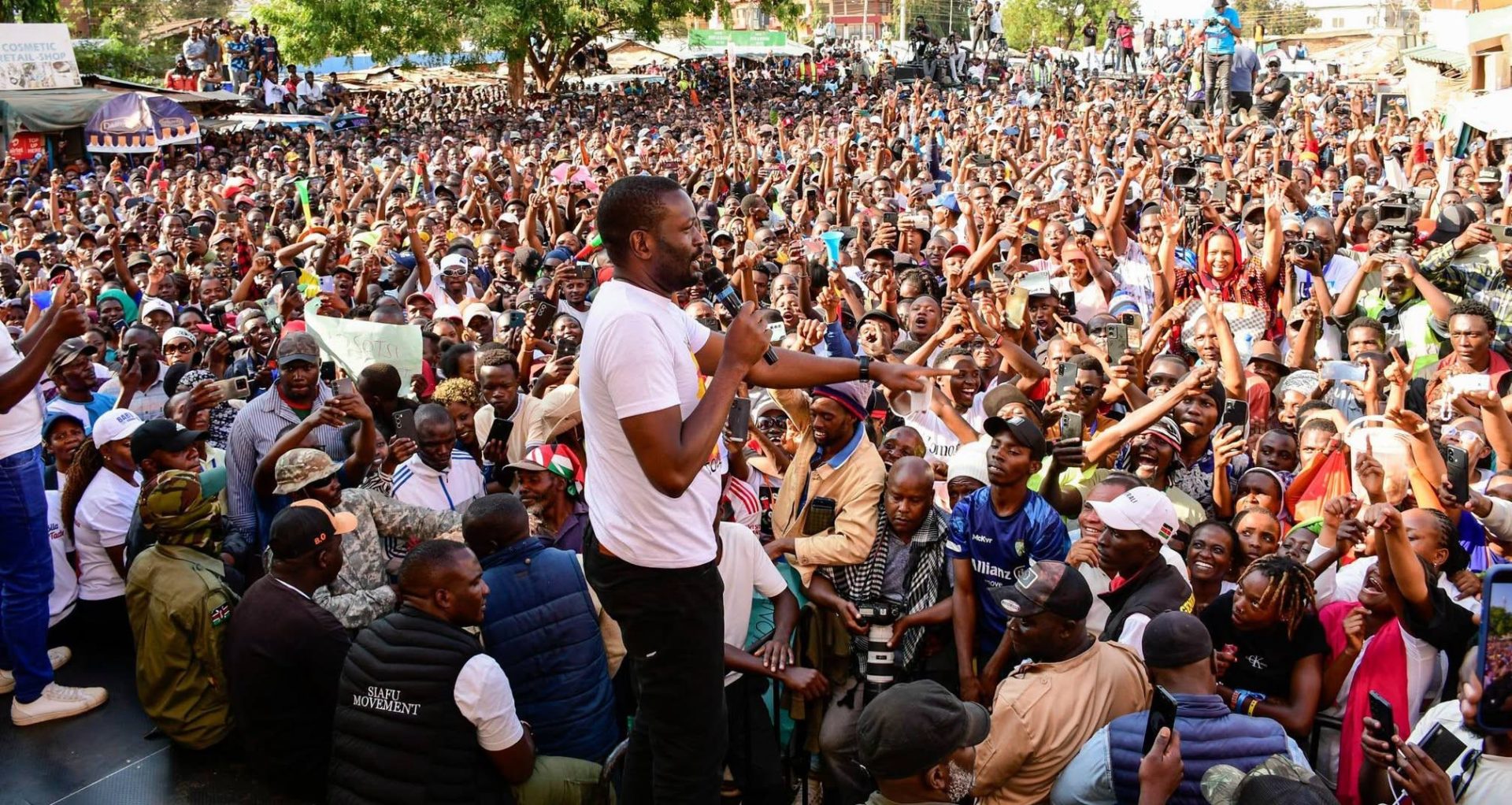
The latest display of this political mobilisation came on Saturday when Linda Mwananchi leaders toured Taveta in Taita Taveta County, where they delivered a message aimed directly at the 2027 General Election: that Kenyans should reconsider their support for President William Ruto’s Kenya Kwanza administration.
The gathering brought together leaders from across the political divide, including Wundanyi MP Danson Mwashako, Siaya Governor James Orengo, Embakasi East MP Babu Owino, Kisii Senator Richard Onyonka and Godfrey Osotsi, among others.
The presence of leaders from different regions and political backgrounds demonstrated an attempt to build a broader coalition around issues affecting ordinary citizens rather than traditional political alliances.
The rise of a new political language
For decades, Kenya’s political contests have largely been shaped by influential personalities, ethnic voting blocs and the ability of candidates to mobilise significant financial resources.
However, the rise of figures such as Sifuna, Babu Owino and other youthful leaders points to a changing political environment where social media influence, public communication and grassroots engagement are becoming increasingly important.
Sifuna, who has built a reputation as an outspoken political communicator, has particularly connected with young Kenyans who see his style as a departure from the conventional political approach.
His supporters argue that his influence is not built around traditional political machinery but through consistent engagement with citizens, especially young voters who have increasingly questioned the old political order.
The message from several leaders associated with Linda Mwananchi has been that political leadership should no longer be determined by financial strength alone.
Some leaders have openly argued that they are willing to work with younger political figures despite questions about their financial capacity to mount nationwide campaigns.
Challenging the politics of money
One of the biggest criticisms directed at Sifuna has been whether he possesses the resources required to compete in Kenya’s highly expensive political environment.
Some political figures from Western Kenya have questioned his ability to reach every part of the country and sustain a national campaign without a strong financial base.
However, such arguments have received resistance from many young Kenyans who believe the era where money alone determines political success is gradually changing.
For this new generation of voters, authenticity, communication and the ability to address everyday struggles may carry as much weight as financial resources.
The debate surrounding Sifuna therefore represents a wider question facing Kenyan politics: can a leader with strong public appeal overcome the traditional barriers of campaign financing and political networks?
The third wave of political change
Kenya’s political history has often been marked by political waves that reshape national conversations.
The current period appears to be producing what some observers describe as a third wave — a movement driven by younger leaders challenging both government and opposition establishments.
The first major political formations were built around independence-era leaders and later dominated by political figures who controlled regional voting blocs.
A second phase saw the rise of coalition politics, where alliances between major personalities became the foundation of presidential contests.
The emerging third wave appears different. It is being shaped by leaders who are attempting to connect directly with citizens through digital platforms, public mobilisation and issue-based messaging.
Whether this wave can translate public enthusiasm into actual votes remains the biggest test.
The 2027 political test
While Linda Mwananchi has generated attention, the road to 2027 remains complicated.
Kenya’s elections have historically required extensive grassroots networks, financial resources and organisational structures spread across all regions.

[The Linda Mwananchi brigade during Taveta tour in Taita Taveta County on July 18, 2026. Linda Mwananchi has been regarded as the youthful political wave in the country. Photo/courtesy/July 19, 2026].
The movement must therefore prove that its growing popularity can move beyond rallies and online conversations into a nationwide political force capable of influencing voting patterns.
For President William Ruto’s administration, the rise of this political challenge presents a new obstacle as it seeks a second term.
The opposition, meanwhile, faces its own challenge of balancing established political figures with a younger generation demanding greater influence in shaping Kenya’s political future.
A changing political generation
The growing popularity of Edwin Sifuna and other youthful leaders signals that Kenyan politics is entering another period of transition.
The question facing the country is not only who will win the 2027 election, but whether the political rules that have governed previous elections are changing.
Linda Mwananchi’s message has found resonance among sections of the population frustrated by economic challenges and demanding a different style of leadership.
Whether this energy becomes a lasting political movement or fades as election competition intensifies will depend on organisation, policy clarity and the ability to transform public support into electoral strength.
But one thing is increasingly clear: the voices of younger leaders are becoming impossible to ignore in Kenya’s political conversation.