





















KAMPALA, Uganda—The detention and subsequent deportation of Kenyan Senior Counsel and People’s Liberation Party (PLP) leader Martha Karua by Ugandan authorities has ignited fresh debate over the rule of law, legal independence and regional integration within the East African Community (EAC).
Karua was denied entry into Uganda on Monday after arriving at Entebbe International Airport for what she described as a legal assignment linked to ongoing court proceedings involving Ugandan opposition figures and lawyers. She was later deported back to Nairobi in a move that has attracted condemnation from legal bodies, political leaders and human rights advocates across the region.
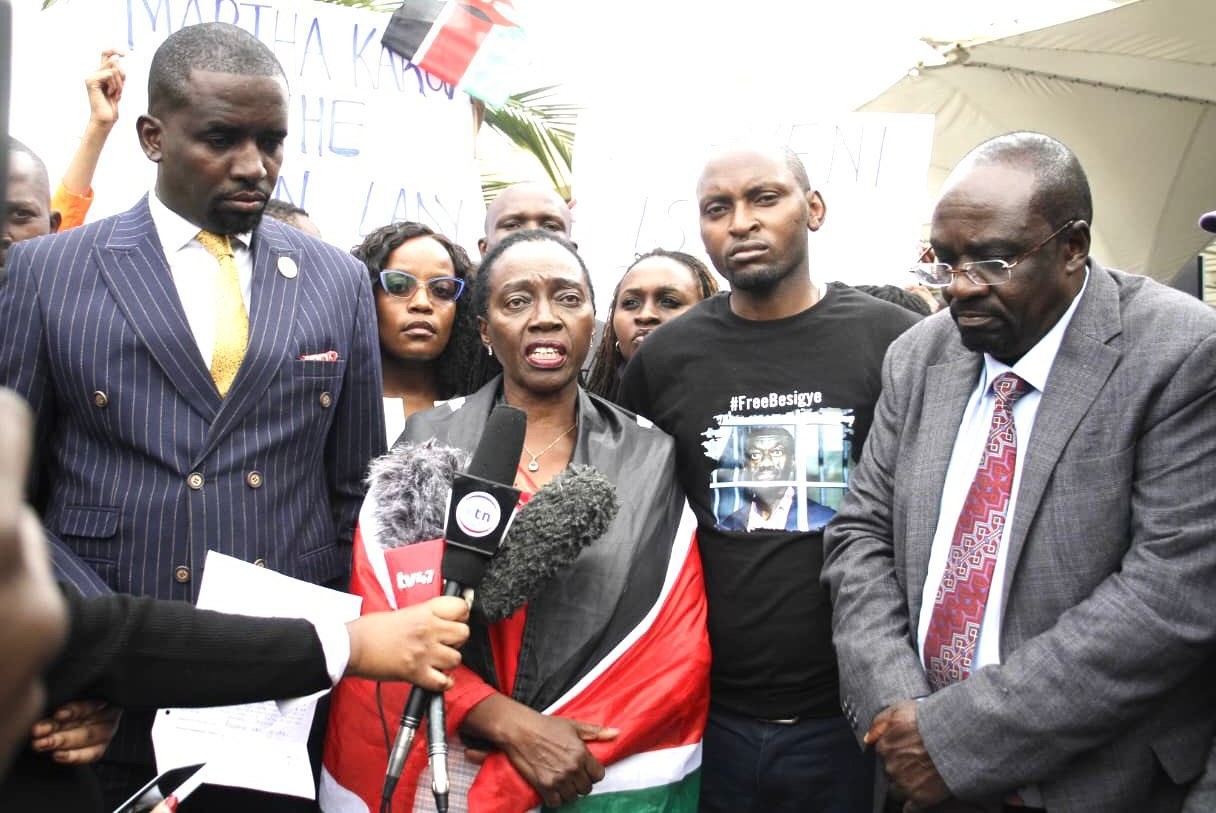
According to reports, Karua had travelled alongside Law Society of Kenya (LSK) President Charles Kanjama to attend proceedings connected to the bail application of veteran Ugandan opposition leader Dr Kizza Besigye and to join legal efforts involving Kampala Lord Mayor and lawyer Erias Lukwago. While Kanjama was allowed entry into Uganda, Karua was reportedly stopped shortly after arrival and ordered to return to Kenya.
Speaking after her return to Nairobi, Karua questioned the decision by Ugandan authorities and suggested the move was intended to interfere with legal representation in politically sensitive cases. She further revealed that she was eventually issued with documentation declaring her persona non grata before being placed on a return flight to Kenya.
The incident has generated concern among legal practitioners within East Africa, with many viewing it as a test of the region’s commitment to justice, professional cooperation and the free movement of persons guaranteed under East African integration frameworks.
The East Africa Law Society (EALS), the umbrella body representing legal professionals across the region, was among the first institutions to condemn the move. EALS President Ramah Abubakar described Karua’s deportation as unlawful and inconsistent with the principles of regional integration, arguing that lawyers should be allowed to carry out their professional duties across East African borders without political interference. The society warned that such actions could undermine confidence in the region’s justice systems and weaken ongoing efforts to harmonise legal practice among EAC member states.
The Law Society of Kenya also joined calls for an explanation from Ugandan authorities, describing the incident as a worrying development for legal cooperation within the region. Reports indicated that Kenyan lawyers viewed the decision as an affront to the administration of justice and the rights of advocates engaged in legitimate professional work.
Uganda’s own legal fraternity also raised concerns. The Uganda Law Society cautioned that denying entry to a senior legal practitioner from a fellow EAC partner state risked undermining the spirit of regional integration and ongoing discussions on cross-border legal practice. The body urged authorities to uphold principles that promote access to justice and professional collaboration.
Meanwhile, Karua’s People’s Liberation Party strongly condemned the detention and deportation, describing it as an attack on legal independence and democratic freedoms. The party argued that the move sends a chilling message to lawyers and human rights defenders working on politically sensitive matters within the region. PLP officials further maintained that the decision raises questions about the protection of constitutional rights and the ability of legal practitioners to represent clients without intimidation.
Political leaders in Kenya also rallied behind the former Justice Minister, with several describing the incident as a setback to East African unity and cooperation. Critics argued that the treatment of Karua contradicts the objectives of the East African Community, which seeks to promote free movement, democratic governance and respect for human rights among member states.
The latest development adds to a growing list of regional incidents involving Karua’s legal work. In 2025, she was similarly deported from Tanzania while attempting to attend proceedings involving opposition leader Tundu Lissu. The recurring confrontations have heightened concerns among rights groups about shrinking democratic space and increasing restrictions facing lawyers representing opposition figures across East Africa.
As pressure mounts on Kampala to explain its actions, attention is now turning to whether regional institutions, including the East African Community and legal bodies across member states, will formally intervene. The incident has once again placed the spotlight on the delicate balance between state sovereignty and the regional commitments that underpin East Africa’s integration agenda.
For many observers, the questions now extend beyond Martha Karua herself. At stake, they argue, is the future of legal independence, access to justice and the credibility of regional institutions tasked with safeguarding democratic values across East Africa.