
























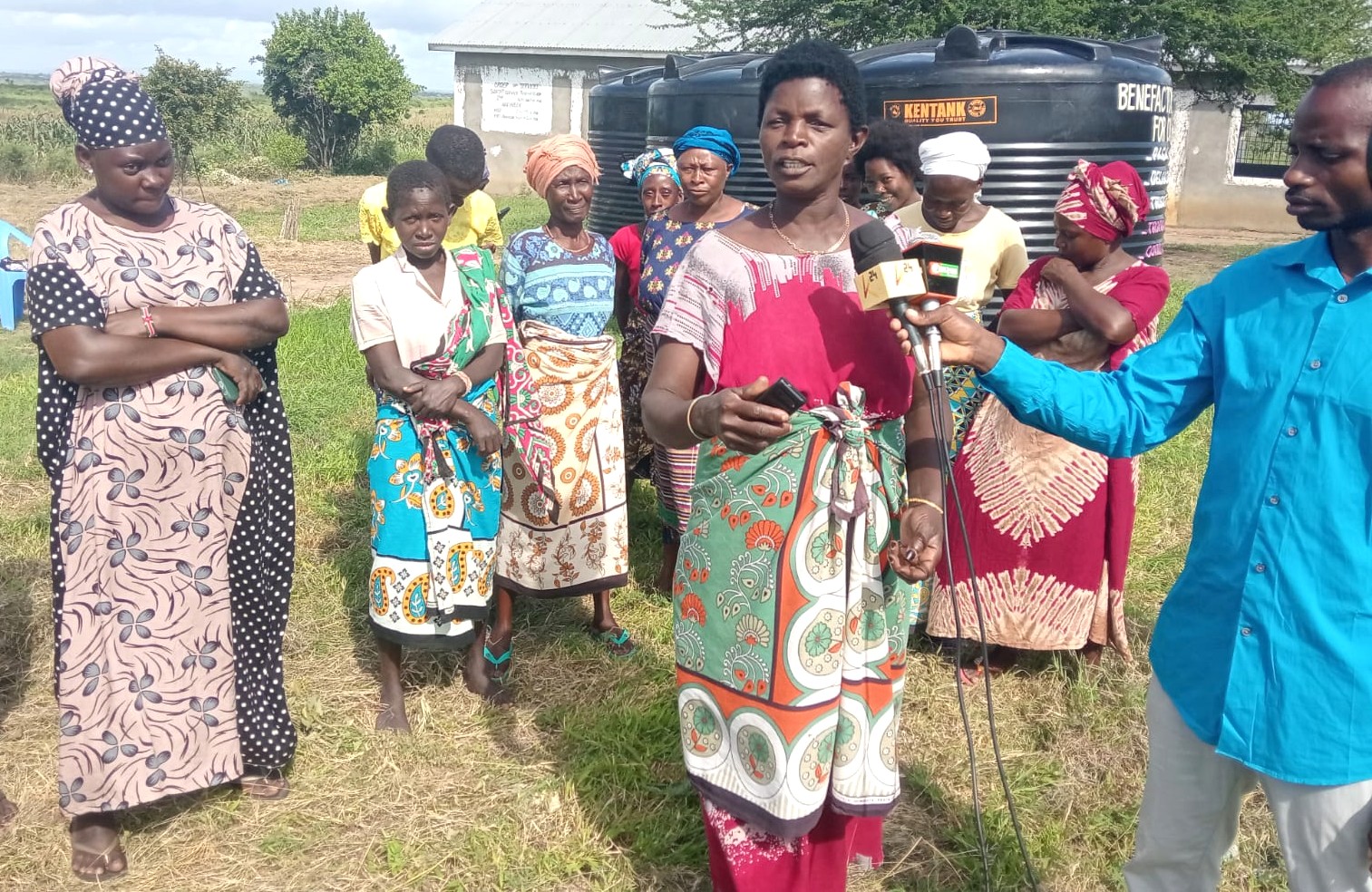
CHASIMBA, Kilifi County—Chasimba Location residents in Magarini Sub-county, Kilifi County, are set to benefit from a new water project aimed at ending years of chronic water shortages that have affected thousands of households.
The project, valued at approximately Ksh400,000, has been funded by Italian donors in partnership with the Office of the Magarini Ward Representative. It is expected to provide much-needed relief to residents of five villages who have long struggled to access clean and safe drinking water.
For decades, communities in Chasimba have relied on seasonal rivers, shallow wells, and unsafe water sources, often walking more than 10 kilometres daily in search of water. The burden has largely fallen on women and school-going children, who spend hours each day fetching water instead of engaging in income-generating activities or attending school.
“We have suffered for too long,” said a resident from Kadzandani Village. “Sometimes we leave home at 4 a.m. and return after midday with just one 20-litre jerrican of water. Our children miss school because they have to help fetch water. Clean water has been a dream for us.”
Community members Kahunda Karisa and Alphonce Kalama noted that the lack of reliable water sources has slowed development in the area. They said schools have recorded high absenteeism rates, particularly among girls who are often tasked with collecting water before attending classes.
The two leaders further observed that small-scale farming and livestock keeping, which form the backbone of the local economy, have been severely affected by recurring water shortages, leading to crop losses and livestock deaths.
Speaking during the commissioning of the project’s first phase, Magarini Ward Representative Paul Charo confirmed that implementation is already underway.
“This project is worth about Ksh400,000. We have already procured three 10,000-litre water tanks which will be installed at strategic locations across the five villages,” said Charo. “This is only the beginning. Our goal is to ensure that every household can access clean water within a reasonable distance.”
Charo said his office is also pursuing long-term solutions to the region’s water challenges through partnerships with development partners, the Kilifi County Government, and the National Government.
He revealed plans to expand water infrastructure through the drilling of boreholes, extension of pipelines, and establishment of water kiosks in areas still facing acute shortages.
“We are appealing to more well-wishers, the county government, and the national government to support these efforts. Water is life, and no resident of Magarini should be forced to drink unsafe water or walk long distances in search of this basic necessity,” he said.
The project is expected to benefit more than 2,000 residents across the five villages by significantly reducing the distance and time spent fetching water. For many families, it represents a major step towards improved living standards, better health outcomes, and enhanced economic opportunities.
Health officials in Magarini have previously raised concerns over the consumption of contaminated water from open sources, linking it to frequent outbreaks of waterborne diseases such as cholera, typhoid, and dysentery.
With the installation of the new water tanks and commitments towards more sustainable water solutions, residents remain optimistic that the long-standing crisis may finally be addressed.
As many parts of Kilifi continue to grapple with the effects of prolonged drought and climate change, the Chasimba water project highlights the impact that partnerships between local leadership and international donors can have in transforming lives and restoring hope to underserved communities.