


















KWALE County—Kenya’s coastal region residents are increasingly turning to mangrove restoration as a tool for combating climate change, protecting marine ecosystems and improving livelihoods, with a major tree-planting exercise in Kwale County, highlighting the growing impact of community-led conservation efforts.
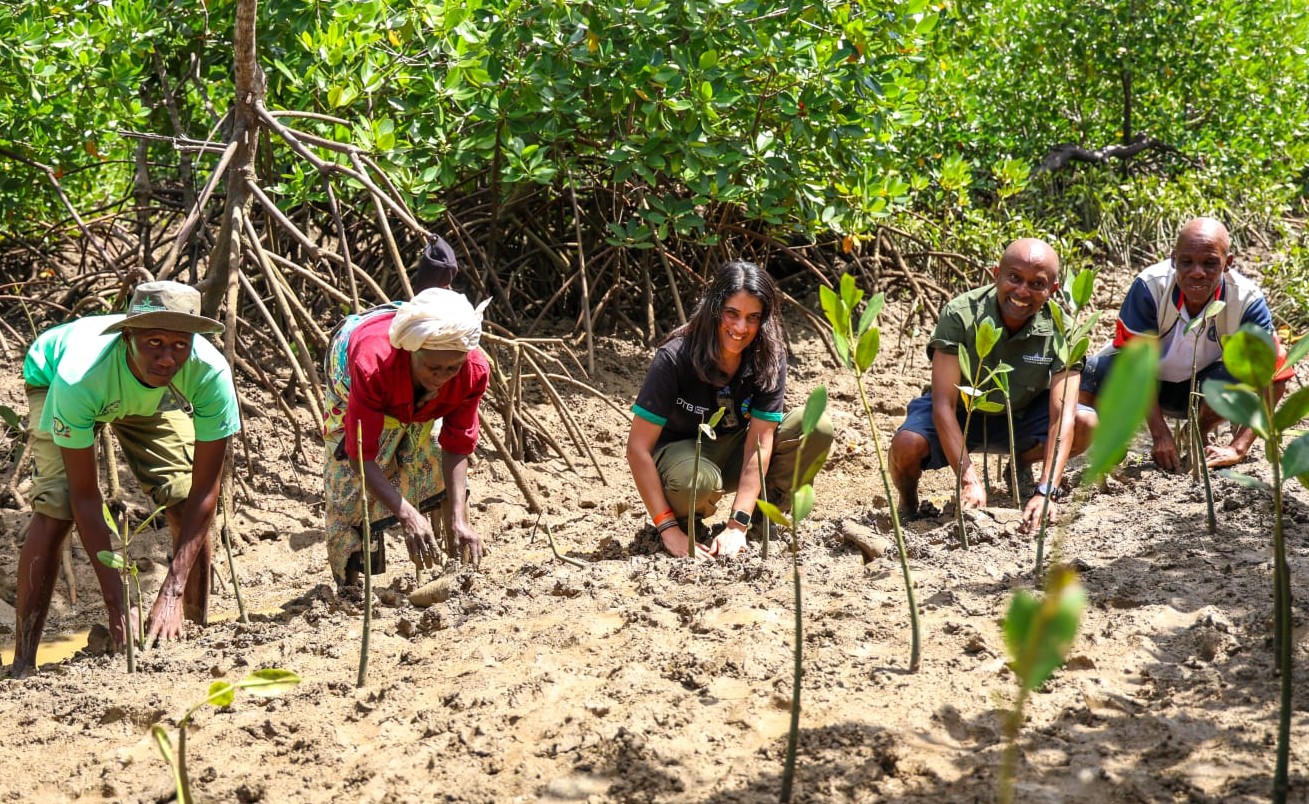
Marking World Environment Day on Friday, Diamond Trust Bank (DTB), conservation partners and local residents planted 100,000 mangrove seedlings at Tsunza-Gutu in Kwale County as part of a broader initiative aimed at restoring degraded coastal ecosystems.
For communities living along the coastline, however, the project is about much more than environmental conservation.
“It means fish. It means income. It means a future for our children,” said Juma Mashanga, Mwatsumbo Forest Association, Chairperson.
The initiative forms part of DTB’s “Much More Than Trees” campaign, which targets the planting of 1.2 million mangroves in 2026 and 10 million trees by 2030. The programme seeks to strengthen climate resilience while creating economic opportunities for communities that depend on coastal resources.
Mangrove forests are among the world’s most effective natural carbon sinks, capable of storing large amounts of carbon while providing breeding grounds for fish, crabs and prawns. They also protect coastlines from erosion and storm surges, making them critical to both environmental sustainability and local economies.
In Mwatsumbo and neighbouring villages, where fishing remains the primary source of income for most households, environmental degradation and declining fish stocks have negatively affected livelihoods over the years.
“Twenty years ago, biodiversity was much richer here. Today, some species are no longer present, fish production has reduced and the ecosystem has suffered,” Mashanga said.
Local leaders say restoration efforts are beginning to reverse the trend, with communities already experiencing economic benefits from conservation activities.
More than 200 women have been engaged in collecting, nurturing and supplying mangrove seedlings, creating a new source of income for households. Community leaders estimate that restoration programmes have generated approximately KSh7 million for local residents over the past two years.
Under the project, residents receive training on seedling propagation, mangrove management and ecosystem monitoring, ensuring long-term community ownership of the restored forests.
“The community has ownership of the project. We work together with them, but ultimately they are the custodians of the ecosystem,” said Azmaira Thobani, DTB’s Head of Sustainability and Communications.
Eco-tourism
Conservation partners are also exploring opportunities to expand the project’s economic impact through eco-tourism.
According to Furaha Baraka Farms Founder and Chief Executive Officer Daniel Mwero, plans are underway to establish a mangrove park and museum within the restoration area to attract visitors while promoting environmental education.
The proposed development forms part of a wider 1,300-hectare restoration landscape that has the potential to support up to 13 million mangrove trees.
As Kenya continues to confront the effects of climate change, environmental experts say community-driven restoration projects offer practical solutions that address both ecological challenges and economic needs.
For residents of Mwatsumbo, the success of the initiative will not be measured solely by the number of trees planted, but by the return of healthy fisheries, stronger livelihoods and a more secure future.
“We are restoring more than mangroves,” Mashanga said. “We are restoring our future.”