























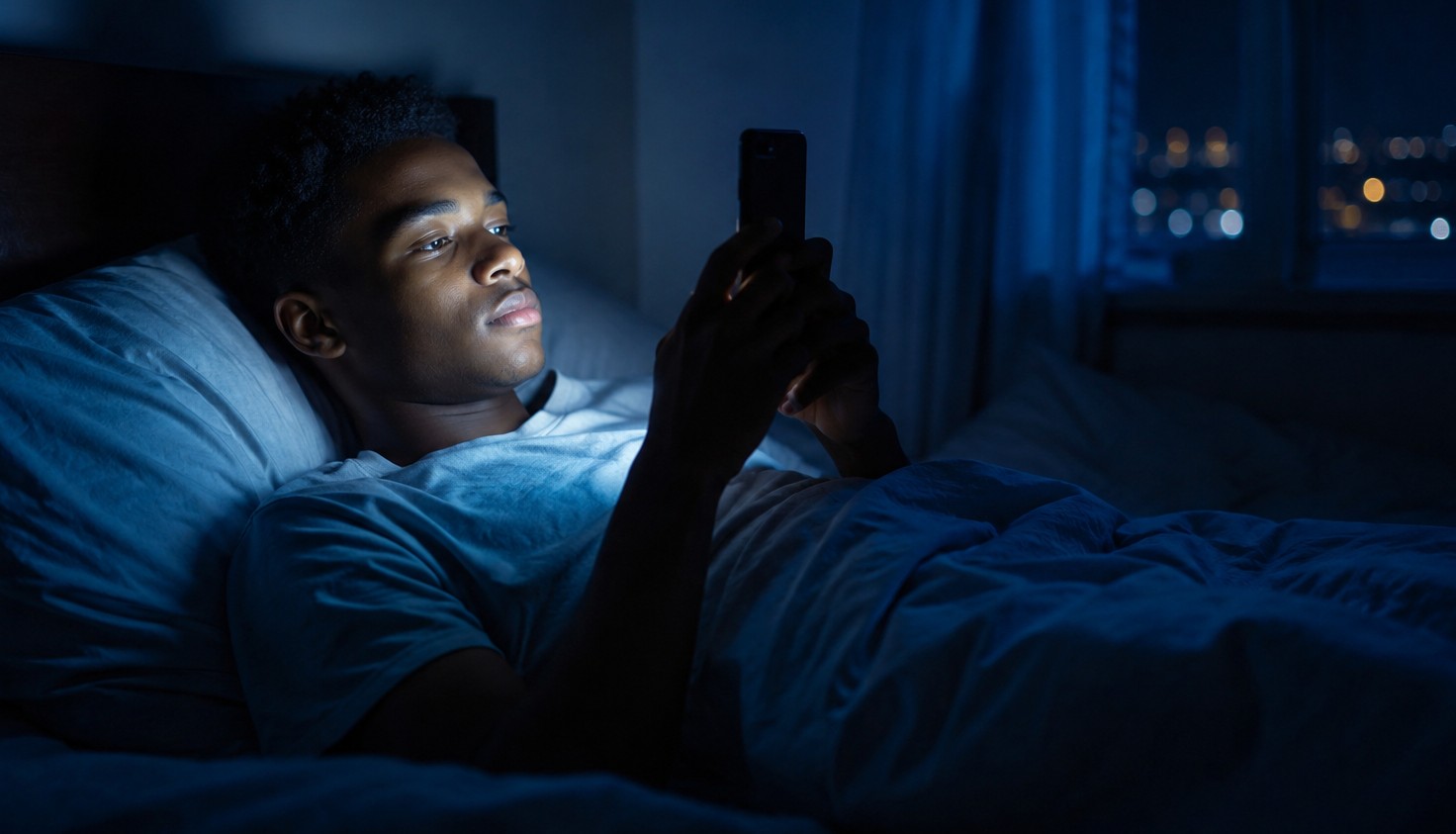
As smartphones become a constant companion for teenagers, mental health experts are raising alarm over a growing wave of anxiety, depression, loneliness and emotional burnout hidden behind glowing screens.
At 2 a.m., the soft glow of a smartphone illuminates the darkness beneath Amina’s blanket.
Her eyes burn with exhaustion. Tomorrow, she has school. Her body is begging for sleep. Yet her thumb continues moving — one more TikTok video, another Instagram reel, another WhatsApp message.
The minutes become hours.
By the time she finally closes her eyes, dawn is only a few hours away.
Amina is just 16 years old.
And she is far from alone.
Across homes, classrooms and even family dinner tables, a quiet transformation is taking place. Teenagers today are spending more time on their phones than any generation before them, prompting growing concern among psychologists who warn that excessive screen use is quietly fueling a mental health crisis among young people.
As the world observed May as Mental Health Awareness Month, attention is increasingly shifting to the hidden emotional toll of digital addiction, social media pressure and online dependency.
Clinical Psychologist Dr. Soud Tengah says many teenagers are silently battling anxiety, low self-esteem, sleep deprivation and emotional exhaustion linked to unhealthy digital habits.
“Many parents believe their children are simply entertaining themselves online, but behind excessive phone use there is often loneliness, anxiety, emotional distress and an unhealthy search for validation,” says Dr. Tengah.
“Teenagers are growing up in an environment where their sense of worth is increasingly tied to likes, followers, comments and online approval. That pressure can have devastating consequences on mental wellbeing.”
According to global health studies, teenagers now spend between six and nine hours daily on screens outside of school-related activities, with social media platforms becoming central to their social lives.
While technology has revolutionised communication, education and access to information, experts warn that uncontrolled screen use is producing unintended psychological consequences.
For many adolescents, social media presents a world where perfection appears ordinary.
Every scroll reveals flawless faces, luxurious lifestyles, expensive vacations, ideal body images and carefully curated moments of happiness.
What many teenagers fail to see is that these images often represent edited fragments of reality.
Yet the emotional impact is real.
Many young people now measure their self-worth through online engagement. When a post attracts little attention, feelings of rejection, inadequacy and self-doubt begin to emerge.
Some develop anxiety from constantly checking notifications. Others experience depression after repeatedly comparing themselves to unrealistic standards portrayed online.
Dr. Tengah, who also serves as Lead Consultant and Mental Health Expert at Mental Health Innovations and Research (MEHIR), says adolescents are particularly vulnerable because their brains are still undergoing critical emotional development.
“Teenagers are at a very delicate stage of psychological growth. Constant comparison on social media can distort reality and create feelings of inadequacy, even when a child is doing perfectly well in real life,” he explains.
Mental health specialists also point to sleep deprivation as one of the most dangerous consequences of excessive phone use.
Instead of resting, many teenagers remain online deep into the night, jumping from one platform to another for hours without meaningful breaks.
The consequences are becoming increasingly visible — poor concentration in school, emotional instability, chronic fatigue, irritability, academic struggles and symptoms associated with anxiety and depression.
Research has consistently linked inadequate sleep among adolescents to higher risks of emotional distress, mood disorders and declining mental health.
Yet perhaps the most troubling consequence is loneliness.
Paradoxically, even as technology connects young people to hundreds or thousands of online contacts, many report feeling more emotionally isolated than ever before.
Family conversations are interrupted by notifications.
Dinner tables have grown quieter.
Face-to-face interactions are being replaced by screens.
Behind active social media profiles, many teenagers are struggling with a profound sense of disconnection.
“Many young people appear socially active online, but emotionally they feel alone, misunderstood and disconnected,” says Dr. Tengah.
“We are increasingly seeing teenagers who can spend an entire day communicating digitally yet struggle to have meaningful conversations with parents, siblings or close friends.”
The situation is further compounded by cyberbullying.
Cruel comments, online harassment, body shaming and public humiliation now spread at unprecedented speed across digital platforms.
Mental health experts warn that for emotionally vulnerable teenagers, such experiences can leave lasting psychological scars.
Some victims develop severe anxiety, depression, social withdrawal and, in extreme situations, thoughts of self-harm.
Despite these growing concerns, psychologists emphasize that smartphones themselves are not the enemy.
Technology remains an important tool for learning, creativity, entrepreneurship, communication and access to mental health support services.
The danger emerges when screen time begins replacing sleep, physical activity, real-world relationships and healthy emotional development.
Dr. Tengah believes parents, schools and communities must become more proactive in promoting responsible digital behaviour.
“We cannot remove technology from young people’s lives, nor should we try to,” he says.

[Clinical Psychologist, Lead Consultant and Mental Health Expert at Mental Health Innovations and Research (MEHIR), Dr. Soud Tengah talking to children. He says adolescents are particularly vulnerable because their brains are still undergoing critical emotional development and that they need more meaningful engagements with their parents. Photo/James Kazungu Lamiry/May, 31, 2026].
“What we must teach is balance, healthy boundaries and emotional awareness. Parents need to spend quality time with their children. Schools must strengthen mental health education. Society must create safe spaces where young people can speak openly without fear of judgment.”
As Mental Health Awareness Month reminds the world about the importance of emotional wellbeing, experts say one message is becoming increasingly urgent:
Not all cries for help are visible.
Sometimes they are hidden behind smiling selfies.
Sometimes they are buried beneath trending videos.
Sometimes they are concealed behind glowing screens in dark bedrooms long after midnight.
And unless society begins paying closer attention, an entire generation may continue suffering in silence while appearing perfectly fine online.
More reports by Fatma Khatib