














![[Kenya's Interior CS Kipchumba Murkomen. Kenya is seeking stronger partnership with China and East Africa to combat terrorism. Photo/courtesy/Sept' 10, 2026].](https://jambonewsnetwork.com/wp-content/uploads/2026/09/MURKOMEN-180x135.jpg "Kenya seeks stronger China, E. Africa partnership against terrorism")





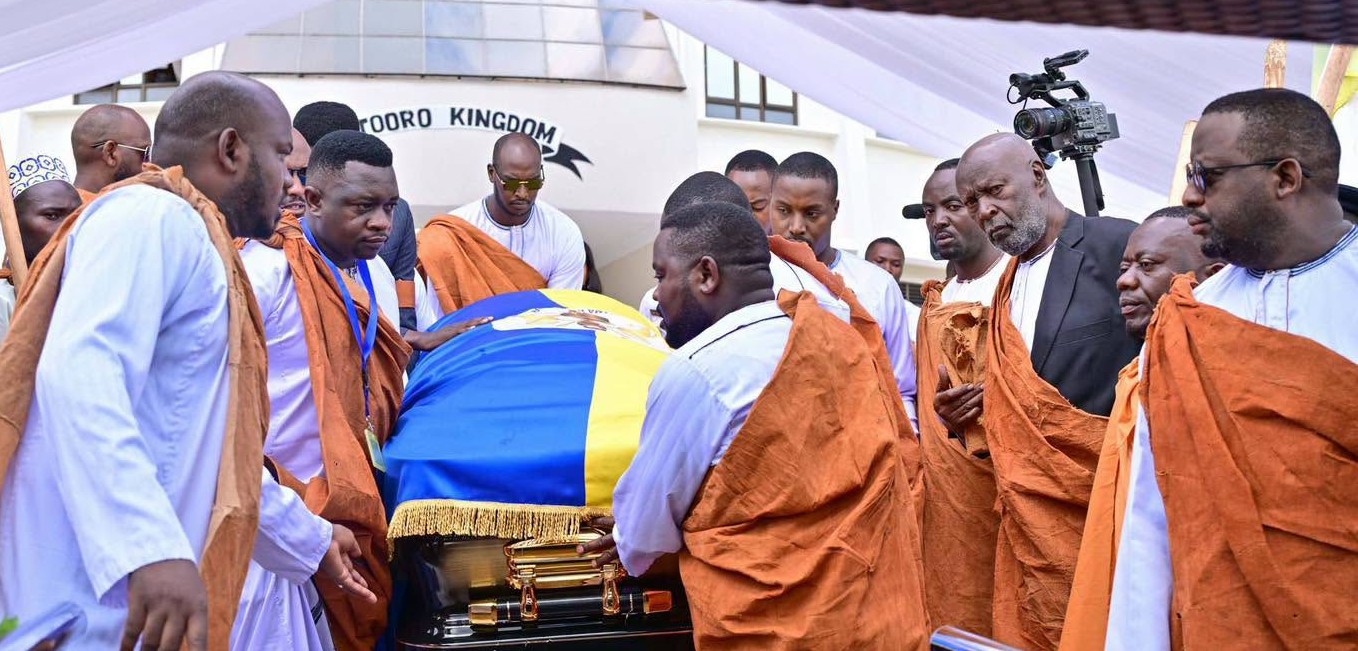
FORT PORTAL, Uganda — The Tooro Kingdom on Saturday bid farewell to King Oyo Nyimba Kabamba Iguru Rukidi IV, bringing to an end the 31-year reign of a monarch who became a global figure after ascending the throne as a three-year-old.
Thousands of mourners, members of the royal family, cultural leaders, government officials and visiting dignitaries gathered in Fort Portal for the final rites, with a funeral service held at St John’s Cathedral before the late king’s remains were taken to the Karambi Royal Tombs for burial.
Oyo died on August 27 at the age of 34 while receiving cancer treatment in the United States. His death brought to a close one of the most unusual royal journeys in modern Africa, having taken the Tooro throne in 1995 following the death of his father and becoming the world’s youngest reigning monarch at the time.
Saturday’s burial was deliberately scheduled to coincide with the anniversary of his enthronement. September 12 marks 31 years since the young prince was crowned Omukama of Tooro, giving the final farewell an added historical significance for the kingdom.
The funeral brought together Christian and traditional elements, reflecting the dual role of the Tooro monarchy as a custodian of the kingdom’s cultural heritage. After the church service, the remains were taken in procession to Karambi, the traditional burial ground for Tooro kings.
Traditional rites are expected to form part of the burial ceremony, including the participation of the Omusuna, the kingdom’s traditional chief priest. Among the rituals associated with the burial of a Tooro monarch is the casting of nine coffee berries into the grave by the incoming king.
But Oyo’s final journey has unfolded against the backdrop of a succession dispute that has exposed divisions within the royal family and the wider Tooro establishment.
The Babiito royal clan’s succession committee selected Oyo’s cousin, Prince Edward Rukidi Kijanangoma, as his successor. Kijanangoma, a journalist and editor at Uganda Broadcasting Corporation, was chosen after the death of the king.
The decision, however, was challenged by members of Oyo’s immediate family, including his sister Princess Ruth Komuntale and Queen Mother Best Kemigisa.
They have maintained that Oyo left a will directing that his biological son, whose existence was not publicly known before the king’s death, should succeed him. The child has not been publicly identified, and supporters of Kijanangoma’s selection have questioned whether the alleged heir has been formally presented or recognised under Tooro customary procedures.
The dispute became particularly sensitive because Tooro’s traditional burial rites are closely connected to the succession of the monarch. Questions had emerged over who would perform rituals reserved for the incoming king, raising concerns that disagreements over the throne could overshadow Oyo’s final send-off.
By Friday, however, reports indicated that Ugandan authorities had helped push through Kijanangoma’s succession, clearing the way for Saturday’s burial ceremonies to proceed. The underlying dispute over the alleged son and the interpretation of Oyo’s will remains a matter that could continue to unfold after the funeral.
The succession controversy has added a difficult chapter to the legacy of a king who largely stayed away from Uganda’s partisan politics but became an important cultural figure during his long reign.
Oyo later served as a United Nations goodwill ambassador and used his position to advocate against HIV and AIDS. He also maintained relationships with prominent international figures, including former South African president Nelson Mandela and former Libyan leader Muammar Gaddafi.
Uganda’s traditional kingdoms do not exercise formal political power, but they retain considerable cultural and historical importance. The Tooro monarchy remains central to the identity of the Batooro and functions as a symbol of their heritage and traditional leadership.
For now, the kingdom has laid its king to rest after nine days of mourning. But as the mourners depart Fort Portal, the question of who will ultimately occupy the Tooro throne — and whether the claims surrounding Oyo’s alleged son will be pursued further — could become the next chapter in the kingdom’s history.