











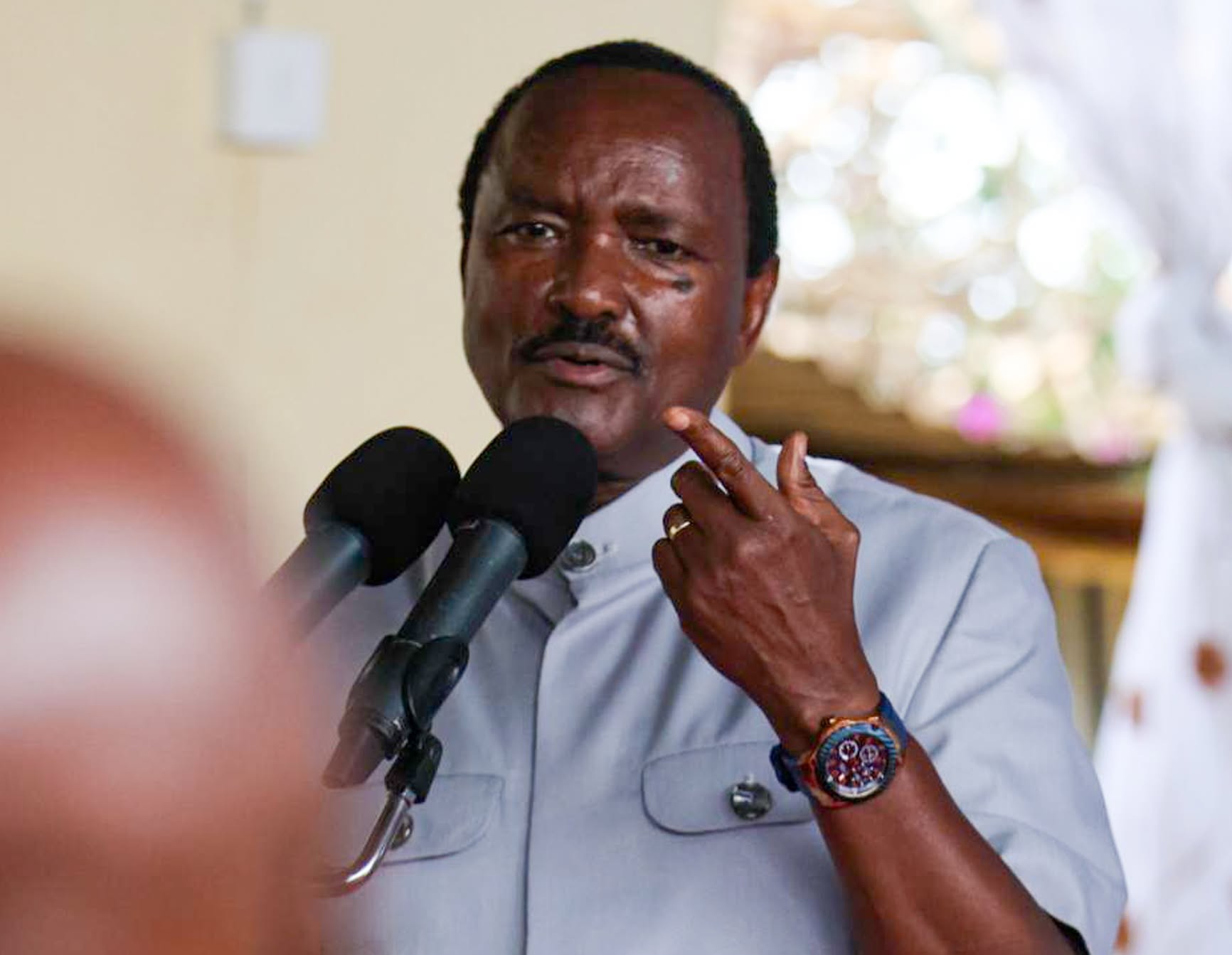
NAIROBI, Kenya—Wiper Patriotic Front leader Kalonzo Musyoka has ruled out joining President William Ruto’s administration, declaring his commitment to the opposition’s 2027 presidential campaign even if he does not secure the coalition’s ticket.
The declaration places the former Vice-President at the centre of an increasingly delicate political balancing act as opposition leaders seek to build a united front against Ruto while negotiating who should lead their campaign in the next General Election.
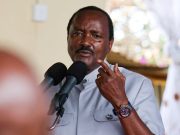
Speaking on Sunday after attending a church service at Word of Faith Church in Mwingi Central, Kitui County, Kalonzo dismissed suggestions that he could consider joining government should another opposition leader emerge as the coalition’s presidential candidate.
He described the Ruto administration as a “predator regime” and insisted that no individual had the authority to communicate his political position on his behalf.
“The mission to liberate Kenya must come before any individual ambition,” he said, reiterating that opposition unity ahead of the 2027 elections was non-negotiable.
Kalonzo also pledged to support whichever opposition leader is selected to challenge Ruto, saying his personal presidential ambitions should not stand in the way of a common political objective.
His remarks come amid renewed efforts by opposition leaders to consolidate their political formations and resolve internal differences before the 2027 contest.
The Wiper leader has increasingly featured in efforts to bridge divisions within the opposition, engaging different political principals as discussions over a possible joint political arrangement continue.
A November 10 report by the Daily Nation described Kalonzo as a central figure in the opposition’s unity efforts, citing his involvement in attempts to ease tensions between leaders including Rigathi Gachagua, Fred Matiang’i, Edwin Sifuna and Eugene Wamalwa.
The challenge, however, extends beyond bringing the leaders together. They must also agree on a presidential candidate, the selection process and the political arrangements that will govern their cooperation.
Kalonzo’s latest declaration therefore addresses one of the central concerns facing the emerging alliance: whether leaders with individual presidential ambitions will be prepared to accept a collective decision when the time comes to settle on a flagbearer.
His political history gives the pledge additional significance.
In the 2007 General Election, Kalonzo contested the presidency and finished third behind Mwai Kibaki and Raila Odinga. He subsequently supported Odinga’s presidential bids in 2013, 2017 and 2022, serving as his running mate in the first two elections.
His repeated participation in coalition arrangements has kept him within the country’s national political leadership, but has also meant that his own presidential ambitions have remained a recurring question in successive election cycles.
The current negotiations present a similar dilemma, particularly as several opposition figures continue to feature in discussions about who should lead the coalition.
Former Deputy President Rigathi Gachagua, former Interior Cabinet Secretary Fred Matiang’i, Nairobi Senator Edwin Sifuna and other opposition figures have been associated with the wider efforts to establish a common political platform.
The question of the flagbearer remains unresolved, with political discussions touching on the timing of the announcement and the process through which competing ambitions will be reconciled.
Kalonzo’s public pledge to support another candidate could help clarify his position in those negotiations. However, it does not resolve the wider question of whether all coalition partners and their supporters will accept the eventual choice.
The pressure is also not confined to the opposition’s national leadership. Kalonzo commands a significant political following in Ukambani, where expectations surrounding his presidential ambitions remain an important consideration in the negotiations.
His latest remarks followed suggestions by former Nairobi Governor Mike Sonko that he should consider joining Ruto’s administration if he failed to secure the opposition ticket. Kalonzo has now publicly rejected that possibility.
Beyond coalition politics, the Wiper leader used his Mwingi appearance to criticise the government’s handling of insecurity following suspected Al-Shabaab attacks and raise concerns over corruption and regulatory failures in the construction sector.
He also alleged that President Ruto has financial interests in the cement industry and benefits from cement sales, claims that require independent substantiation and a response from the President or relevant authorities.
Nevertheless, the central political message from Mwingi was directed at the opposition’s 2027 calculations.
With less than a year to the General Election, the emerging coalition faces the difficult task of translating public declarations of unity into an agreed political structure, a common campaign programme and a credible method of selecting its presidential candidate.
For Kalonzo, ruling out a deal with the administration and pledging to support another opposition candidate establishes his publicly stated position. Whether the wider opposition can agree on a candidate and maintain that unity when individual ambitions are tested remains one of the defining questions ahead of 2027.