





















Maritime security stakeholders have called for enhanced cooperation among governments, maritime agencies, and research institutions to address piracy, illegal fishing, trafficking, and other emerging threats in the Western Indian Ocean.
MOMBASA, Kenya – Maritime security experts, policymakers, researchers, and regional stakeholders have called for enhanced cooperation among governments, maritime agencies, and research institutions to address emerging security threats facing the Western Indian Ocean region.
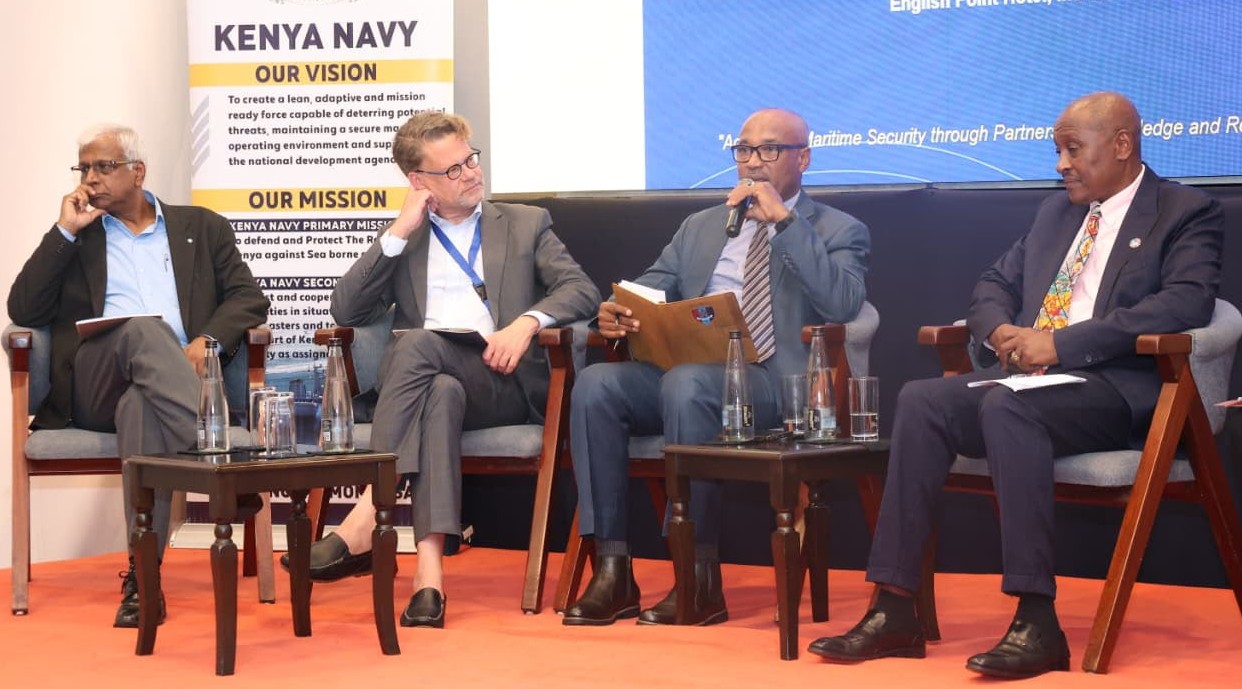
The call was made during the launch of the Regional Maritime Security Architecture (RMSA) Policy Brief, an initiative of the Indian Ocean Commission (IOC) developed in partnership with the University of Oxford. The forum brought together maritime governance experts, security practitioners, academics, and development partners to deliberate on the future of maritime security cooperation and governance in the region.
Speaking during the launch, Kenya Navy Fleet Commander Brigadier Mohamed Shemote described the Western Indian Ocean as a region of immense strategic importance, serving as a critical route for global trade, energy transportation, and economic growth while supporting millions of livelihoods through the blue economy.
However, he warned that the maritime domain continues to face increasingly complex threats, including piracy, illicit trafficking, illegal, unreported and unregulated (IUU) fishing, marine pollution, and the growing effects of climate change.
“These threats transcend national boundaries and require coordinated regional responses,” said Brigadier Shemote.
The senior naval officer commended the Indian Ocean Commission for its role in advancing maritime security cooperation, noting that the establishment of the Regional Maritime Security Architecture has significantly strengthened information sharing and operational coordination among countries in the Western Indian Ocean.
According to Brigadier Shemote, the architecture has enhanced maritime domain awareness through key regional institutions, including the Regional Maritime Information Fusion Centre in Madagascar and the Regional Coordination of Operations Centre in Seychelles.
“Through the Regional Maritime Information Fusion Centre in Madagascar and the Regional Coordination of Operations Centre in Seychelles, supported by national maritime information-sharing centres, the Architecture has strengthened maritime domain awareness and improved coordination of operations at sea,” he said.
Accelerate
He added that for Kenya, the RMSA represents more than a security framework, describing it as a practical demonstration of regional commitment to safeguarding maritime resources, protecting the blue economy, and promoting peace, stability, and prosperity across the Western Indian Ocean.
Participants at the forum observed that the region continues to grapple with interconnected challenges ranging from piracy and trafficking to environmental degradation and increasing geopolitical competition, highlighting the need for stronger collaboration and evidence-based policymaking.
The newly launched policy brief outlines the achievements made under the Regional Maritime Security Architecture in enhancing regional coordination and collective responses to illicit activities at sea. It also identifies priority areas aimed at strengthening the framework’s long-term sustainability and strategic development.
Brigadier Shemote emphasized the importance of research-driven maritime governance, saying the rapidly changing maritime environment requires policies and institutions capable of adapting to emerging risks and opportunities.
“Evidence-based analysis enables policymakers and practitioners to better understand emerging risks, identify opportunities, and develop sustainable solutions,” he said.
He further welcomed the collaboration between the University of Oxford and the Indian Ocean Commission in developing the policy brief, noting that research remains critical in shaping effective maritime security strategies.
The forum also explored a wide range of issues affecting maritime security in the Western Indian Ocean, including piracy, organised transnational crime, maritime safety, environmental protection, search and rescue operations, and regional preparedness to emerging threats.
Experts expressed optimism that stronger cooperation among regional states and maritime institutions will enhance collective efforts to secure the region’s waters and unlock the full potential of the blue economy.