




















TANA RIVER, Kenya — For generations, the search for water has defined daily life for thousands of families across the arid interior of Tana River County.
Every dry season, women and children trekked for kilometres in search of water, livestock died from prolonged drought, schools recorded absenteeism as families migrated in search of pasture, while competition over scarce water sources often fuelled conflicts among pastoralist communities.
That long-standing struggle could soon become a thing of the past.
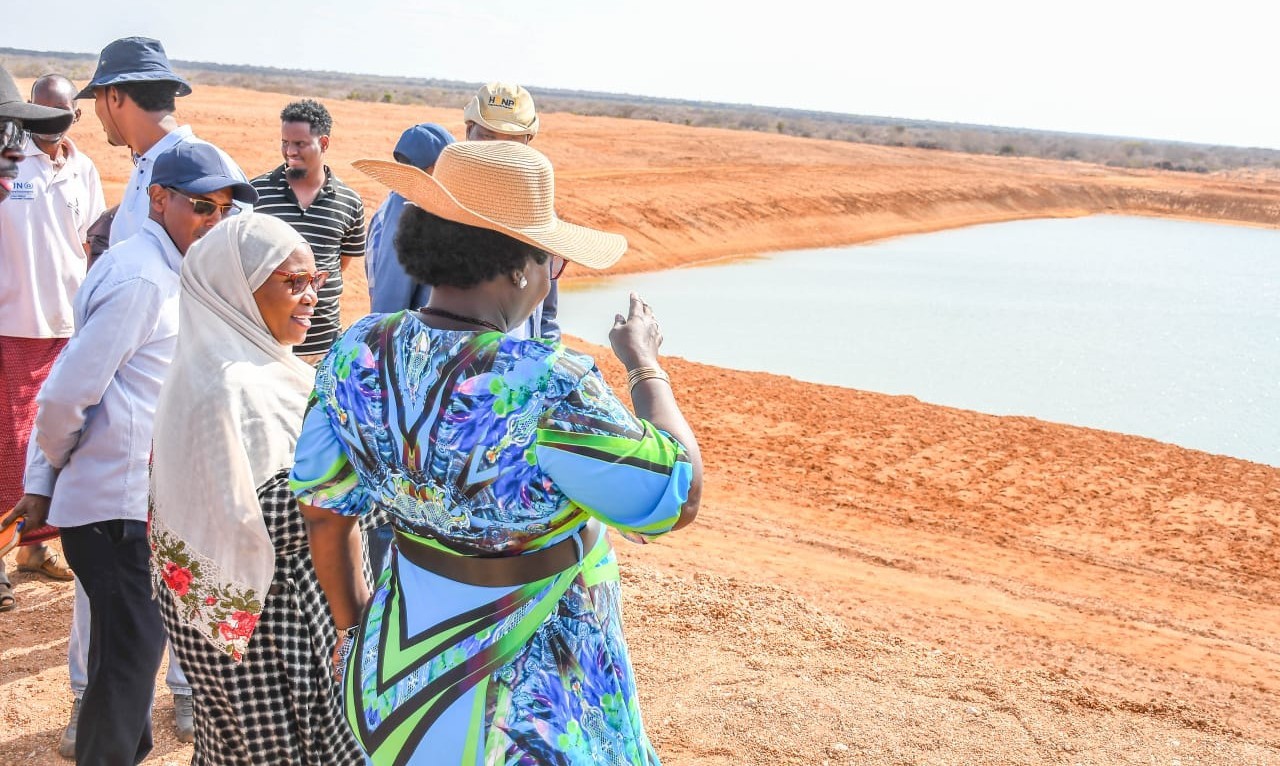
The national government has commissioned two earth-fill dams worth nearly Sh190 million in Tana North and Bangale sub-counties, marking a significant investment aimed at improving water access, boosting livestock production and strengthening climate resilience in one of Kenya’s most drought-affected counties.
The Miidi and Hambaresa Earth-fill Dams, constructed under the Drought Mitigation and Flood Control Programme through the Coast Development Authority (CDA), each have a storage capacity of 100,000 cubic metres.
Beyond providing water for domestic use, the dams are expected to improve food security, reduce conflicts over dwindling water resources and support livelihoods that largely depend on livestock keeping.
Speaking during the commissioning ceremony, East African Community Affairs, ASALs and Regional Development Cabinet Secretary Beatrice Askul said the projects demonstrate the government’s commitment to improving the lives of communities living in Kenya’s arid and semi-arid lands.
“What I have witnessed here is value for public investment. These projects are reaching vulnerable and marginalised communities whose livelihoods depend on livestock. This is development that directly improves people’s lives,” she said.
Askul noted that recurring drought has forced many pastoralist families to travel long distances in search of water and pasture, disrupting children’s education and exposing communities to conflicts over limited natural resources.
“The pastoralists told us they migrate for water during the dry season. In many cases, children are forced out of school because families cannot leave them behind. Sometimes these movements also trigger conflicts over grazing land and water,” she said.
“These dams give communities renewed hope. Families will have water closer to home while livestock, which is their main source of livelihood, will have reliable watering points.”
The Cabinet Secretary urged local residents to safeguard the facilities, describing them as critical public investments whose success depends on community ownership.
The Miidi Earth-fill Dam, located in Chewele Ward of Tana North Sub-County, was constructed at a cost of Sh95.8 million by Holwadhe Investment Limited.
The project includes a reservoir, embankment, livestock watering troughs, water kiosk, fencing and supporting infrastructure.
It is expected to serve approximately 1,349 households in Miidi, Village 15, Kware and Sigale villages while providing water for between 30,000 and 40,000 cattle, around 200 camels, 6,000 goats and sheep, and hundreds of donkeys.
Meanwhile, the Hambaresa Earth-fill Dam in Sala Ward, Bangale Sub-County, was completed at a cost of Sh93.98 million by Crossland Construction and General Supplies Limited.
The facility will provide water to nearly 2,000 households in Dalolo Garse, Boca, Gelmad and neighbouring villages, in addition to supporting between 30,000 and 40,000 cattle, about 40,000 camels, and thousands of goats and sheep.
Coast Development Authority Managing Director Dr. Mwanasiti Bendera said the projects represent a major milestone in efforts to strengthen water security across Kenya’s coastal arid counties.
She said reliable access to water will reduce the time families spend searching for water while improving livestock productivity and enhancing household incomes.
“Our goal is to ensure communities have sustainable access to water while building resilience against the effects of climate change,” she said.
CDA Chairperson Mzee Mwenye Mzee described the projects as evidence of the government’s commitment to expanding development to underserved communities.
“We are taking development to the grassroots through projects that directly improve livelihoods. That remains the core mandate of the Coast Development Authority,” he said.
Tana River County Commissioner Joseph Mwangi Wamuti said the improved water supply could also unlock new agricultural opportunities in the county.
He encouraged residents to embrace crop farming alongside livestock keeping, noting that increased water availability creates new opportunities for irrigation and food production.
“We have seen investors establish large-scale farms in this region. Local communities should also take advantage of the improved water supply to venture into farming and strengthen household food security,” he said.
Growing Need for Climate-Resilient Infrastructure
Tana River County is among Kenya’s most climate-vulnerable regions, frequently experiencing prolonged droughts that threaten livelihoods, livestock and food security. While seasonal flooding occasionally affects parts of the county, many interior areas face chronic water shortages during dry periods.
Experts say investments in water harvesting infrastructure such as earth-fill dams are becoming increasingly important as climate change intensifies weather extremes across Kenya’s arid and semi-arid lands.
For thousands of families in Tana North and Bangale, the two new dams are expected to reduce the burden of searching for water while supporting livestock, improving school attendance and opening new opportunities for agriculture and economic development.