













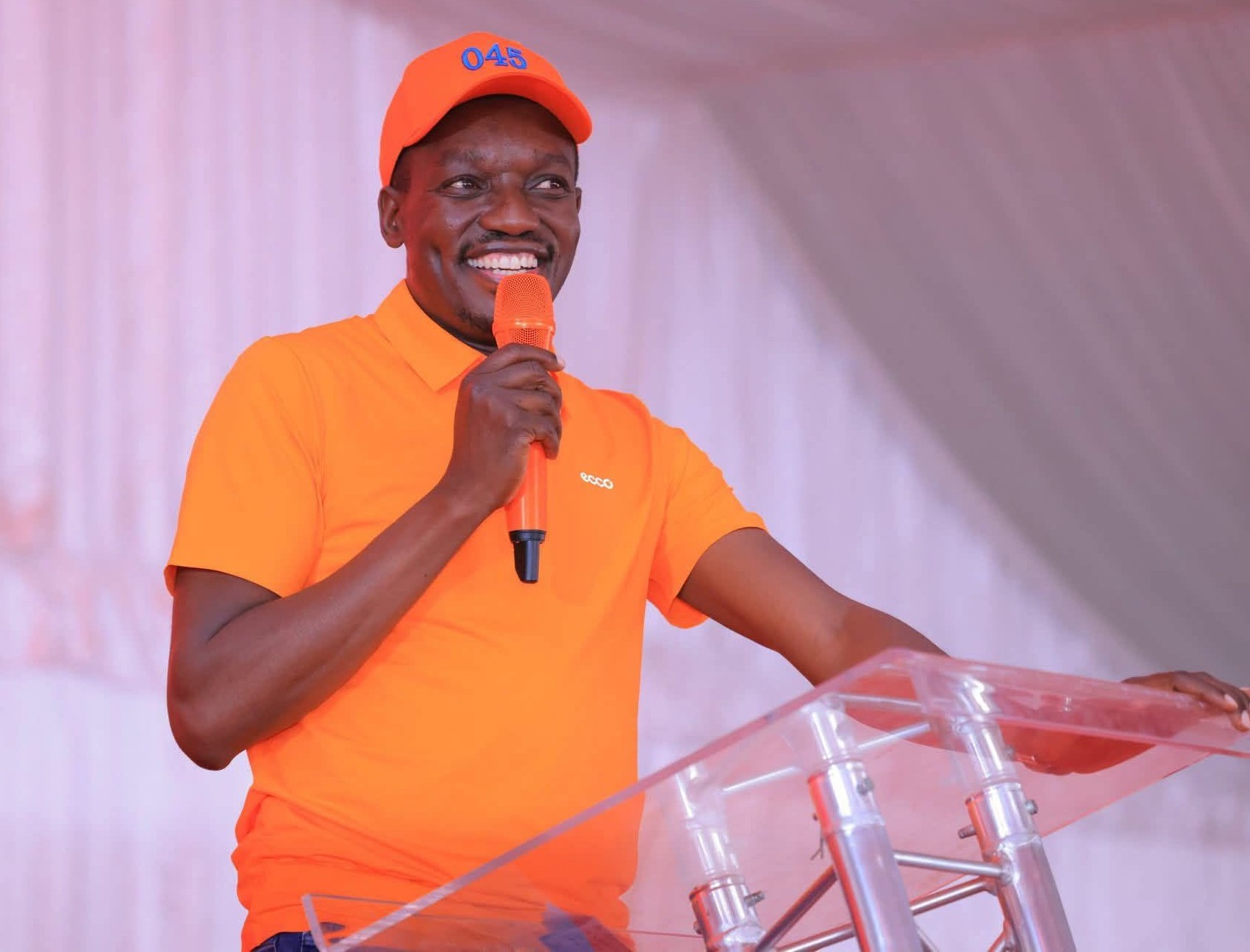
NAIROBI, Kenya—The political partnership between President William Ruto’s United Democratic Alliance (UDA) and the Orange Democratic Movement (ODM) is facing a fresh test after Kisii Governor and ODM Deputy Party Leader Simba Arati demanded an equal share of government should the two parties remain together after the 2027 General Election.
Arati’s demand for a 50-50 arrangement has placed the question of political returns at the centre of the ODM-UDA relationship, raising fresh questions about what the opposition-turned-government partner expects to secure if the broad-based government arrangement evolves into a post-2027 political alliance.
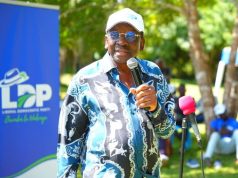
Speaking on Monday during President Ruto’s four-day tour of Nyanza, at Chemelil in Muhoroni Constituency, Arati said ODM must secure half of the government if the partnership survives into the next administration.
“In the 2027 government, we as ODM must get a half share together with Honorable Ruto,” Arati said.
He was even more emphatic on the proposed arrangement, insisting that there should be no ambiguity over how power would be shared.
“ODM and UDA will go 50/50. There is no shortcut about it,” he said.
The remarks provide one of the clearest indications yet of the expectations developing within sections of ODM as the party weighs its political future with Ruto ahead of the 2027 elections.
The broad-based government arrangement brought members and allies of the former opposition closer to the Kenya Kwanza administration following the political turbulence that followed the 2024 protests.
Since then, ODM politicians have taken up senior government positions, while President Ruto and ODM leaders have repeatedly defended their cooperation as necessary for national unity, stability and development.
But beneath that cooperation lies a more complicated political calculation.
For ODM, participation in government must eventually translate into tangible political gains, particularly if the party is expected to support Ruto’s re-election bid in 2027.
That question has increasingly become important as politicians begin looking beyond the current administration towards the next electoral contest.
Arati’s remarks suggest that at least a section of ODM wants the party to approach any post-election arrangement from a position of negotiated strength rather than simply continue its current role within the broad-based government.
The demand also comes amid reports and political speculation over senior positions that ODM could seek if the partnership becomes an electoral coalition.
Among the positions that have featured prominently in political discussions is that of Deputy President, although the final structure of any possible alliance remains uncertain.
The question is further complicated by the fact that ODM remains a major political organisation with its own leadership, grassroots support and ambitions beyond the current government arrangement.
President Ruto, however, has consistently sought to portray the relationship between the two parties as one based on partnership rather than competition.
On Sunday, while speaking during a church service at the Voice of Salvation and Healing Church in Kisumu, the President said UDA and ODM were not competitors but partners working together under the broad-based government framework.
“UDA and ODM are not competitors but partners in the Broad-Based Government,” Ruto said.
He said the two parties were working together in what he described as an effort to transform the country.
The President was accompanied by Kisumu Governor Anyang’ Nyong’o, Migori Governor Ochilo Ayacko, Homa Bay Governor Gladys Wanga and several MPs and other political leaders.
The contrasting emphasis between Ruto’s language of partnership and Arati’s insistence on a 50-50 division of government highlights one of the central political questions surrounding the arrangement.
While the President presents the relationship as cooperation in government, sections of ODM are already looking towards the political price of that cooperation.
The issue is likely to become more pronounced as the 2027 election approaches.
For ODM, remaining in partnership with Ruto offers access to government and an opportunity to influence policy and development priorities. But the party also faces pressure from its political base to demonstrate what it has gained from working with a President it previously opposed.
For UDA, the calculation is equally significant.
A stronger formal alliance with ODM could give Ruto access to substantial support in regions where the President and his party have historically faced political challenges. But accommodating demands for an equal share of government could also alter the balance of power within the administration and generate resistance among sections of Kenya Kwanza.
The 50-50 proposal therefore goes beyond the distribution of positions.
It raises the broader question of whether ODM and UDA can transform their current cooperation into a structured electoral partnership without creating new tensions over leadership, influence and political expectations.
With 2027 drawing closer, both parties will increasingly have to answer difficult questions about who leads, who supports whom, how positions are shared and what each side brings to the table.
For now, the broad-based government remains intact.
But Arati’s message from Nyanza offers an early glimpse into the negotiations that could define its political future: if ODM is expected to remain a partner beyond 2027, it wants the partnership to be measured not only in cooperation, but in an equal share of power.