




















From soldiers and environmentalists to fishermen and youth groups, a growing movement along Kenya’s Coast is fighting to restore mangrove forests threatened by climate change, deforestation and rapid coastal development.
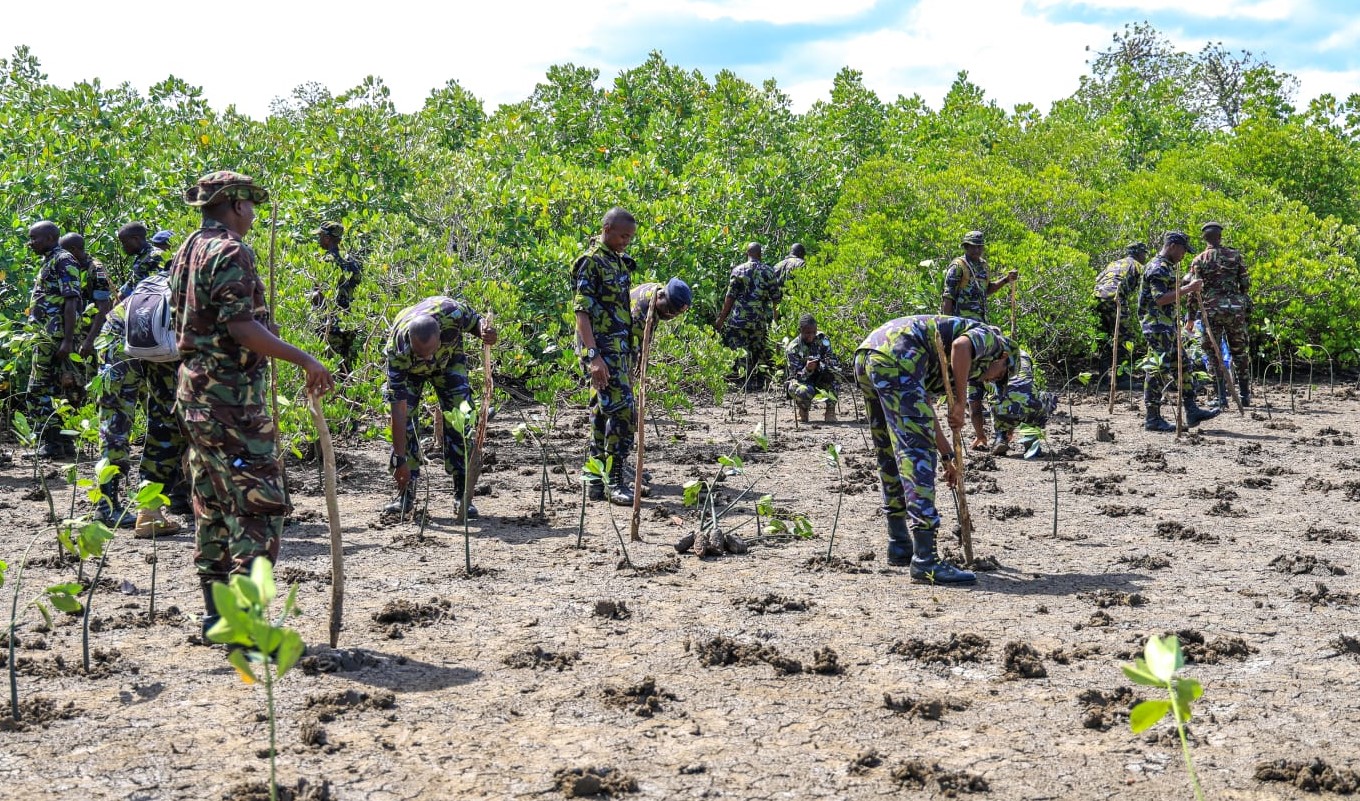
Along the muddy shores of Tsunza in Kwale County, hundreds of boots sank into the wet ground as soldiers, bankers, environmentalists and villagers formed long lines carrying young mangrove seedlings beneath the morning sun.
What looked like a simple tree planting exercise was, for many residents, a fight for the future of Kenya’s coastline.
On Saturday, the Kenya Defence Forces (KDF), Equity Bank, conservation organisations and local communities planted 150,000 mangrove seedlings along the Dongo Kundu bypass area in one of the largest coordinated mangrove restoration campaigns witnessed at the Coast in recent years.
For coastal communities, mangroves are far more than trees.
They are natural sea barriers that shield homes from strong tides and erosion. They serve as breeding grounds for fish and crabs that sustain fishermen. They absorb carbon dioxide from the atmosphere and help slow the effects of climate change increasingly felt across Kenya’s coastline.
As participants moved through the tidal flats planting seedlings row after row, Brigadier Dr. Justino Muinde described the exercise as both an environmental mission and a national responsibility.
“Protecting the environment is protecting life itself,” he said.
Kenya’s military says it has planted more than 80 million trees under the Environmental Soldier Programme, reflecting the growing role security agencies are playing in climate and environmental protection efforts.
The restoration work is unfolding against the backdrop of Kenya’s ambitious national target of planting 15 billion trees by 2032.
But beyond the environmental message, the Tsunza project is also quietly reshaping livelihoods.
Community groups nurturing mangrove seedlings are now earning income through conservation partnerships. Women and youth groups involved in restoration activities are receiving financial support while some corporate sponsors are helping fund school fees, internships and community water projects.
Furaha Baraka Farms CEO Daniel Mwero said the organisation has already restored nearly six million mangroves across the Coast region through partnerships with banks, corporations and environmental stakeholders.
The group has also secured approximately 1,300 hectares for future restoration — enough land to support nearly 13 million mangrove trees.
Environmental experts warn that the stakes remain high.
Years of deforestation, charcoal burning, illegal logging and unregulated coastal activities have left sections of Kenya’s mangrove forests degraded and vulnerable.
KFS Ecosystem Conservator Elvis Katana Fondo noted that Kwale County’s tree cover remains below the national target, warning that climate pressures on coastal ecosystems continue to intensify.
“Mangroves help reduce wave impact, support biodiversity and protect communities,” he said. “Their survival is directly linked to the survival of coastal livelihoods.”
Residents now hope the growing mangrove belt around Tsunza could eventually support eco-tourism and environmental education projects, creating a new model where conservation and economic empowerment work together.
As the tide slowly rose over the newly planted seedlings, volunteers continued pressing young mangroves into the mud — small trees carrying enormous expectations for the future of Kenya’s coastline.