







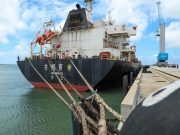












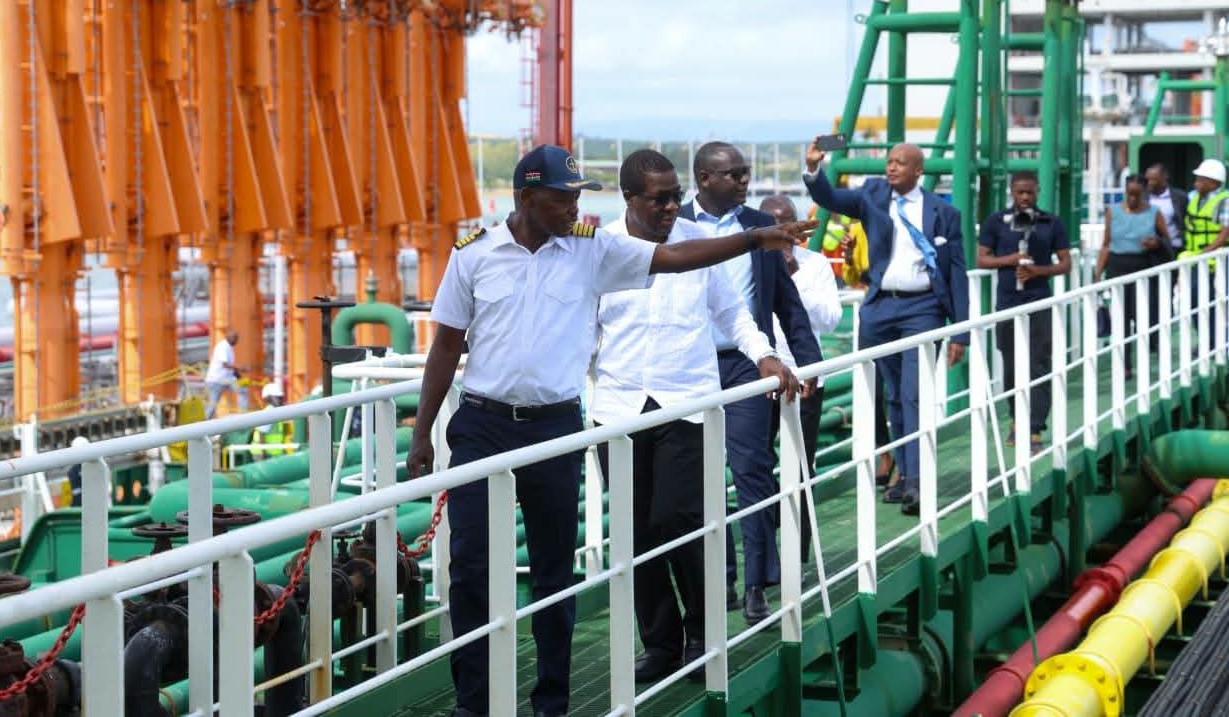
MOMBASA, Kenya—Rwanda has activated a new petroleum import route through the Port of Mombasa after its national energy company received a maiden shipment of 40,000 metric tonnes of refined petroleum products, opening the way for a potentially significant expansion of fuel transit through Kenya’s Northern Corridor.
The cargo, carried by MT Sea Wolf, was received at Kipevu Oil Terminal 2 on Tuesday in a ceremony attended by Kenya’s Energy and Petroleum Cabinet Secretary James Opiyo Wandayi, Rwanda’s Minister of State for Infrastructure Armand Zingiro and senior officials from both countries.
The shipment marks the operationalisation of a new framework allowing Rwanda to import bulk refined petroleum products through Kenya, with the two governments seeking to re-establish the Northern Corridor as a major route for Rwanda’s fuel supplies.
For Kenya’s petroleum and logistics sector, the commercial opportunity could be substantial.
Kenya Pipeline Company Acting Managing Director Pius Mwendwa said Rwanda-bound petroleum volumes through Kenya are projected to rise from about 60,000 cubic metres a year to 600,000 cubic metres, representing a tenfold increase.
Mwendwa said KPC had invested ahead of demand and had the capacity to handle the anticipated increase through its pipeline, storage and loading infrastructure.
KPC operates a 1,342-kilometre pipeline network with an annual capacity of about 14 billion litres and storage capacity of 1.138 billion litres.
“Our pipelines, our depots and our people stand ready to deliver for Rwanda,” Mwendwa said.
The expected increase would strengthen the role of the Port of Mombasa and the Northern Corridor in regional petroleum trade, potentially generating additional business for transporters, storage operators, clearing and forwarding firms and other logistics companies along the supply chain.
Energy and Petroleum Cabinet Secretary James Opiyo Wandayi said the maiden cargo was more than a single shipment, describing it as a milestone in Kenya-Rwanda economic cooperation.
“This framework is projected to grow the volume of petroleum products moving through our Northern Corridor to Rwanda tenfold over the coming years,” Wandayi said.
He said the arrangement would reinforce Kenya’s position as a regional logistics and energy transit hub while deepening economic integration within the East African Community.
The new supply arrangement is backed by a framework developed by the two governments, including a memorandum of understanding signed on June 29, 2026, between Kenya’s Ministry of Energy and Petroleum and Rwanda’s Ministry of Trade and Industry.
The arrangement also includes a tripartite framework involving the two governments and the Rwanda National Energy Company (RNEC), alongside a transport and storage agreement between KPC and RNEC covering the movement, storage, scheduling and handling of Rwanda’s petroleum imports through Kenya’s infrastructure.
Rwanda’s Minister of State for Infrastructure Armand Zingiro said the route would provide his country with a reliable and cost-effective channel for importing refined petroleum products.
“Today’s ceremony marks the culmination of a shared vision between Rwanda and Kenya to strengthen our energy security through regional cooperation,” Zingiro said.
The arrangement gives Rwanda access to Kenya’s port, pipeline and storage infrastructure, with KPC also pointing to the Kisumu Oil Jetty as an additional option for moving petroleum products towards Rwanda through the lake route.
The development could also intensify competition between East Africa’s transport corridors for Rwanda’s petroleum business. KPC said Rwanda had previously moved most of its fuel through the Central Corridor, with Kenya’s Northern Corridor accounting for only about 10 per cent of the market.
Mwendwa said the increase in Rwanda-bound volumes would be absorbed without compromising petroleum supplies to Kenya or the wider region, supported by ongoing investment in storage, loading facilities and pipeline capacity.
Wandayi said Kenya’s longer-term ambition was not limited to serving as a transit route, noting that Rwanda and other regional markets could eventually access finished petroleum products from the planned Lamu refinery.
For Mombasa, the new arrangement provides another potential source of regional transit business at a time when the port is seeking to deepen its role as a gateway to landlocked East African markets.
The two governments say the framework is intended to strengthen regional energy security, improve supply-chain efficiency and reduce logistical costs for Rwanda’s petroleum sector.
The first 40,000-tonne shipment therefore marks the beginning of a potentially larger petroleum trade relationship, with the scale of future volumes depending on the implementation and expansion of the new supply arrangement.