





















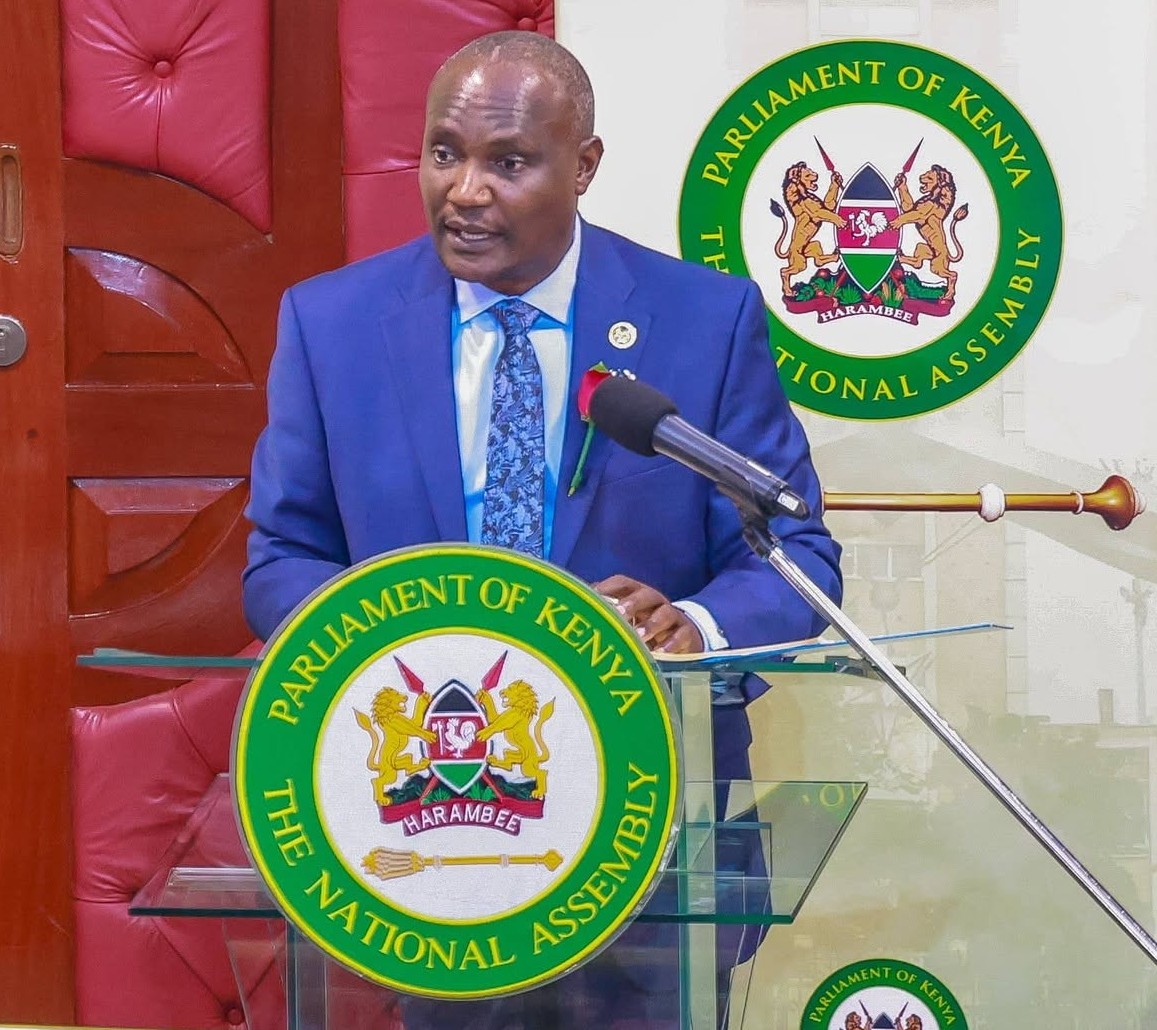
NAIROBI, Kenya—Treasury Cabinet Secretary John Mbadi has defended the government’s decision to leave tax rates unchanged and avoid introducing fresh levies in the 2026 Finance Bill, saying the move is intended to protect Kenyans from further economic hardship while supporting recovery and growth.
Presenting the 2026/27 Budget Statement in Parliament on Thursday, Mbadi said the government had deliberately chosen not to impose additional taxes, opting instead to strengthen tax administration, improve compliance and widen the taxpayer base to increase revenue collection.
The Cabinet Secretary said the budget proposals were informed by extensive public participation conducted over the past year and lessons drawn from the widespread public opposition that greeted the 2024 Finance Bill.
“In preparing these proposals, I have been guided by the overriding principle of placing the well-being of the common mwananchi first. In this regard, I have deliberately chosen not to introduce new taxes or increase tax rates that would further overburden the hardworking Kenyans and their families,” Mbadi told lawmakers.
He said the government had adopted a people-centred approach to budgeting, placing the interests of ordinary citizens at the centre of fiscal policy decisions.
Rather than increasing taxes, the Treasury will focus on improving efficiency in revenue collection, promoting fairness within the tax system and bringing more eligible taxpayers into the tax net.
Mbadi linked the policy direction to the events surrounding the June 25, 2024 anti-finance bill demonstrations, which forced the government to reconsider its approach to taxation and public engagement.
“Government was reminded of the need to always listen to the voices of our citizens,” he said.
According to the Treasury CS, broadening the tax base remains one of the most effective ways of raising additional revenue without increasing the burden on Kenyans who already comply with tax obligations.
He revealed that he personally led public participation forums across the country while preparing the budget and the accompanying Finance Bill proposals.
The consultations brought together youth groups, business leaders, professionals and other stakeholders. Mbadi said he also engaged Kenyans through media platforms and discussions with university students to gather views on government spending priorities and taxation measures.
“I wish to thank all Kenyans who took time to attend these forums and engage with me. My assurance is that their voices have been reflected in the proposals that I am presenting today,” he said.
While ruling out new taxes and tax rate increases, Mbadi emphasized that efforts to expand the tax base would continue in order to ensure that more Kenyans contribute fairly towards financing public services and national development.
He noted that only 3.1 million employed Kenyans currently remit Pay As You Earn (PAYE) tax despite millions of others earning income within the economy.
“Only 3.1 million working Kenyans contribute to PAYE, yet millions of other Kenyans who make money in our economy do not contribute to the taxes we collect,” he said.
The Cabinet Secretary further observed that many potential taxpayers continue to file nil returns despite earning income, leaving a relatively small number of compliant taxpayers carrying the country’s development burden.
“The burden of development in this country has been borne by a few of us, and that must change,” Mbadi said.
The government’s latest fiscal approach signals a shift towards enhancing tax compliance and expanding the revenue base rather than introducing new tax measures, a strategy aimed at balancing revenue needs with growing public concerns over the cost of living and economic pressures facing households.