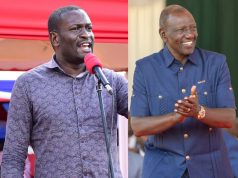



















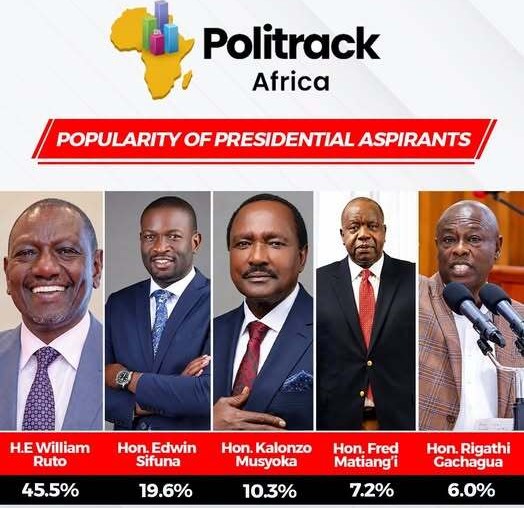
NAIROBI, Kenya—President William Ruto has recorded 45.1 per cent in a new presidential preference survey by the Politrack Research Team, with Nairobi Senator Edwin Sifuna at 19.6 per cent.
The survey, conducted between September 15 and 25, 2026, asked respondents which presidential candidate they would vote for if the election were held at the time of the poll.
Wiper leader Kalonzo Musyoka followed with 10.3 per cent, while former Interior Cabinet Secretary Fred Matiang’i recorded 7.2 per cent.
Former Deputy President Rigathi Gachagua polled 6.0 per cent, while 8.4 per cent of respondents were undecided.
Other candidates received smaller shares. Professor George Wajackoyah recorded 1.1 per cent, while former Justice Minister Martha Karua and former Chief Justice David Maraga each received 0.8 per cent.
Siaya Governor James Orengo polled 0.4 per cent, while businessman Jimmy Wanjigi recorded 0.3 per cent. Other respondents were captured under additional categories in the survey.
Politrack says the survey targeted potential voters across the country, with data collected through a text-based technology platform.
A total of 20,419 respondents took part in the survey. The research firm reports a 95 per cent confidence level and a margin of error of plus or minus three percentage points.
The findings come amid increased political activity ahead of the 2027 General Election, with presidential hopefuls and political formations stepping up mobilisation and discussions on possible alliances.
Sifuna’s showing comes shortly after the Linda Mwananchi movement formally endorsed him as its presidential candidate for the 2027 election. The movement announced the decision following a leadership retreat on September 26, saying Sifuna would lead its presidential campaign.
Sifuna had earlier indicated that Linda Mwananchi was considering fielding its own presidential candidate following consultations across the country.
Gachagua has also continued political mobilisation through his Democracy for Citizens Party, while Kalonzo remains involved in consultations around opposition political arrangements ahead of the election.
Matiang’i has similarly remained part of discussions around possible opposition formations as political actors position themselves for the 2027 contest.
The Politrack figures represent respondents’ stated preferences during the September 15–25 survey period. They are a snapshot of opinion at that time and do not constitute a prediction of the eventual outcome of the 2027 General Election.