






















With political temperatures expected to rise ahead of the 2027 General Election, a new initiative in Kenya’s Coast region is shifting the conversation from crisis response to conflict prevention by empowering women to take a leading role in peacebuilding, governance and community resilience.
Every election cycle in Kenya follows a familiar rhythm.
Political alliances are forged and broken. Campaign caravans crisscross the country. Social media becomes increasingly polarised. Security agencies heighten surveillance while religious leaders, civil society organisations and peace ambassadors intensify calls for calm.
Yet despite years of experience managing electoral tensions, one question continues to linger whenever the country approaches a General Election.
Can violence be prevented before it erupts?
For decades, Kenya’s approach to election preparedness has largely focused on responding to crises after warning signs begin to emerge. Police deployments are increased. Security meetings become more frequent. Appeals for peaceful coexistence dominate public discourse.
Increasingly, however, peace practitioners argue that lasting peace cannot be built through security operations alone.
It begins much earlier—in villages, neighbourhoods and community forums where local disputes are resolved long before they evolve into larger political conflicts.
Along Kenya’s Coast, a growing number of organisations believe one of the country’s most underutilised peacebuilding resources has been quietly holding communities together for generations: women.
Rather than viewing women solely as victims of conflict, they argue that women should be recognised as leaders, mediators and decision-makers capable of identifying tensions early, building dialogue and preventing violence before it takes root.
It is against this backdrop that the Kenya Community Support Centre (KECOSCE) has launched the IMARISHA Project, a three-year initiative aimed at strengthening women’s leadership, promoting inclusive governance and reinforcing community-based early warning systems across Mombasa, Kilifi and Kwale counties as Kenya prepares for the 2027 General Election.
Supported by the Danish Ministry of Foreign Affairs through Act Change Transform (ACT!), the programme seeks to translate Kenya’s National Action Plan on Women, Peace and Security from policy documents into practical action at the county and community levels.
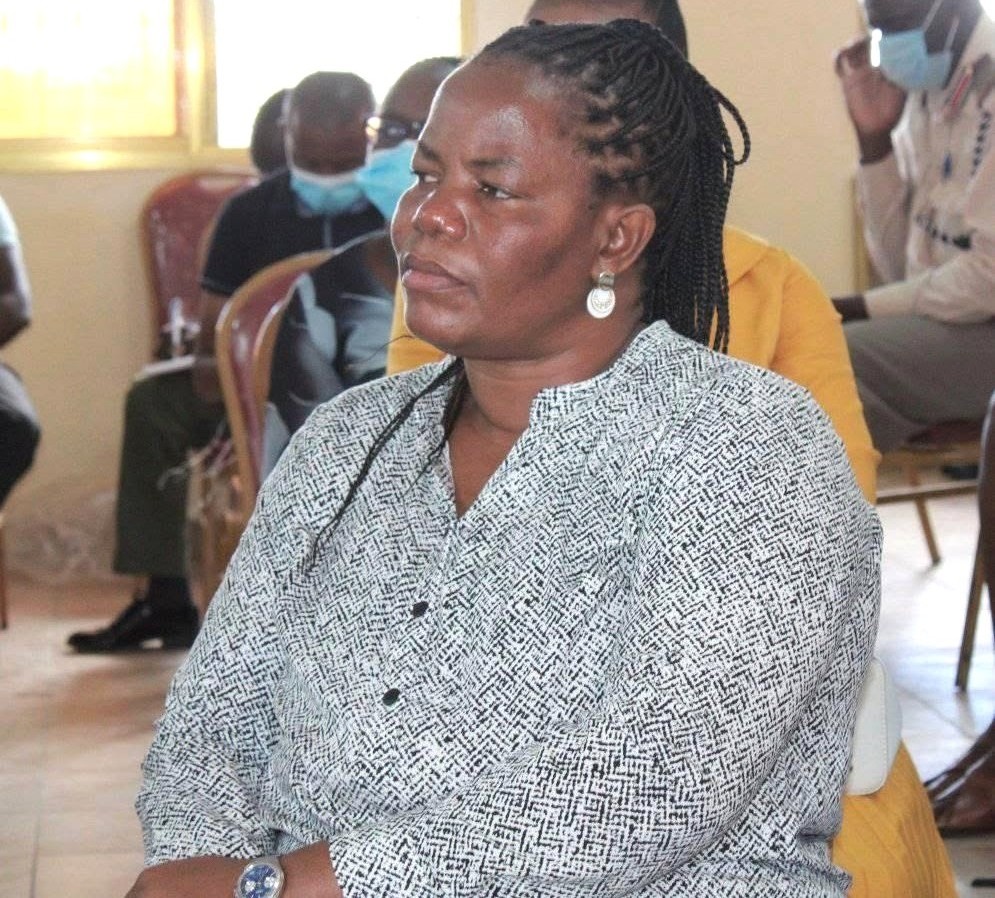
For KECOSCE Executive Director Phyllis Muema, the conversation is not about creating a new role for women.
It is about recognising the role they have already been playing for decades.
“Women are already preventing conflict, mediating disputes and building peace in communities across the Coast region. The challenge is that their leadership and contributions are too often overlooked or excluded from formal decision-making spaces,” she says.
Muema argues that women should no longer be seen merely as beneficiaries of peace and security programmes but as equal partners in designing and implementing solutions.
“As Kenya prepares for the 2027 elections, we must move beyond seeing women as beneficiaries of peace and security interventions. Women must be recognised as peacebuilders, leaders, decision-makers and agents of change.”
From Responding to Conflict to Preventing It
One of the most significant shifts taking place in peacebuilding today is the growing emphasis on prevention rather than response.
Traditionally, interventions have intensified only after political tensions become visible—when inflammatory rhetoric spreads, protests emerge or violence appears imminent.
Peace experts increasingly argue that by then, communities may already have suffered avoidable damage.
Instead, organisations are investing in systems capable of detecting warning signs much earlier.
These include strengthening community dialogue, encouraging inclusive leadership, improving communication between local leaders and security agencies, and creating trusted networks that can identify emerging disputes before they escalate.
The IMARISHA Project embraces this preventive approach by strengthening community-based early warning and early response mechanisms while expanding women’s participation in governance, peace and electoral processes.
The initiative also seeks to address gender-based violence and harmful cultural practices that continue to limit women’s participation in leadership and decision-making.
For Muema, peacebuilding is not simply about avoiding violence during elections.
It is about building stronger, more resilient communities throughout the electoral cycle.
More Than a Women’s Agenda
While women remain central to the IMARISHA Project, those behind the initiative insist the conversation extends far beyond gender.
Peaceful elections, they argue, are not simply about avoiding violence. They are about protecting livelihoods, safeguarding businesses, keeping children in school and ensuring communities continue to thrive regardless of political competition.
The project will bring together county governments, security agencies, civil society organisations, women-led groups, youth leaders and faith-based organisations to strengthen collaboration and improve community-based early warning systems capable of detecting tensions before they escalate into conflict.
For Phyllis Muema, the success of Kenya’s next election will not be measured only by the outcome at the ballot box, but also by how well communities prepare long before polling day.
“The successful implementation of the Women, Peace and Security agenda requires more than policy commitments. It requires political will, resources, accountability and action at every level,” she says.
She believes meaningful participation by women should move beyond symbolism, allowing them to influence decisions that shape peace, governance and development within their communities.
As Kenya inches closer to another election season, political campaigns will inevitably dominate headlines.
But away from the rallies and campaign slogans, quieter conversations are already taking place in community halls, churches, village meetings and local peace forums across the Coast.
They may never command the same attention as national political events, yet they could prove just as significant.
If initiatives such as IMARISHA succeed, the country’s next election may ultimately be remembered not only for who won political office, but for the communities that chose dialogue over division, inclusion over exclusion and prevention over conflict.
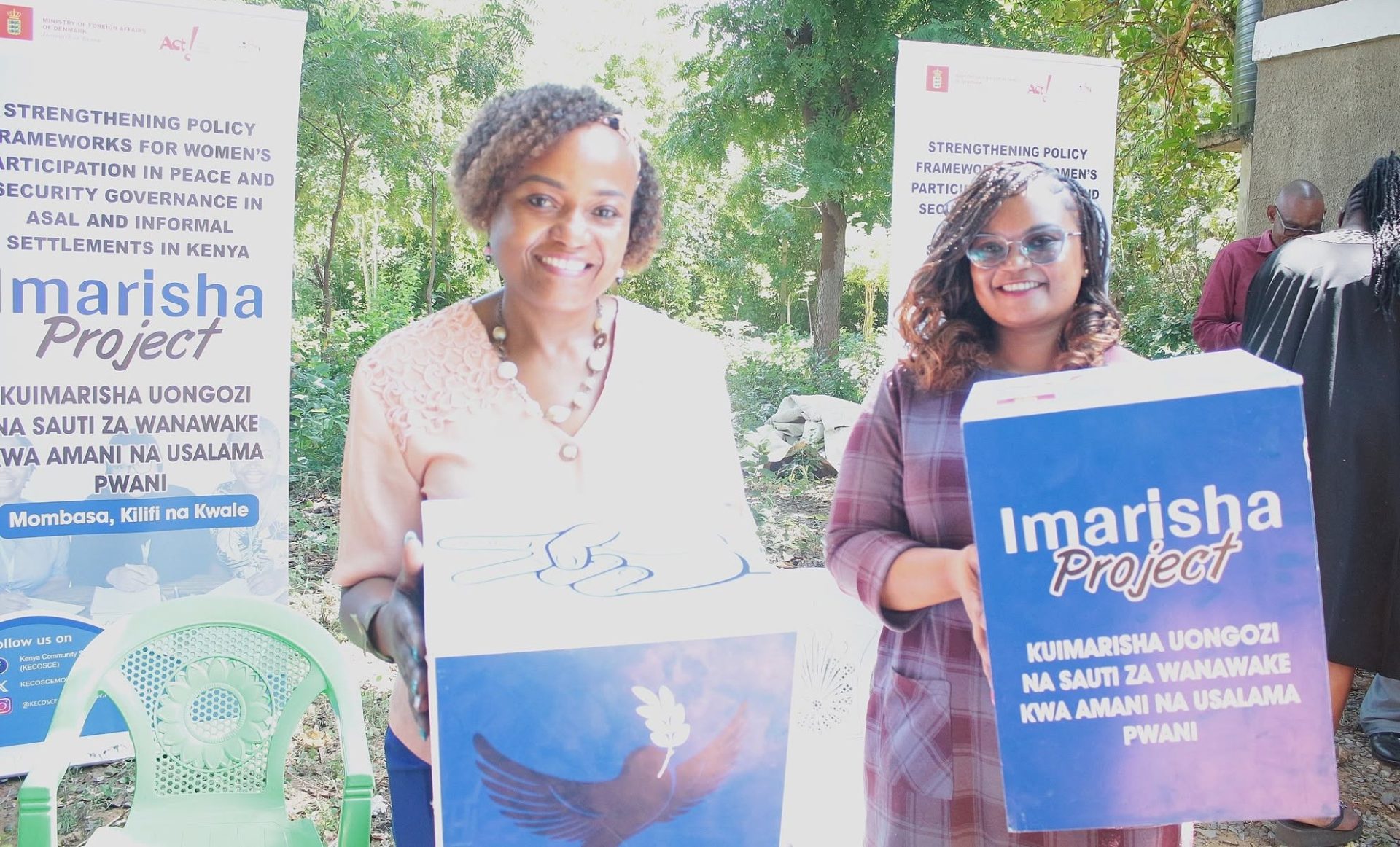
[Some of the participants during the launch of the Imarisha Project in Kilifi. The project aims at equipping women with required information and acceleration to prevent conflict through early warning systems. Photo/courtesy/July 26, 2026].
For Kenya, that may be the most important victory of all.
Kenya’s Women, Peace and Security Agenda
Kenya adopted its first National Action Plan on Women, Peace and Security in 2020 following United Nations Security Council Resolution 1325, which recognises the critical role of women in conflict prevention, peacebuilding and post-conflict recovery. The current framework, KNAP III (2025–2029), seeks to strengthen women’s participation in peace and governance while addressing gender-based violence and promoting inclusive decision-making at both national and county levels. Programmes such as IMARISHA reflect growing efforts to translate these national commitments into practical action within local communities.