

















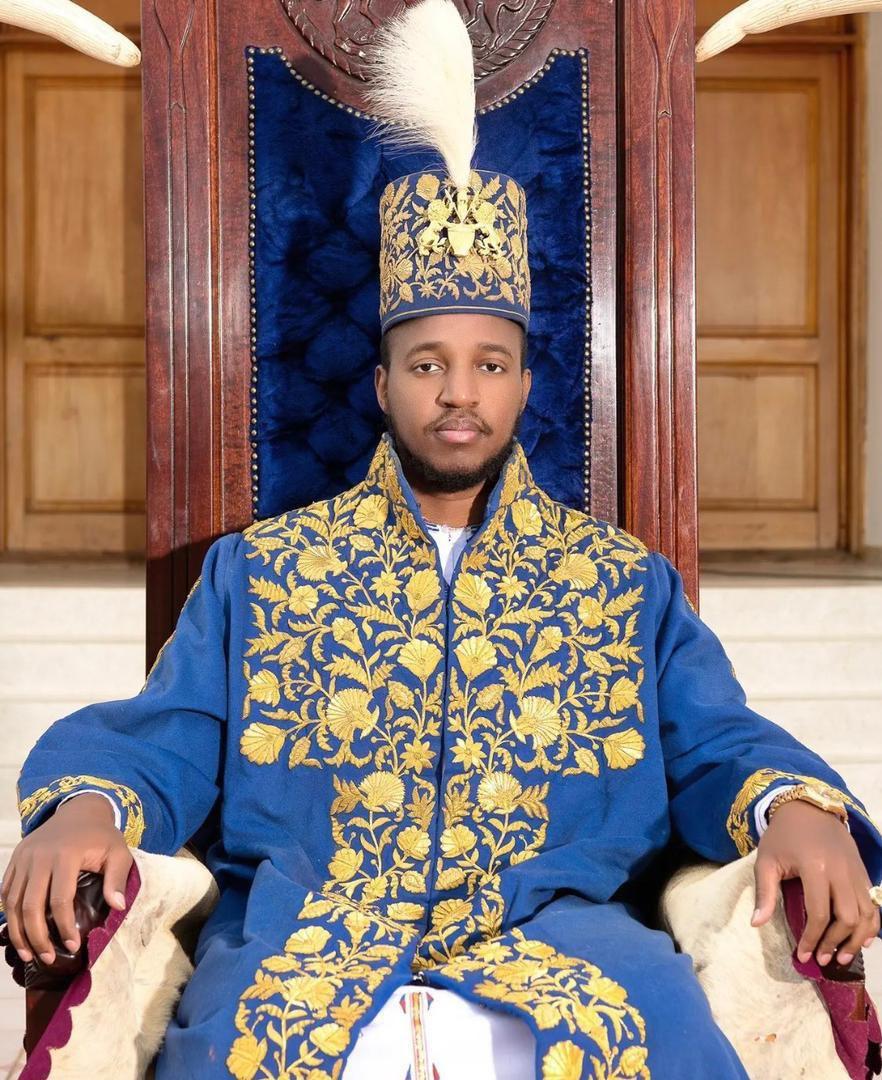
When Oyo Nyimba Kabamba Iguru Rukidi IV was proclaimed King of Tooro in September 1995, he was only three years old.
Too young to understand the weight of the crown placed on his head, the young prince suddenly became one of the most closely watched royals in Africa following the death of his father, King Patrick David Matthew Kaboyo Olimi III, in August that year.
His accession was extraordinary. At an age when most children were beginning nursery school and discovering the world through play, Oyo was already being introduced to the responsibilities and traditions of one of Uganda’s historic kingdoms.
Born on April 16, 1992, to King Olimi III and Queen Mother Best Kemigisa, Oyo inherited the Tooro throne after his father’s death. Because he was still a child, the affairs of the kingdom were managed through a regency involving senior members of the royal family and other traditional leaders.
His unusual circumstances soon attracted international attention. Oyo became widely recognised as the world’s youngest reigning monarch, a distinction that followed him throughout his childhood and teenage years.
But behind the public fascination with the young king was a child growing up between two very different worlds.
Oyo went to school, played football and video games and experienced many of the ordinary interests of young people his age. At the same time, he was expected to understand and eventually carry the traditions of the Omukama, the title used for the king of Tooro.
That balancing act became even more significant when he reached adulthood.
In April 2010, Oyo turned 18 and began assuming greater personal responsibility for the kingdom. His formal transition into adulthood was marked by his coronation and the traditional Empango ceremony in Fort Portal, signalling the end of the period in which the kingdom had largely been administered on his behalf.
The young monarch gradually began shaping a public identity of his own.
Rather than limiting his role to cultural and ceremonial functions, Oyo increasingly focused on issues affecting the wider community, particularly young people. His interests included education, healthcare, HIV/AIDS awareness, environmental conservation, tourism and economic development.
One of the clearest expressions of that vision came in 2021, when he launched Tooro Kingdom Vision 2045, a long-term development framework intended to guide the kingdom’s efforts in areas such as agriculture, tourism, health, environmental conservation and youth skills.
Through such initiatives, Oyo sought to position the traditional institution not simply as a custodian of history, but as an institution capable of contributing to the social and economic challenges facing contemporary Tooro.
His public profile also extended beyond Uganda, with the king becoming associated with initiatives promoting youth empowerment and raising awareness around HIV/AIDS and other social issues.
For a monarch who had spent much of his life in the public eye, however, his final chapter came unexpectedly.
Oyo died in the United States on August 27, 2026, aged 34, after receiving treatment for cancer. The news shocked many Ugandans, particularly because details about the seriousness of his illness had not been widely known.
His death brought the focus back to the institution he had led for more than three decades.
His remains were returned to Uganda on September 4 and received at Entebbe International Airport by President Yoweri Museveni, members of the royal family and government officials. The government has accorded the late king an official burial, with funeral ceremonies culminating at the Karambi Royal Tombs in Tooro on September 12.
The date carries particular significance. It falls exactly 31 years after Oyo ascended the throne as a three-year-old prince.
But even as Tooro mourns its late king, questions surrounding the future of the monarchy have emerged.
Kingdom officials have indicated that Oyo left behind a young male heir whose identity would be announced in accordance with Tooro traditions. However, the head of the Babiito royal clan has said the clan was not aware of a biological heir, creating uncertainty over the succession.
The issue has placed traditional leaders at the centre of an important transition, while religious leaders have urged calm and unity as the kingdom prepares for life after Oyo.
Whatever the outcome of the succession debate, Oyo’s reign will remain an unusual chapter in Uganda’s royal history.
He inherited the throne before he was old enough to understand what kingship meant. He grew up under international attention, entered adulthood carrying expectations that had been placed on him as a child, and eventually sought to use the institution he represented to address contemporary social and economic challenges.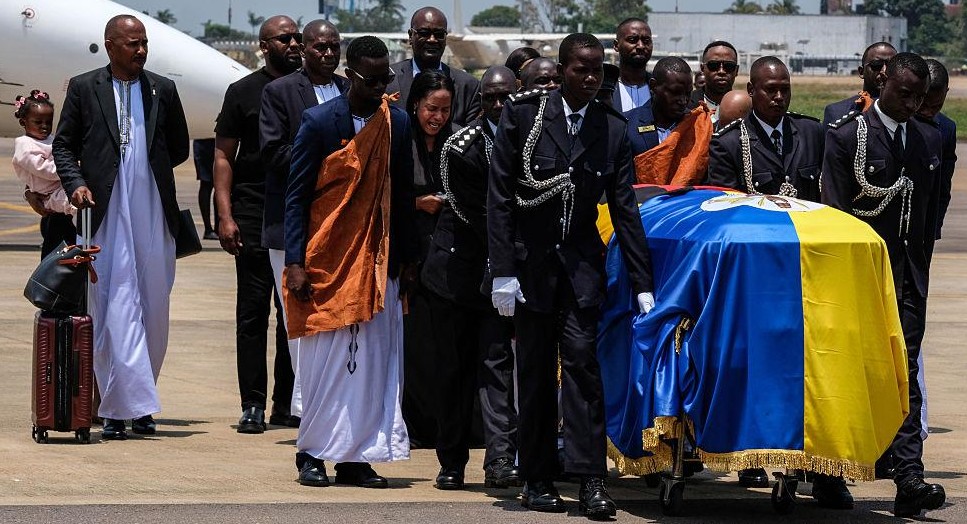
[The casket bearing the remains of Uganda’s youngest King Oyo Nyimba Kabamba Iguru Rukidi IV arrives at the Entebbe International Airport on September 4, 2026. Oyo’s body was received by Uganda’s President Yowero Kaguta Museveni. Photo/courtesy/Sept’ 5, 2026].
For nearly 31 years, Oyo’s life was inseparable from the story of Tooro.
He began as the little boy seated on a throne far bigger than him.
He died as an adult king whose reign had become part of the modern history and identity of the kingdom.
The crown has now passed into a period of uncertainty. But the institution Oyo inherited as a child—and spent his adult life trying to shape for a changing generation—remains at the heart of Tooro’s cultural identity.