
















WAJIR, County—For decades, the vast plains of Northern Kenya have carried the weight of a painful history — one marked by isolation, underdevelopment, insecurity and a lingering feeling among many residents that they were forgotten by the nation they helped build.
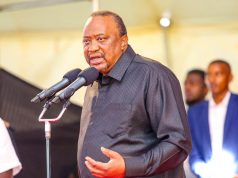
On Monday, during the 63rd Madaraka Day celebrations held in Wajir County, President William Ruto did something no Kenyan Head of State has publicly done before: he apologised.
Standing before thousands of residents in a region that has long occupied the margins of Kenya’s development story, the President acknowledged that past State policies had systematically disadvantaged Northern Kenya and denied its people opportunities enjoyed elsewhere in the country.
“That was wrong then, it is wrong now and it will forever remain wrong,” President Ruto said.
“On behalf of the people and the Republic of Kenya, I offer my sincere apology for the marginalisation you have endured over the years. Poleni sana ndugu zetu. It was never meant to be this way.”
The words drew applause inside Wajir Stadium. Yet beyond the symbolism, the apology reopened a difficult national conversation about historical injustice, regional inequality and whether Kenya is finally prepared to confront one of the most enduring chapters of its post-independence history.
A Legacy of Exclusion
At the centre of President Ruto’s apology was Cabinet Sessional Paper No. 10 of 1965, the influential policy document that guided Kenya’s economic planning in the years following independence.
The policy prioritised investment in areas considered to possess “high economic potential,” effectively directing public resources towards regions with favourable climatic conditions, established infrastructure and stronger economic prospects.
While the policy accelerated growth in some parts of the country, critics have long argued that it condemned arid and semi-arid regions, particularly Northern Kenya, to decades of neglect.
For many residents of Wajir, Mandera, Garissa and neighbouring counties, the consequences became painfully visible over the years.
Road networks remained poor. Access to clean water remained a constant struggle. Health facilities were scarce and under-resourced. Educational opportunities lagged behind national averages. Entire communities often travelled hundreds of kilometres to access services readily available elsewhere.
Successive governments acknowledged the disparities but progress remained slow.
Monday’s apology therefore carried significance not simply because it was delivered by the President, but because it represented an official recognition that the marginalisation was not accidental — it was the result of deliberate policy choices.
Why Wajir Matters
The decision to hold Madaraka Day celebrations in Wajir was itself symbolic.
Since independence, national celebrations have largely been hosted in major urban centres and regions that traditionally occupy the centre of Kenya’s political and economic landscape.
For the first time, Northern Kenya became the national stage.
The message was clear: a region once viewed as peripheral now occupies a central place in Kenya’s development agenda.
Political analysts note that hosting the celebrations in Wajir transformed what might have been a routine national event into a statement of inclusion.
The symbolism was powerful.
A region historically associated with drought, insecurity and neglect became the venue where the nation celebrated freedom, self-governance and unity.
Beyond Words: The Development Promise
Yet apologies alone cannot pave roads, build universities or deliver healthcare.
Recognising this reality, President Ruto accompanied his apology with a catalogue of development initiatives intended to demonstrate that the government’s commitment extends beyond rhetoric.
Among the flagship projects highlighted was the 750-kilometre Northern Kenya Gateway Corridor linking Isiolo, Wajir and Mandera.
The road project is expected to improve connectivity, unlock trade opportunities and integrate previously isolated communities into the national economy.
The President also announced a KSh5 billion County Livestock Investment Company targeting more than 350,000 pastoralists across 21 arid and semi-arid counties.
For communities whose livelihoods revolve around livestock, the initiative has the potential to transform pastoralism from a subsistence activity into a more profitable commercial enterprise.
In education, the government has expanded teacher training opportunities through institutions in Wajir, Kotulo and Mandera while pushing for the establishment of Wajir University.
Meanwhile, more than 800,000 residents across the region have reportedly registered under the Social Health Authority, with billions of shillings already paid to health facilities serving local communities.
Collectively, these projects represent an attempt to tackle the structural barriers that have slowed development in the region for generations.
The Identity Card Question
Perhaps one of the most significant policy changes highlighted by President Ruto was the removal of discriminatory vetting procedures that residents of Northern Kenya have long complained about.
For years, obtaining national identity cards and birth certificates often involved additional scrutiny not experienced in many other parts of the country.
Critics argued that the process effectively treated some Kenyan citizens as perpetual suspects in their own country.
By abolishing the controversial procedures earlier this year, the government sought to address a grievance that has fuelled resentment for decades.
For many young people, access to an identity card means access to education, employment, banking services and participation in national life.
Without it, opportunities remain out of reach.
The Real Test Ahead
While President Ruto’s apology may be remembered as a historic moment, its true significance will ultimately depend on what follows.
Northern Kenya has heard promises before.
Many residents will judge the speech not by the emotion it generated but by whether roads are completed, schools expanded, hospitals equipped and economic opportunities created.
History shows that development gaps are not erased through speeches alone.
They are closed through sustained investment, political commitment and accountability.
Still, Madaraka Day 2026 may come to be remembered as a turning point.
For perhaps the first time since independence, the State openly admitted that Northern Kenya was left behind.
The apology did not erase decades of neglect.
But for many residents, it offered something equally important — recognition.
And for communities that have spent generations seeking acknowledgment of their struggles, recognition is often where healing begins.