

























MOMBASA, Kenya—The controversy surrounding the Buxton Point Affordable Housing Project in Mombasa has evolved into a dispute that goes beyond construction disagreements, exposing difficult questions about public accountability, contractual obligations, the rights of former residents and the relationship between county authorities and private developers.
What was presented as an ambitious urban redevelopment initiative has increasingly become a subject of competing claims, legal proceedings and public confrontation, with the interests of the people who previously occupied the estate remaining central to the controversy.
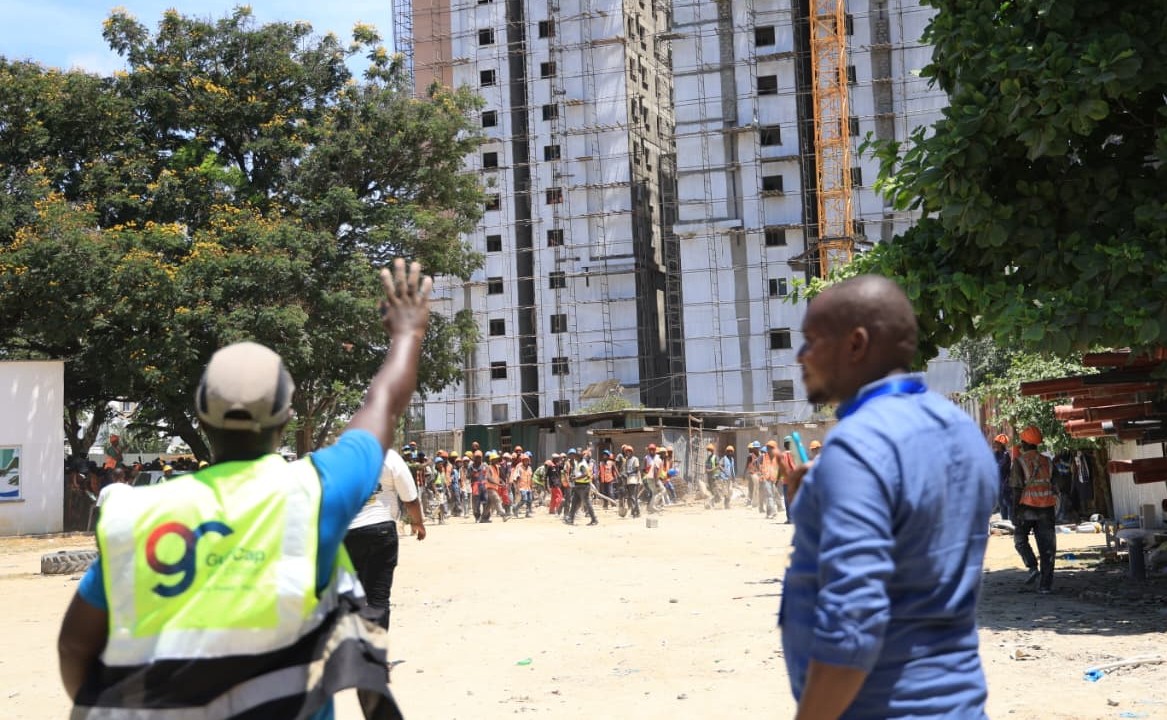
The recent confrontation involving Mombasa County officials and individuals at the development site, followed by court proceedings in which the developer failed to obtain urgent interim orders against the county’s enforcement notice, illustrates how deeply the disagreement has escalated.
However, the significance of the dispute cannot be understood by examining these two developments in isolation. Its roots lie in the obligations and expectations surrounding the redevelopment, particularly those concerning the former residents.
Former residents
At the heart of the controversy is the disputed 10 per cent entitlement, which has remained one of the most contentious aspects of the Buxton redevelopment.
Former residents have continued seeking clarity over the housing arrangements and commitments made during the redevelopment process, arguing that the benefits associated with the project have not been adequately addressed.
The concerns extend beyond residential units to include the demolition of an Early Childhood Development Education (ECDE) centre to accommodate the development and the outstanding provision of a social centre.
These are not minor administrative disagreements. They touch on the social obligations associated with redevelopment projects involving established communities.
When an urban housing project requires the displacement of existing residents, the success of the development should not be measured exclusively by the number of new apartments constructed or the commercial value of the completed property.
The treatment of affected households, fulfilment of agreed commitments and provision of community facilities should also form part of the assessment.
The central question, therefore, is whether the original expectations surrounding Buxton have been adequately translated into enforceable and fulfilled obligations.
Mombasa County’s intervention through its Lands department has brought the disagreement into sharper focus.
Lands CECM Mohammed Hussein maintained that the county had made three formal attempts to engage the developer over the outstanding concerns before issuing a directive suspending construction and related activities.
The subsequent confrontation during the attempted delivery of the official communication raised another serious concern: the ability of public officers to discharge their responsibilities without intimidation or obstruction.
Allegations that individuals linked to businessman and gubernatorial aspirant Suleiman Shahbal were involved in the confrontation also emerged. These claims require independent investigation and a response from the parties implicated.
Nevertheless, the broader issue concerns the relationship between the county government and the private developer.
A development involving public land, housing commitments and county interests requires clearly defined responsibilities and effective mechanisms for resolving disagreements.
Neither the county’s regulatory authority nor the developer’s commercial interests should operate outside the framework of the law and the applicable contractual arrangements.
The public deserves clarity on the obligations agreed upon, the extent of compliance and the reasons the outstanding concerns have persisted for so long.
Court battle
The legal developments have introduced another layer to the dispute.
On November 12, 2026, the Environment and Land Court in Mombasa declined to certify as urgent an application by Buxton Point Apartments Limited seeking interim orders to restrain the county government from enforcing its November 10 notice.
Justice Belinda Akoth Akello directed that the matter proceed through an inter partes process, allowing the respondents to present their positions.
Importantly, the court did not determine whether the county’s enforcement notice was valid or invalid. Neither did it make a final determination on the developer’s application.
Instead, the judge directed the parties to address a preliminary legal question concerning an appeal reportedly lodged before the County Physical and Land Use Planning Liaison Committee.
This raises an important question about the relationship between statutory dispute-resolution mechanisms and the Environment and Land Court.
The parties must establish whether the available administrative procedures have been exhausted before the court can intervene in the dispute.
The matter is scheduled for mention on January 20, 2027, when the court will consider compliance with its directions, preliminary issues and further steps towards determination.
The proceedings therefore leave the substantive disagreement unresolved.
They also demonstrate why the legal process must be allowed to take its course rather than interpreting the refusal of urgent interim orders as a final endorsement of either party’s position.
Beyond confrontation
The Buxton controversy has also acquired a political dimension, particularly because of the association between the developer and Suleiman Shahbal, who is among the political figures seeking the Mombasa gubernatorial seat.
With the 2027 General Election approaching, disagreements involving prominent political and business figures can easily become entangled in electoral calculations.
However, the existence of political interests does not automatically invalidate the county’s concerns, just as the county’s regulatory authority does not automatically establish that every action it takes is legally justified.
The distinction between legitimate regulatory enforcement, contractual disagreements and political competition must remain clear.
Otherwise, the interests of former residents risk being overshadowed by exchanges between powerful political and commercial actors.
Accountability
Ultimately, the Buxton Point controversy presents Mombasa with a wider question about how major urban redevelopment projects are negotiated, implemented and supervised.

[Mombasa Lands, Housing, Urban Development and Serikali mtaani CECM Mohammed Hussein Amadoh (centre in white) addressing security officials over chaos that marred Buxton Point affordable housing recently, in Mombasa. Photo/Ahmed Omar/Nov’ 16, 2026].
Public authorities must demonstrate transparency in agreements involving public land and community interests. Developers must account for their contractual obligations, while affected residents deserve clear information about commitments made to them and the mechanisms available to enforce those commitments.
The county government must also demonstrate that its enforcement decisions are supported by the law and the relevant contractual and planning provisions.
The forthcoming court proceedings may clarify important aspects of the legal disagreement, but the wider question of the former residents’ outstanding concerns requires more than courtroom arguments.
After years of disagreement, the people affected deserve a clear account of what was promised, what has been delivered and what remains outstanding.
Buxton Point should ultimately be judged not only by the buildings it produces, but also by whether the redevelopment has honoured the obligations and public interests that accompanied it.