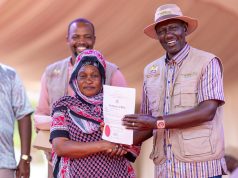























Kenya’s ambitious plan to plant 15 billion trees by 2032 is turning the spotlight on mangrove restoration along the Coast, where communities, conservationists and young volunteers are proving that the country’s fight against climate change depends as much on protecting ecosystems as it does on planting new trees.
At sunrise, the tide slips silently through the tangled roots of the mangrove forest.
Crabs disappear beneath the mud. Tiny fish weave through submerged roots searching for shelter before venturing into the Indian Ocean. Above them, birds settle briefly on branches that have stood for decades, surviving storms, rising tides and relentless human pressure.
To many people, mangroves are simply trees growing in salty water.
But to Kenya’s coastline, they are something far greater.
They are natural seawalls protecting villages from erosion. They are nurseries where marine life begins its journey. They are carbon vaults locking away greenhouse gases that fuel global warming. They are the foundation upon which thousands of fishermen, beekeepers, tourism operators and coastal families build their livelihoods.
Without healthy mangroves, the coast becomes more vulnerable—to climate change, collapsing fisheries and the gradual disappearance of one of Kenya’s richest ecosystems.
That reality is increasingly shaping Kenya’s environmental agenda.
As the government pursues its ambitious target of planting 15 billion trees by 2032, conservationists say success will depend not only on the number of seedlings planted but also on restoring ecosystems capable of surviving for generations.
Few ecosystems offer greater promise than mangrove forests.
It was against this backdrop that thousands of volunteers converged at the Jomvu Mangrove Ecosystem in Mombasa to participate in an ambitious effort to plant mangroves simultaneously, an exercise organised by the Kenya Forest Service and the Kenya Scouts Association to coincide with the International Day for the Conservation of Mangrove Ecosystems.
While the event attracted global attention through a Guinness World Record attempt, conservation experts insist the real achievement cannot be measured by certificates or headlines.
Its true significance lies in restoring one of Kenya’s most valuable natural defenses against climate change.
A National Dream Rooted in Local Communities
When President William Ruto unveiled Kenya’s plan to plant 15 billion trees by 2032, it was presented as one of the country’s most ambitious environmental restoration programmes since independence.
The campaign seeks to increase national tree cover, restore degraded landscapes, strengthen water catchments and contribute to global efforts to combat climate change.
Yet environmental scientists argue that planting trees is only the beginning.
The greater challenge lies in ensuring they survive.
Across the country, millions of seedlings have been planted during national campaigns. But without community ownership, long-term protection and sustainable management, many fail to mature.
That is why mangrove restoration is increasingly attracting national attention.
Unlike conventional tree-planting exercises, restoring mangroves requires communities that understand the rhythm of the tides, the fragile coastal ecosystem and the delicate relationship between forests and the sea.
In places such as Jomvu, conservation has become less about planting trees for a day and more about rebuilding an ecosystem that supports both people and nature.
Nature’s Quiet Climate Warrior
Scientists often describe mangroves as one of the most productive ecosystems on Earth.
Their complex root systems trap sediment, reduce coastal erosion and soften the impact of storm surges that are becoming more frequent as global temperatures rise.
Beneath the surface, those same roots create safe breeding grounds for fish, crabs and prawns that sustain Kenya’s coastal fisheries.
Above ground, mangroves absorb and store remarkable amounts of carbon, making them among the planet’s most effective natural tools for slowing climate change.
For coastal communities, protecting mangroves is therefore not simply an environmental obligation.
It is an economic necessity.
Healthy forests mean healthier fisheries, stronger tourism, improved beekeeping, greater biodiversity and more resilient livelihoods.
Communities Hold the Key
For the Kenya Forest Service and its partners, restoring mangroves is no longer simply about increasing the country’s tree cover. It is about rebuilding ecosystems that protect both people and nature.
The restoration drive has brought together government agencies, the Kenya Scouts Association, the M-PESA Foundation and local communities in an effort to ensure conservation extends beyond ceremonial tree-planting exercises.
By mobilising thousands of young people alongside residents, conservationists hope to nurture a generation that views environmental stewardship as a shared responsibility rather than the work of government alone.
The initiative also coincided with the International Day for the Conservation of Mangrove Ecosystems, celebrated annually on July 26, highlighting the growing global recognition of mangroves as critical natural defenses against climate change.
The challenge, however, extends far beyond planting seedlings.
Across Kenya, environmental experts say the real measure of success will be the survival of restored forests years after the planting campaigns have ended. That will depend on sustained community participation, stronger environmental awareness and continued investment in conservation programmes that provide tangible benefits to local people.
Communities that once depended on mangrove forests for timber are increasingly discovering alternative livelihoods through conservation. Along the Coast, initiatives such as beekeeping, ecotourism, sustainable fisheries and mangrove seedling enterprises are demonstrating that protecting nature can also strengthen household incomes.
That shift reflects a growing understanding that environmental conservation and economic development are not competing priorities but complementary goals.
For Kenya, the ambition of planting 15 billion trees by 2032 is about more than restoring degraded landscapes. It is an opportunity to strengthen climate resilience, safeguard biodiversity, secure water catchments and reinforce the ecosystems that sustain millions of livelihoods.
Mangrove forests may occupy only a small fraction of Kenya’s landscape, yet their ecological value extends far beyond the coastline. They protect communities from rising seas, support marine biodiversity and quietly absorb the carbon that fuels a warming planet.
As the last seedling is planted and the crowds disperse, the true test begins.
The future of Kenya’s mangroves will not be determined by a single day’s achievement or international recognition, but by the commitment of communities, institutions and future generations to protect what has been restored.

[Jomvu MP Badi Twalib (right) joining KFS officials, stakeholders and the public in a massive mangrove restoration excercise in commemoration of the International Day for the Conservation of Mangrove Ecosystems, observed every July 26. Photo/Ahmed Omar/July 26, 2026].
If those roots take hold, they will anchor far more than trees.
They will strengthen the resilience of Kenya’s coastline, sustain livelihoods and help secure a greener future for generations to come.
Kenya’s 15 Billion Tree Initiative
In December 2022, President William Ruto launched the national programme to plant 15 billion trees by 2032, positioning it as one of Kenya’s most ambitious environmental restoration efforts.
The initiative aims to increase national tree cover to at least 30 percent, restore degraded forests and water towers, enhance biodiversity and contribute to global climate action. While government agencies are leading the campaign, conservationists increasingly argue that its long-term success will depend on community ownership, private-sector partnerships and sustained ecosystem restoration rather than simply meeting annual planting targets.