















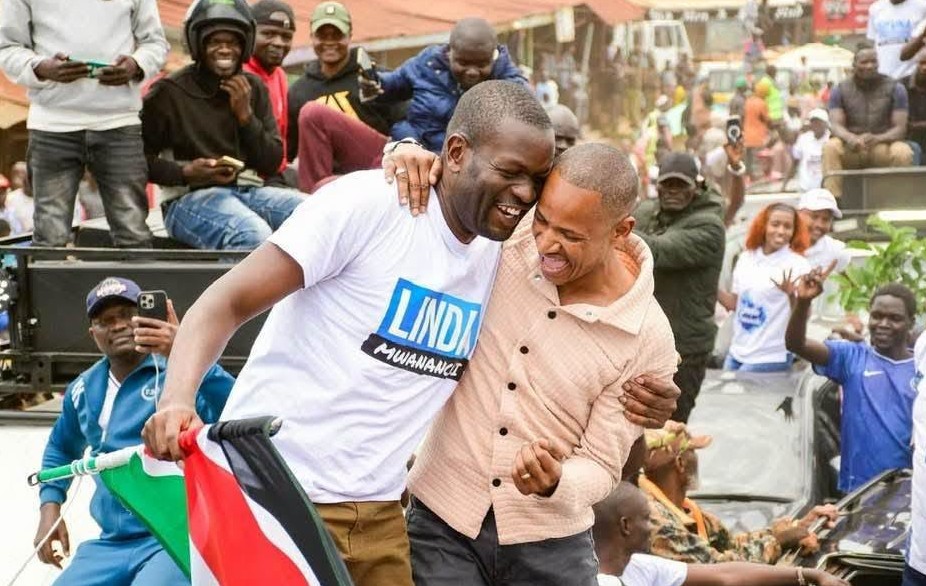
NAIROBI, Kenya—The political partnership between Nairobi Senator Edwin Sifuna and Embakasi East MP Babu Owino is facing growing questions after the two leaders offered seemingly different accounts of an agreement that was expected to shape the leadership of their emerging political outfit.
Sifuna has now broken his silence on the disagreements surrounding the Linda Mwananchi movement, disputing suggestions that he betrayed his colleagues by assuming both the position of party leader and presidential candidate.
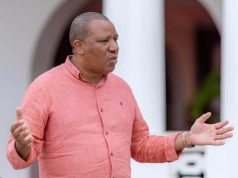
Speaking during an interview on Citizen Radio, the Nairobi Senator maintained that the decision to have him occupy the two positions was reached collectively after members agreed to bring their political parties together under one outfit.
His explanation, however, contrasts with an earlier account by Babu, who claimed that the original understanding was for Sifuna to become the presidential candidate while he assumed the position of party leader.
According to Babu, that arrangement subsequently changed, with some members arguing that the presidential candidate should also lead the party.
The differing accounts have exposed an underlying disagreement over power-sharing within a movement that had presented itself as a united political alternative, raising questions about whether personal ambitions and competing political interests could undermine its cohesion.
Sifuna traced the disagreements to discussions that began after the leaders were pushed out of ODM and started looking for a common political vehicle through which they could pursue their political ambitions.
“We were looking for a new house to be able to ensure that all of us could take shelter in there,” he said.
He disclosed that five leaders presented their political parties for consideration, including parties associated with Babu Owino, Caroli Omondi, Godfrey Osotsi, George Natembeya and Caleb Amisi.
A sub-committee comprising the party owners was subsequently established to submit the respective party documents for legal evaluation.
The lawyers were expected to examine the parties’ registration status, structures, ownership and compliance before recommending the most suitable vehicle for the group.
Sifuna said the leaders eventually settled on the Equitable Party as their common political vehicle.
He cited Caroli Omondi as one of those who abandoned his own political party to join the arrangement, adding that former Meru Governor Kawira Mwangaza and Mavoko MP Patrick Makau also became part of the political undertaking.
The group subsequently agreed on leadership positions, with Sifuna emerging as both party leader and presidential candidate.
Defending the arrangement, the Senator questioned why colleagues who considered him suitable to seek the country’s highest office would object to him leading the political party.
“Is it possible you trust me to be president of the country but you cannot trust me to be party leader of a party?” he posed.
He insisted that the decision was collective and was never intended to sideline Babu or any other member of the movement.
However, Sifuna acknowledged that some leaders later expressed reservations about abandoning their own political parties, arguing that retaining control of their grassroots political structures offered them strategic advantages.
He said the group accepted their position and allowed them to continue leading their respective parties.
“So we agreed. If you must be party leader so people enter your party, it’s okay. You can be party leader,” he explained.
The Senator also sought to downplay reports of deteriorating personal relationships with Babu, Siaya Governor James Orengo and Godfrey Osotsi.
He maintained that none of the leaders had personally confronted him over allegations that he had betrayed the group, dismissing much of the speculation circulating on social media.
“When you talk about rumors, especially these rumors I see on social media, Babu himself or Orengo or Caleb hasn’t said that Sifuna has wronged him anywhere,” he said.
Sifuna challenged those portraying the developments as a personal fallout to distinguish between disagreements over political arrangements and an actual breakdown in relationships among the leaders.
He also urged his colleagues to allow him to concentrate on building the Linda Mwananchi political outfit rather than repeatedly revisiting disagreements over leadership positions.
“The hope that Kenyans have placed in Linda Mwananchi does not allow me to have side shows,” he said.
He further revealed that the group had held more than 100 meetings in an effort to persuade its members to operate under a single political party.
Yet, the conflicting accounts surrounding the original power-sharing arrangement leave an important question hanging over the movement: Was the disagreement simply about choosing the most suitable political vehicle, or did the sharing of political power become the real test of its unity?
For Babu and Sifuna, the emerging differences could prove to be more consequential than a disagreement over party positions. With the 2027 political contest approaching, their ability to reconcile competing ambitions may determine whether Linda Mwananchi remains a united political project or becomes another casualty of disagreements over leadership and power.