






















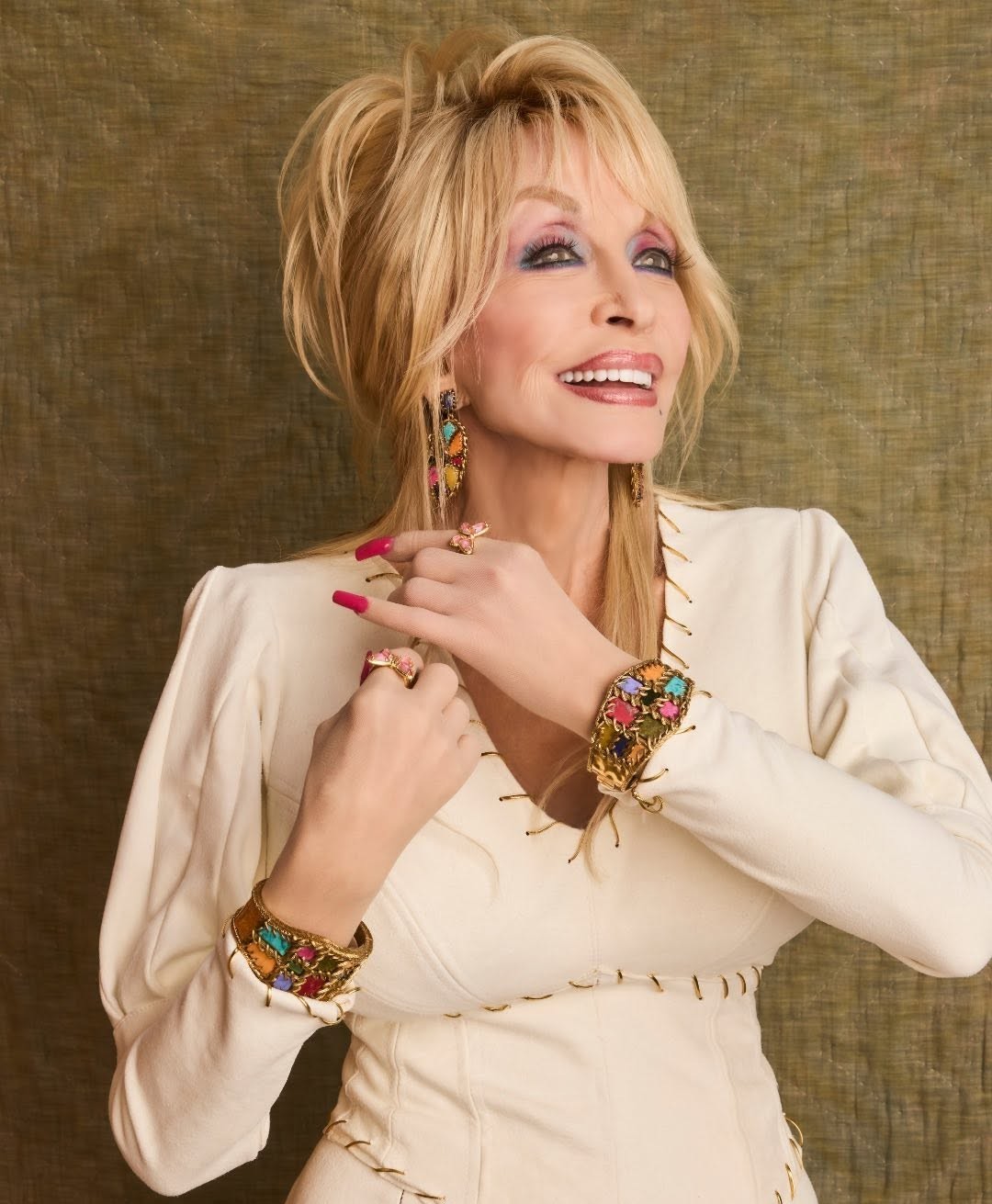
Dolly Parton, the legendary country music singer, songwriter, actress, entrepreneur and philanthropist whose distinctive voice and larger-than-life personality made her one of the world’s most recognisable entertainers, has died at the age of 80.
Parton’s death was announced by her family on Tuesday, August 25, 2026, bringing to an end a remarkable career that stretched across nearly six decades and produced some of the most enduring songs in popular music. Her death was also confirmed by major international news organisations, including Reuters and the Associated Press.
For generations of music lovers, Parton was far more than a country singer. She was a songwriter whose compositions crossed musical boundaries, an actress who became a Hollywood star, a shrewd businesswoman and a philanthropist whose charitable work touched millions of children.
She was born on January 19, 1946, in Locust Ridge, Tennessee, into a large family that grew up in poverty in the Great Smoky Mountains. Music became an important part of her childhood, and she began writing songs at a remarkably young age.
By the time she reached Nashville, Parton had already developed the songwriting talent that would eventually make her one of the most influential figures in American music.
Her breakthrough came through her association with country singer Porter Wagoner and his television programme. The partnership helped introduce her to a national audience before she embarked on a hugely successful solo career.
Then came the songs that would make her a global star.
Jolene, released in 1973, became one of her signature recordings, while 9 to 5 turned into both a major hit and the title song for the 1980 comedy film in which she starred alongside Jane Fonda and Lily Tomlin.
But perhaps no song is more closely associated with Parton’s extraordinary songwriting legacy than I Will Always Love You.
Parton originally wrote and recorded the song in the 1970s. Decades later, Whitney Houston’s powerful version for the 1992 film The Bodyguard transformed it into one of the biggest-selling singles in music history, introducing Parton’s songwriting to an entirely new generation.
Her success was not confined to music.
Parton became a major Hollywood presence, appearing in films including 9 to 5 and Steel Magnolias. Her ability to move comfortably between country music, pop culture and film helped make her a rare entertainer whose appeal extended far beyond one genre or one generation.
Behind the flamboyant costumes, unmistakable blonde hair and sharp sense of humour was also an astute businesswoman.
Parton became closely associated with Dollywood, the Tennessee theme park that bears her name and grew into one of the region’s major tourist attractions. The Country Music Hall of Fame credits her business vision and the park’s contribution to the economy of her home region.
But perhaps her most enduring legacy away from entertainment will be her commitment to children and education.
In 1995, she launched Dolly Parton’s Imagination Library, initially providing books to children in her home county. The programme eventually expanded far beyond Tennessee and now provides more than two million free books every month to children around the world, according to her official website.
Parton’s philanthropy was deeply connected to her own upbringing. Her father could not read or write, an experience that helped inspire her commitment to childhood literacy.
Her charitable work also extended to education, disaster relief and medical research, including a $1 million donation to Vanderbilt University Medical Center that supported research connected to the development of the Moderna COVID-19 vaccine.
Recognition followed her throughout her career.
Parton won numerous Grammy Awards, was inducted into the Country Music Hall of Fame and later the Rock & Roll Hall of Fame, and received the Jean Hersholt Humanitarian Award for her philanthropic work. AP described her legacy as spanning music, film, business and humanitarian causes.
Her final years were marked by both professional ambition and personal loss.
Parton’s husband of almost six decades, Carl Dean, died in March 2025. She later spoke openly about the grief of losing the man she had married in 1966, while continuing to work on music and other projects.
She also experienced health problems that forced her to postpone performances. In May 2026, she cancelled a planned Las Vegas residency after health issues, although she had previously reassured fans that she was not dying.
That earlier episode makes Tuesday’s news particularly poignant.
Parton had continued talking about future projects and remained determined to create and perform despite the setbacks. Her death therefore closes the story of an artist who spent virtually her entire adult life refusing to be confined by expectations.
Dolly Parton came from poverty but never allowed poverty to define her.
She became a country music superstar without abandoning the Appalachian roots that shaped her. She crossed successfully into pop music and Hollywood without losing her identity. She built a business empire without distancing herself from ordinary people. And she accumulated enormous fame while using much of her influence to promote literacy, education and opportunity for children.
Her songs will continue to be recorded. Her films will continue to be watched. Her books will continue to reach children. Dollywood will continue to welcome visitors.
And somewhere, every time the opening notes of Jolene or I Will Always Love You are heard, another generation will discover the extraordinary woman behind them.
Dolly Parton is gone.
But the voice, the songs and the generosity that made her the Queen of Country Music are likely to remain for generations.