
















KWALE, Kenya — Years of painstaking mangrove restoration along Kenya’s coastline are beginning to reshape not only the coastal environment but also the economic aspirations of local communities, with residents in Kwale County now calling for investment in ecotourism to ensure conservation delivers lasting livelihoods.
Communities in Mwamdudu village on the Tsunza Peninsula say the success of ongoing mangrove rehabilitation should mark the beginning of a new chapter focused on sustainable economic development rather than the end of restoration efforts.
Residents are urging both the national government and private investors to support the establishment of community-led ecotourism ventures that would create jobs, generate household incomes and provide long-term incentives to safeguard the fragile coastal ecosystem.
“We have rehabilitated this mangrove forest, but what comes next?” posed Juma Mashanga, Chairperson Mwatsumbo Community Forest Association,
“We need a sustainability strategy, and ecotourism presents one of the biggest opportunities for this community.”
Mashanga said the Tsunza Peninsula possesses enormous tourism potential owing to its rich biodiversity, extensive mangrove forests and scenic coastline. Yet despite its strategic location near the Standard Gauge Railway, the Port of Mombasa and the Dongo Kundu Special Economic Zone, the area has remained largely overlooked as a tourism destination.
According to the community, locally managed tourism enterprises—including homestays, guided mangrove tours, canoe excursions, birdwatching and cultural experiences—would enable residents to directly benefit from conservation while encouraging continued protection of the restored forests.
“We need to diversify economic opportunities if communities are to remain resilient while protecting these ecosystems,” Mashanga said.
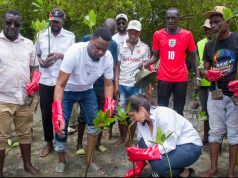
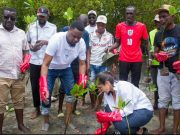
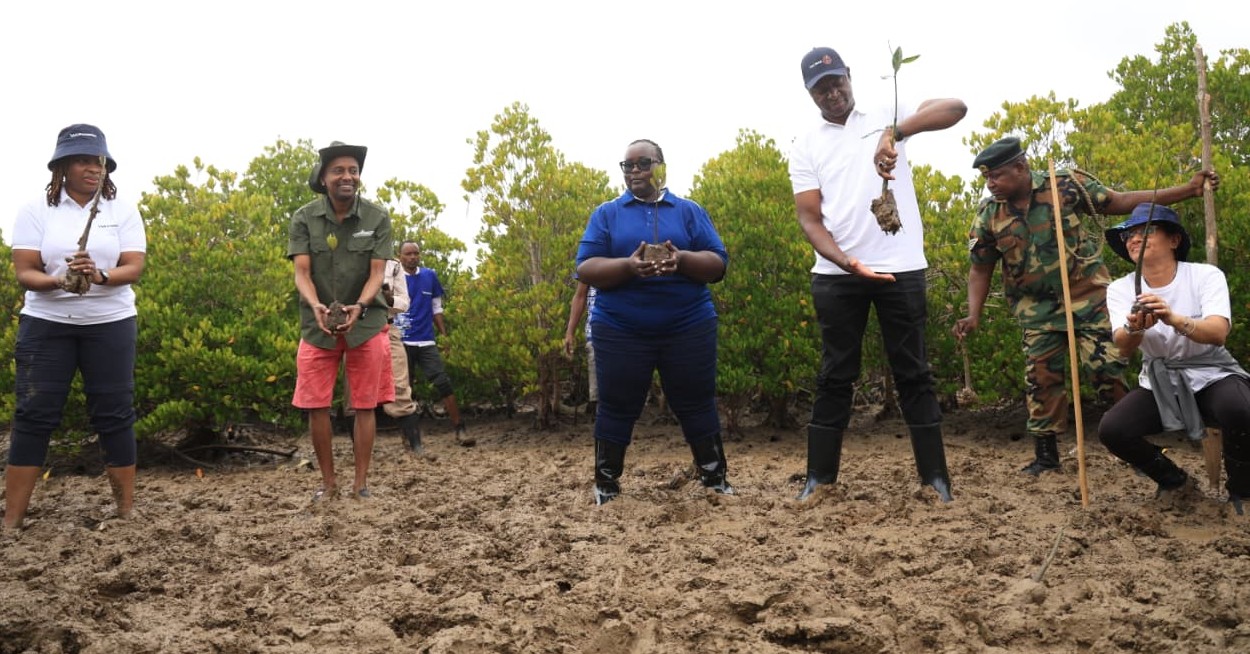
The appeal was made during the planting of 20,000 mangrove seedlings under a partnership bringing together the I&M Foundation, Furaha and Baraka Farms, the Kenya Forest Service (KFS) and local community groups.
Speaking during the exercise, I&M Bank Group East Africa Regional CEO, Kihara Maina said environmental conservation remains one of the foundation’s key investment pillars and contributes to Kenya’s ambitious national target of planting 15 billion trees by 2032.
He said the foundation has already achieved its annual target of planting one million trees, with nearly 30 per cent of its community investment directed towards environmental conservation initiatives.
“Tree planting creates an ecosystem that supports employment, and ecotourism is one of the ways conservation can continue generating livelihoods while protecting the environment,” Maina said.
He added that the foundation aims to positively impact more than 10 million people through investments in environmental conservation, education and community development.
Furaha and Baraka Farms Chief Executive Officer, Daniel Mwero, said collaboration with local communities has enabled the planting of nearly 250,000 trees every month across the Tsunza Peninsula.
Beyond restoring degraded forests, Mwero said the initiative has created employment opportunities as community members establish tree nurseries, collect propagules, nurture seedlings and participate in restoration activities.
“The impact is unimaginable,” Mwero said. “Community members raise the seedlings themselves, creating employment for thousands of residents while restoring degraded ecosystems.”
Mwero noted that the programme also contributes towards several United Nations Sustainable Development Goals, including climate action, biodiversity conservation, poverty reduction and sustainable livelihoods.
Kwale County Conservator Elvis Fondo said partnerships between government agencies, conservation organisations, private investors and local communities remain critical in reversing decades of mangrove degradation along Kenya’s coastline.
According to the Kenya Forest Service, Kwale County is home to approximately 8,500 hectares of mangrove forests, with more than 2,000 hectares found within the Tsunza Peninsula alone.
“This is our mandate,” Fondo said. “Achieving Kenya’s target of planting 15 billion trees over ten years requires every Kenyan to play their part by planting trees every year.”
Despite the encouraging progress, Mashanga acknowledged that restoration work in Mwamdudu remains physically demanding because volunteers often carry seedlings for nearly half an hour across muddy terrain before reaching degraded planting sites.
“It is not easy being green,” he remarked. “Conservation is a continuous process that requires commitment long after the tree-planting exercise has ended.”
Under a Forest Management Agreement signed with the Kenya Forest Service, the Mwatsumbo Community Forest Association committed to restoring 300 hectares of degraded mangrove forest between 2023 and 2028.
Mashanga said the association has already rehabilitated 288 hectares and expects to surpass its target before the end of this year.
He appealed for continued financial and technical support from development partners, noting that significant portions of degraded mangrove forests still require restoration.
Mangroves Critical to Kenya’s Blue Economy
Mangrove forests are among the world’s most productive coastal ecosystems, providing breeding grounds for fish and marine life, protecting shorelines from erosion and storm surges, filtering pollutants and storing significantly more carbon than many terrestrial forests.
Kenya has approximately 61,000 hectares of mangrove forests, with the largest concentrations found in Lamu, Kwale, Kilifi and Mombasa counties. However, decades of overharvesting, urban development, pollution and climate change have resulted in substantial degradation, prompting government agencies, conservation groups and local communities to intensify restoration efforts.
Environmental experts say successful mangrove restoration not only strengthens climate resilience but also supports Kenya’s Blue Economy agenda by enhancing fisheries, promoting nature-based tourism and creating sustainable income opportunities for coastal communities.
For residents of Mwamdudu, the restored mangrove forests now represent more than an environmental success story—they offer the promise of a greener and more inclusive local economy where conservation, tourism and community prosperity reinforce one another.