












What should be a day of cultural pride and unity for the Mijikenda community is once again threatening to become a stage for political rivalry.
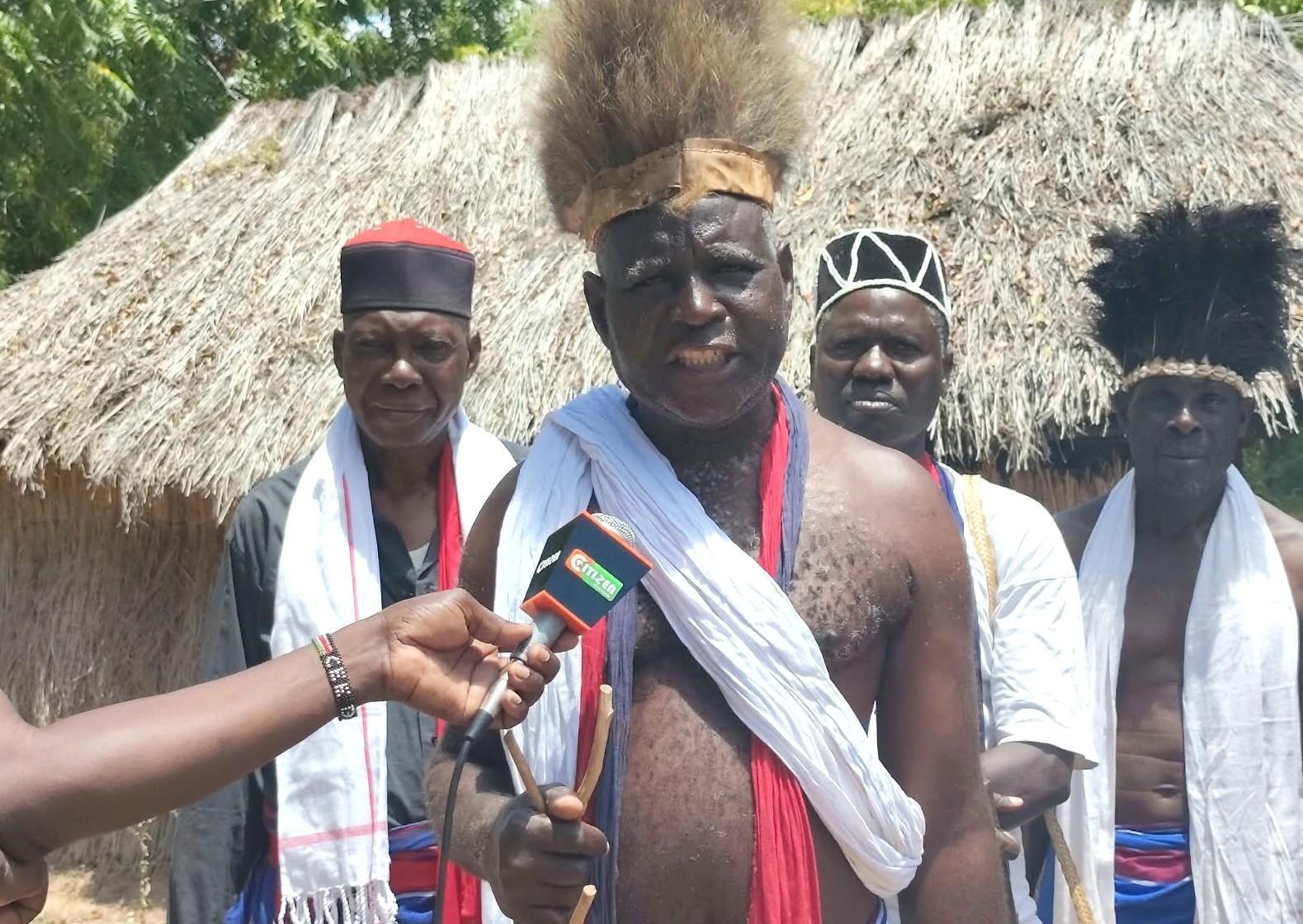
As the Mijikenda prepare to mark this year’s Chenda Chenda celebrations on Wednesday, September 9, Kaya elders are raising the alarm over what they describe as attempts by politicians to interfere with and take control of an event they say belongs to the community and its traditional custodians.
The elders, led by Mijikenda Kaya coordinator Tsuma Nzai, say preparations for this year’s celebrations have already exposed divisions, with competing plans emerging over where the festival should be held.
According to the elders, the cultural celebrations will take place at Kaya Kauma. They accuse politicians of planning a separate event at Pwani University, an arrangement they fear could split the community and undermine the traditional character of Chenda Chenda.
The dispute goes beyond a disagreement over venue.
At its heart is a much bigger question: Who owns Chenda Chenda, and who should have the final word over how the festival is organised?
A festival built around nine communities
Chenda Chenda is not simply an annual entertainment event.
The word “Chenda” refers to nine and reflects the nine Mijikenda communities — Giriama, Chonyi, Rabai, Ribe, Jibana, Kambe, Kauma, Duruma and Digo.
The festival is held every September 9 and has traditionally provided a platform for the communities to celebrate their shared identity, preserve cultural practices and pass knowledge from elders to younger generations.
The Mijikenda cultural tradition describes elders from the nine communities coming together to teach younger people about their cultures. Traditional attire, music, dance and other practices form part of that intergenerational transmission.
The 2024 celebrations were similarly described as bringing together the nine communities to celebrate cultural identity and unity, reflect on their past and make decisions about their future.
That history explains why Kaya elders are particularly sensitive to attempts to turn the festival into a political contest.
For them, Chenda Chenda is not simply another public event at which politicians can compete for visibility.
It is a cultural institution.
The elders now say politicians should keep away from the organisation of the celebrations and allow traditional custodians to determine how the event is conducted.
Tsuma Nzai, together with Kaya elders including Khamisi Juma, Shungu Thuva and Dama John, says the community has already witnessed divisions during preparations.
Their concern is that competing events could create the impression that there are competing centres of authority within the Mijikenda community.
That would be particularly damaging to an event whose central message is supposed to be unity.
And there is history behind their concern.
In 2023, as the festival was being prepared in Kwale, Nzai accused unnamed leaders of attempting to divide the Mijikenda by organising a parallel festival. The Kaya elders insisted that the official celebration would proceed in Kwale after the previous year’s event had been held in Kilifi.
The concern did not end there.
In 2024, the festival at Kayafungo in Kilifi became embroiled in rivalry between Governor Gideon Mung’aro and former Cabinet Secretary Aisha Jumwa. Religious leaders subsequently condemned the confrontation, saying an event intended to unite the Mijikenda had instead become dominated by politics.
That history gives today’s dispute a deeper meaning.
When culture meets politics
Politicians have never been completely absent from Chenda Chenda.
Indeed, the festival has frequently attracted governors, Cabinet secretaries, MPs and other political leaders.
In 2024, Senate Speaker Amason Kingi and several other political leaders attended the celebrations in Kilifi. The event was jointly organised by the Kilifi county government and former CS Aisha Jumwa and featured traditional music, dance and cultural exhibitions.
There have also been occasions when Kaya elders themselves have used the festival to engage political leaders.
In 2021, for example, Mijikenda elders used the Chenda Chenda gathering to call on Coast politicians to support a regional political agenda ahead of the 2022 elections.
This complicates the current argument.
The question is not whether politicians should ever attend Chenda Chenda.
They clearly have.
The more difficult question is whether political participation should extend to determining the identity, organisation and direction of the cultural event itself.
That is the line the Kaya elders now appear determined to draw.
The struggle over cultural authority
The dispute also comes at a time when questions over who speaks for the Mijikenda community have become increasingly contentious.
In July, Kaya elders from the nine sacred Kayas rejected former Cabinet minister Chirau Mwakwere’s claim to be the Mijikenda spokesperson.
Mwakwere, however, maintained that he had been crowned Mijikenda spokesperson during the first Chenda Chenda Festival on September 9, 2009.
The disagreement illustrates just how much symbolic importance the festival has acquired.
Chenda Chenda is not merely about songs, dances and traditional food.
It has become a significant gathering point for questions of Mijikenda identity, leadership, representation and the community’s future.
That makes control of the festival potentially influential — and therefore vulnerable to political competition.
Who speaks for Chenda Chenda?
The current dispute therefore raises a fundamental question that the Mijikenda community may eventually have to confront openly.
Should Chenda Chenda be organised primarily by Kaya elders and cultural custodians, with political leaders participating as guests and supporters?
Or should elected governments and political leaders have a larger role because the festival has grown into a major public cultural event?
There is no question that county governments have an important role in supporting culture, heritage and tourism.
But support is different from ownership.
Kilifi County’s recent consultations with representatives of the nine Kaya communities described Chenda Chenda as a collectively owned cultural event and emphasised the need for it to remain deeply rooted in Mijikenda culture and heritage.
That distinction could prove crucial in resolving the current dispute.
A festival at risk of losing its meaning?
There is a danger that the repeated political contests surrounding Chenda Chenda could eventually overshadow the very culture the festival was created to protect.
If the nine communities are presented with competing celebrations, competing organisers and competing claims to legitimacy, the festival risks becoming another arena for political mobilisation.
That would be an unfortunate irony.
An event created to bring together nine communities could become a source of division among them.
The Mijikenda have a rich cultural heritage that includes the sacred Kaya forests, councils of elders, traditional knowledge, ceremonies and systems of community governance. UNESCO recognises traditions and practices associated with the Kayas as intangible cultural heritage requiring safeguarding.
Chenda Chenda is one of the occasions through which that heritage is publicly celebrated and transmitted.
It therefore carries responsibilities beyond politics.
What happens tomorrow?
As the Mijikenda gather on September 9, the most important question may not be which politician appears on the podium.
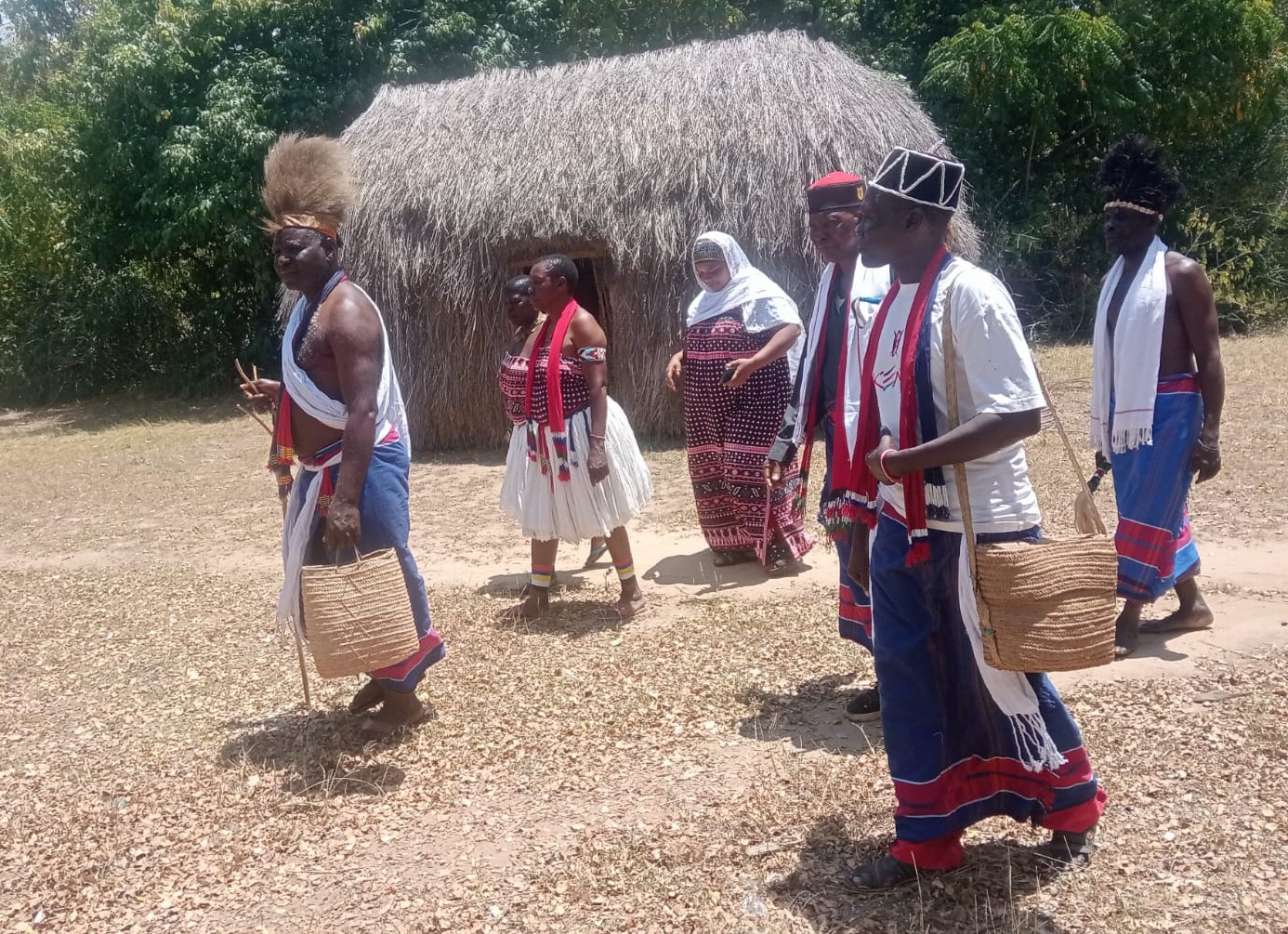
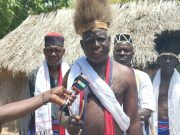
[Some of the Mijikenda elders arriving at Kaya Kauma. Photo/Ahmed Omar/Sept’ 8, 2026].
It may be whether the community can reclaim the festival’s original purpose — bringing together the nine communities, celebrating their heritage and ensuring that cultural knowledge survives from one generation to the next.
The Kaya elders’ message is clear: politicians are welcome as members of the community, but they should not determine the cultural direction of Chenda Chenda.
Whether that position will prevail will depend on what happens at Kaya Kauma, Pwani University and elsewhere tomorrow.
But one thing is already clear.
The battle over Chenda Chenda is no longer simply about a festival. It is a battle over culture, identity, authority and who has the right to speak for the Mijikenda.