




















NAIROBI, Kenya—Aviation workers under the Kenya Aviation Workers’ Union (KAWU) have called off their strike after reaching a return-to-work agreement with the government, paving the way for the resumption of normal operations at airports across the country.
KAWU signed the agreement with the Ministry of Transport on Tuesday morning, ending the industrial action that had disrupted airport operations since Sunday. The union subsequently directed its affected members to resume normal duties immediately following the signing of the agreement.
The deal provides for the immediate commencement of Collective Bargaining Agreement (CBA) negotiations between KAWU and the Kenya Civil Aviation Authority (KCAA), with the authority committing to honour and implement the outcome of the negotiations. Salary negotiations will be conducted in accordance with guidelines issued by the Salaries and Remuneration Commission (SRC) on September 1, 2026.
The agreement also addresses the union’s demand for recognition by Jambojet Limited, although the matter will now await determination by the court.
“In consideration of the foregoing agreements and commitments, KAWU calls off the industrial action and advises all its affected members to resume normal duties immediately upon execution of this Return-to-Work Agreement,” the parties said in the agreement signed by KAWU, the Ministry of Transport, KCAA, Kenya Airports Authority (KAA) and Jambojet.
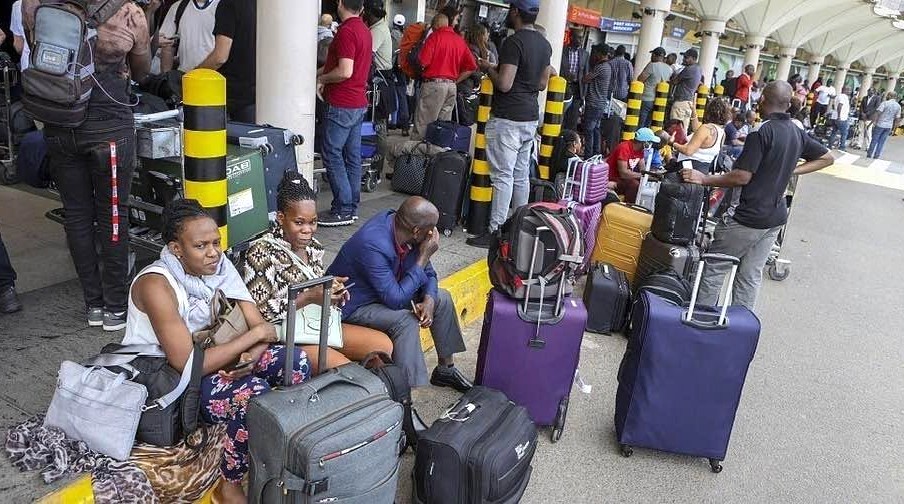
The strike had meanwhile left thousands of passengers stranded or facing uncertainty at airports in different parts of the country, with flight delays eventually turning into cancellations as airlines struggled to operate without sufficient aviation workers.
At Jomo Kenyatta International Airport (JKIA), the country’s main aviation hub, travellers faced significant disruptions to both domestic and international journeys, with some passengers forced to wait for several hours as airlines attempted to reorganise their schedules.
The disruption was also felt at Moi International Airport in Changamwe, Mombasa, where passengers travelling to and from the Coast were caught up in delays and cancellations. Malindi Airport was also among the facilities affected, disrupting travellers relying on flights connecting the Coast with Nairobi and other destinations.
The disruptions were particularly costly for passengers who had connecting flights, hotel bookings, business appointments and other commitments at their destinations. Some travellers were forced to make additional arrangements for accommodation, transport and meals as they waited for their flights, while others had to reorganise their travel plans altogether.
Travel agents and businesses that depend on predictable flight schedules were also caught up in the disruption, with cancelled and delayed flights affecting bookings and forcing agents to spend additional time assisting stranded or rescheduled passengers.
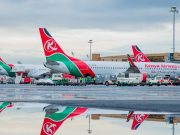
The Kenya Airports Authority (KAA) had on Monday warned passengers to expect delays in their scheduled journeys as the industrial action continued to affect airport operations. Kenya Airways, the national carrier, also notified passengers of significant disruption, with some flight schedules delayed by up to six hours.
The strike triggered growing concern over the wider economic impact of the disruption, coming at a time when thousands of passengers were travelling for business, tourism and other engagements.
The government was forced to intervene as the dispute threatened to prolong the disruption. On Monday evening, Foreign Affairs Cabinet Secretary Musalia Mudavadi apologised to passengers affected by the disruption at JKIA and acknowledged the impact on travellers, airlines and businesses.
Mudavadi said the government was engaging all parties involved in the dispute in an effort to resolve the impasse and restore airport operations safely and in an orderly manner.
The strike was called after aviation workers raised grievances involving KCAA, KAA and Jambojet, including demands relating to collective bargaining and union recognition.
With the return-to-work agreement now signed, workers are expected to resume duty and allow airport operations to return to normal. However, passengers may continue experiencing delays as airlines and airport authorities work to clear the backlog created by the strike and reorganise flight schedules.
The end of the strike brings relief to passengers and the aviation industry, but the disruption has exposed the significant economic and social consequences of prolonged industrial action at Kenya’s airports, which serve as critical gateways for tourism, trade, business and domestic travel.