






















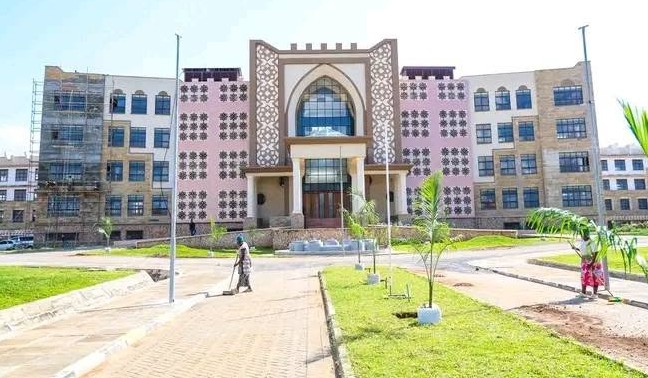
For years, motorists travelling along the Mombasa-Malindi highway would catch a glimpse of an imposing modern campus overlooking the Indian Ocean at Vipingo in Kilifi County. Behind its impressive buildings lay a question many residents repeatedly asked: When will Ronald Ngala Utalii College finally open its doors?
The answer has taken more than a decade.
Now, with the institution nearing completion and expected to admit its first cohort of about 1,000 students in September, one of Kenya’s longest-awaited tourism education projects is finally preparing to fulfil the promise that inspired its conception years ago.
The journey to this moment has been anything but straightforward. It has been marked by changing governments, shifting priorities, construction delays and years of uncertainty that turned what was once envisioned as a flagship institution into a project many feared would never be completed.
Yet behind the delays lies a bigger story—one about Kenya’s tourism ambitions, the importance of investing in skills development and the Coast region’s long-standing quest to become not only the country’s tourism hub but also its centre of excellence for hospitality training.
A Vision Born During Tourism’s Golden Years
The idea of establishing Ronald Ngala Utalii College gathered momentum during the tenure of former Tourism Minister Najib Balala, a period when Kenya was pursuing major investments aimed at strengthening the tourism sector beyond marketing destinations.
The thinking was straightforward. While the Coast remained Kenya’s leading tourism destination, many aspiring hospitality professionals still had to travel hundreds of kilometres to Nairobi to enroll at Kenya Utalii College, the country’s premier hospitality training institution.
Establishing a modern satellite campus at the Coast would bring specialised training closer to one of Kenya’s busiest tourism regions while creating a steady pipeline of skilled workers for hotels, restaurants, resorts and the wider hospitality industry.
A Dream Delayed
If the vision behind Ronald Ngala Utalii College was clear, its implementation proved far more complicated.
Over the years, the project became one of the Coast’s most talked-about public investments—not because of what it had achieved, but because of how long it remained unfinished. Every few years, fresh promises emerged that the institution would soon open, only for construction to continue with little visible progress.
For residents of Kilifi and the wider Coast region, the impressive buildings overlooking Vipingo gradually became a reminder of the gap that can exist between government ambition and project delivery.
Although successive administrations reaffirmed their commitment to completing the institution, progress was slowed by a combination of funding constraints, procurement processes, administrative transitions and changing implementation priorities. As deadlines shifted, public confidence in the project also began to fade.
Yet the need for the college never disappeared.
During those years of delay, Kenya’s tourism industry continued to evolve. International hotel brands expanded along the Coast, conference tourism gained momentum, cruise tourism began making a gradual return to Mombasa, while investors increasingly demanded a workforce equipped with modern hospitality skills.
Ironically, many young people living only a few kilometres from the unfinished campus still had to travel to Nairobi or seek opportunities elsewhere to access specialised hospitality training.
The longer construction stalled, the greater the gap between the industry’s growing demand for skilled professionals and the region’s ability to train them locally.
A New Chapter for the Coast
Today, the conversation surrounding Ronald Ngala Utalii College is no longer about stalled construction or missed deadlines. Instead, attention is turning to the opportunities the institution is expected to unlock for thousands of young Kenyans seeking careers in one of the country’s most important economic sectors.
As a satellite campus of Kenya Utalii College, the institution is expected to offer specialised training in hospitality, tourism management, food production, accommodation services and other industry-focused programmes that are increasingly in demand as Kenya’s tourism sector continues to recover and expand.
Its strategic location in Vipingo also places students at the heart of the country’s tourism corridor, where they will have access to some of Kenya’s leading hotels, beach resorts, restaurants and tourism enterprises for practical training and industry exposure.
Beyond education, the college is expected to stimulate economic activity in Kilifi County through job creation, increased demand for local goods and services, and new investment opportunities as businesses emerge to support the growing student population.
For a region whose economy is closely intertwined with tourism, the institution represents more than a centre of learning. It is an investment in human capital and a recognition that the future of Kenya’s tourism industry will depend as much on skilled professionals as it does on world-class destinations.
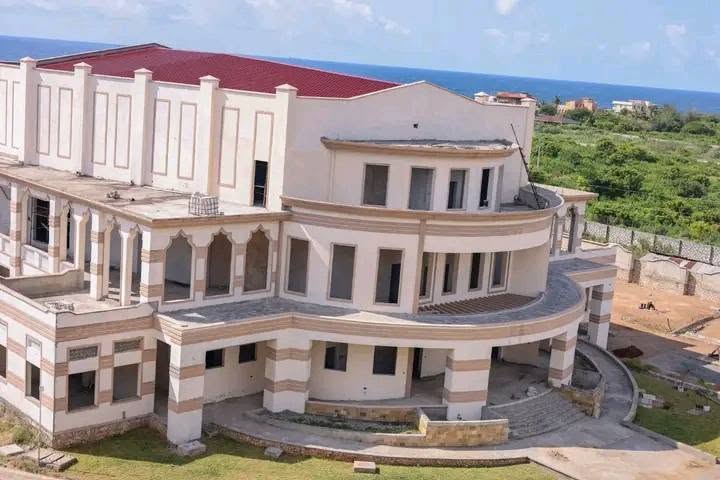
[The almost finished Ronald Ngala Utalii College in Vipingo, Kilifi County. It is set to admit its first 1000 students in September, 2026. Photo/courtesy/July 31, 2026].
After years of waiting, Ronald Ngala Utalii College is finally preparing to welcome its first students. For many along the Coast, its opening is more than the completion of a long-delayed public project—it is the fulfilment of a vision first conceived more than a decade ago to bring world-class hospitality training closer to the region that remains the heartbeat of Kenya’s tourism industry.
Whether the institution ultimately delivers on that promise will depend not only on modern infrastructure, but also on sustained investment in quality training, strong industry partnerships and a commitment to producing graduates capable of competing in an increasingly global hospitality market.
For now, however, the opening of Ronald Ngala Utalii College marks the beginning of a new chapter—one that offers renewed hope that long-delayed public investments can still deliver lasting value when they are finally brought to completion.