






















Residents of Mombasa, Kwale, Kilifi and Taita Taveta counties continue to face a worsening water crisis, with current supplies meeting only 42 percent of the region’s daily demand, the Senate Committee on Lands, Environment and Natural Resources has been told.
Appearing before the committee, Water, Sanitation and Irrigation Cabinet Secretary Eng. Eric Murithi Mugaa revealed that the four counties require approximately 512,000 cubic metres of water daily but currently receive only 185,000 cubic metres, leaving a deficit of 327,000 cubic metres every day.
The disclosure came during a session convened to address persistent water shortages affecting thousands of households, businesses and institutions across the Coast region.
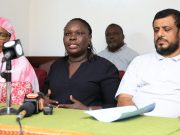
The committee, chaired by Mombasa Senator Mohamed Faki, expressed concern over the continued shortage of clean and reliable water, warning that delays in major infrastructure projects could further worsen the situation as demand continues to rise.
According to the Cabinet Secretary, the government has implemented a series of short-term measures aimed at easing the crisis, including water rationing programmes, emergency repairs on major transmission pipelines, reduction of non-revenue water losses through infrastructure upgrades and tighter regulation of water vendors to protect consumers from exploitation.
Despite these interventions, existing water sources including Mzima Springs, Baricho Water Works, Marere Springs and Tiwi Boreholes remain unable to meet the growing demand from the rapidly expanding population in the region.
The government is banking on the completion of the Mwache Dam Project to significantly improve water availability in Mombasa and Kwale counties. Eng. Mugaa told senators that the project is currently 86 percent complete, with civil works expected to be finalised by September 2026 and water impoundment scheduled to begin the following month.
Once operational, the dam is expected to provide an additional 186,000 cubic metres of water per day, substantially reducing the current deficit and improving water security for residents and businesses.
The Cabinet Secretary also provided an update on the long-awaited Mzima II Pipeline Project, stating that it is currently under review by the National Treasury’s Public-Private Partnership Directorate following the submission and evaluation of a privately initiated proposal.
He said the Public-Private Partnership model remains a viable option for accelerating implementation of the project, which is expected to enhance water supply across the Coast region.
Beyond the ongoing projects, the government has outlined a broader strategy to address chronic water shortages through the completion of the Mwache Dam Water Supply System, construction of the Baricho II Pipeline, development of the Garsen-Lamu Water Supply Project and expansion of key water intake facilities.
Other measures under consideration include rehabilitation of aging distribution networks and investment in climate-resilient technologies such as rainwater harvesting, managed aquifer recharge and solar-powered desalination systems.
The Senate committee emphasized the need for urgent action to fast-track critical water infrastructure projects, noting that reliable access to clean water remains one of the most pressing challenges facing communities in the Coast region.
The latest revelations come amid growing concern from residents and leaders over recurring water shortages that have for years affected households, schools, healthcare facilities and businesses, particularly in urban centres such as Mombasa where demand continues to outstrip available supply.
With major projects still under implementation, thousands of residents across the four counties are expected to continue relying on rationing programmes and alternative water sources as the government works to bridge the widening gap between supply and demand.