

















![[Kenya's Interior CS Kipchumba Murkomen. Kenya is seeking stronger partnership with China and East Africa to combat terrorism. Photo/courtesy/Sept' 10, 2026].](https://jambonewsnetwork.com/wp-content/uploads/2026/09/MURKOMEN-180x135.jpg "Kenya seeks stronger China, E. Africa partnership against terrorism")


How a Kilifi community initiative is using public murals to promote healthier eating, traditional foods and environmental sustainability.
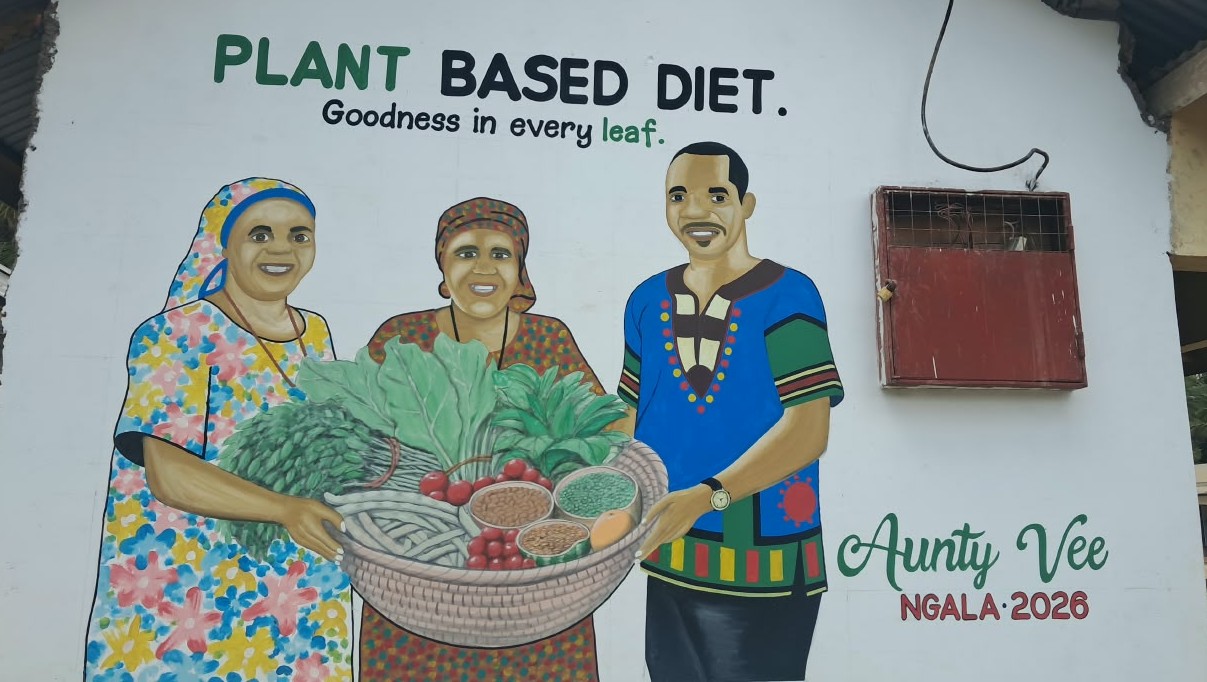
At a busy shopping centre in Kilifi County, an ordinary wall has been given an unusual job: talking to the public about what they eat.
The colourful mural at Kijiwetanga Shopping Center is part of an initiative by Torch Initiatives CBO to promote plant-based eating, environmental sustainability and renewed interest in traditional foods.
Led by Virginia Ruguru, popularly known as Aunty Vee, the organisation is taking its message beyond workshops and formal campaigns and placing it where people live, shop and interact.
The idea is simple. If health messages are repeatedly encountered in familiar public spaces, they can start conversations, challenge assumptions and, eventually, influence behaviour.
For a community walking past the mural every day, nutrition education becomes less of a special event and more of an everyday experience.
That approach is also being tested at Sal Achievers School in Malindi, where a similar mural introduces children to healthy eating, locally available foods, sustainability and compassion.
The focus on children is deliberate. Food habits often begin at home and take shape early in life. By introducing the conversation in schools, Torch Initiatives hopes to influence how young people understand the relationship between what is on their plate, their health and the environment around them.
Aunty Vee says part of the motivation is concern that younger generations are becoming increasingly disconnected from foods traditionally consumed by local communities.
“Our children are now slowly drifting from the food that was traditionally ours and there is an interconnection between food, environment.”
She argues that food should not be viewed only as something consumed to satisfy hunger, but as part of a wider relationship involving health, culture, the environment and community wellbeing.
That argument gives the murals a significance beyond their artistic appeal.
They are being used as permanent communication platforms—visible long after a launch event has ended and accessible to people who may never attend a nutrition seminar.
At Sal Achievers School, head teacher Amos Baya says the visual approach has helped students remember the foods being promoted and generated interest in having some of them at home.
The experiment raises a broader question for public-health advocates: how can communities communicate health information in ways that people encounter naturally in their daily lives?
New initiative
Traditional health campaigns often depend on meetings, posters, social media or organised outreach. Torch Initiatives is adding another tool—public art.
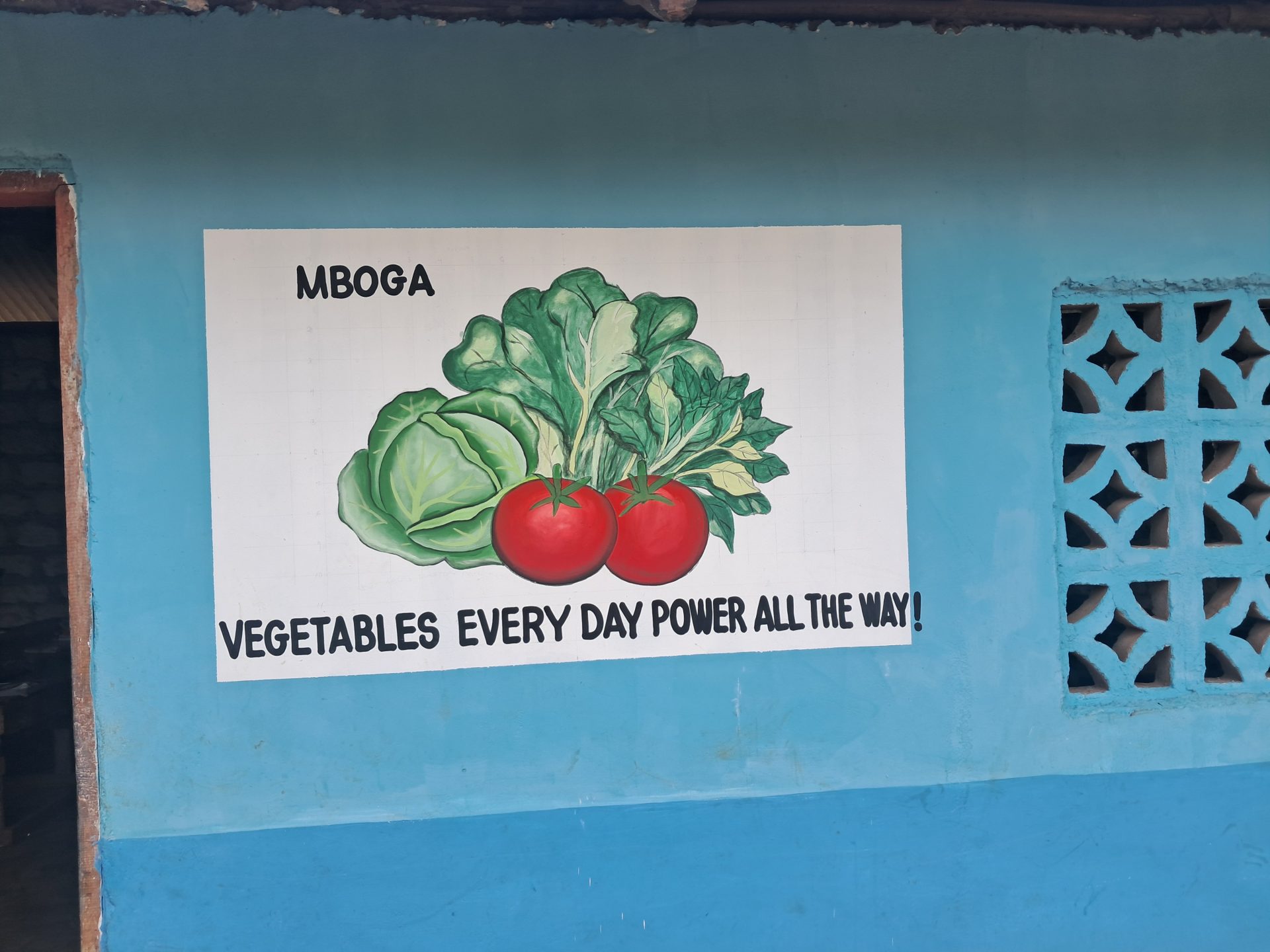
[A painting on the wall of a classromm in Malindi, encouraging pupils and the larger Kilifi County communities to consume vegetables in a bid to protect their health. Photo/Ali Mwalimu/Sept’ 26, 2026].
The organisation says the concept is expected to expand, with plans to replicate the shopping-centre murals in other parts of Kilifi County and extend the school programme to 20 additional schools.
If implemented, the expansion could create a network of public spaces where conversations about nutrition, food culture and sustainability become part of the everyday environment.
But the initiative is also part of a larger conversation taking place across Africa.
The fourth edition of the Thrive Africa Vegan Restaurant Week is running from September 21 to 27, bringing together organisations, restaurants, chefs and food businesses across 17 African countries, including Kenya. The campaign is designed to increase access to plant-based food and make African plant-based cuisine more visible and relevant to consumers.
Thrive Africa describes the campaign as an Africa-wide effort to promote plant-based eating, while its organisers link food choices with healthier and more sustainable food systems.
Torch Initiatives is among the organisations participating in this wider movement. Its work in Kenya includes school and community outreach focused on plant-based nutrition, sustainability and local food traditions.
For Kilifi, however, the conversation is being brought down to a much more familiar level: the food available at home, the choices made by parents and children, and the traditional vegetables and crops that may be disappearing from everyday diets.
That is where the mural becomes more than paint on a wall.
Its success will ultimately depend not on how colourful it looks, but on whether people stop, talk, remember the message and perhaps make different choices when they return home.
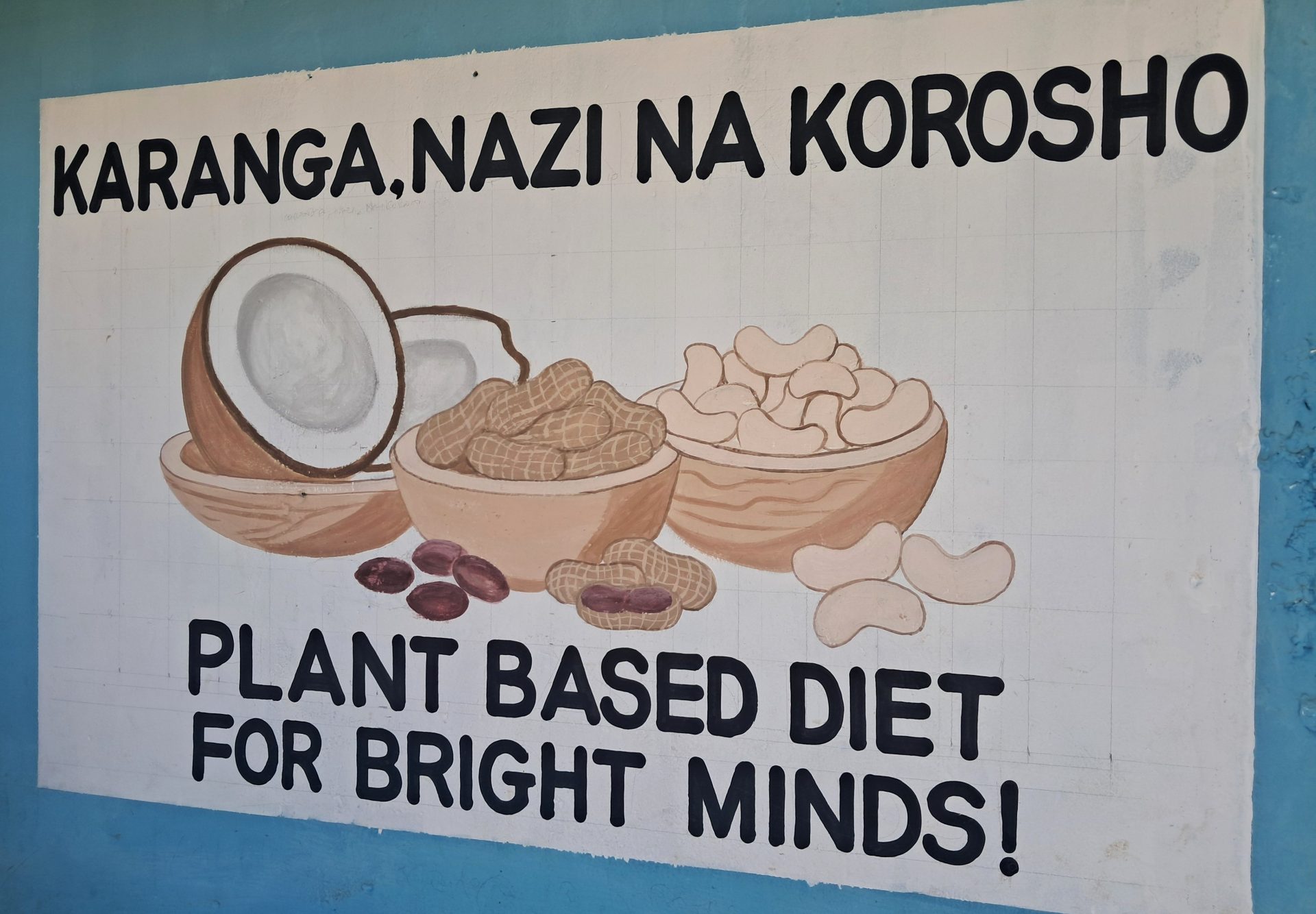
[A clear strong message displayed on a mural encouraging Kilifi residents to consume nuts so that they remain healthy. Photo/Ali Mwalimu/Sept’ 26, 2026].
For Torch Initiatives, the ambition is to move the conversation from the wall into the classroom, from the classroom into the home, and from individual choices into a wider discussion about healthier and more sustainable communities.
In Kilifi, a wall has become the starting point. The bigger test is whether the message can travel beyond it.
By; Ali Mwalimu