



















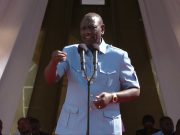
Dear President William Ruto,
There is a question that Kenya needs answered.
Not tomorrow. Not after another journalist is attacked. Not after another Kenyan disappears. Now.
What happens to a democracy when journalists begin to fear the people they are supposed to question?
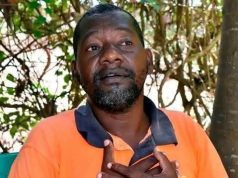
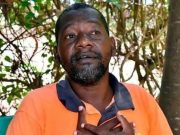
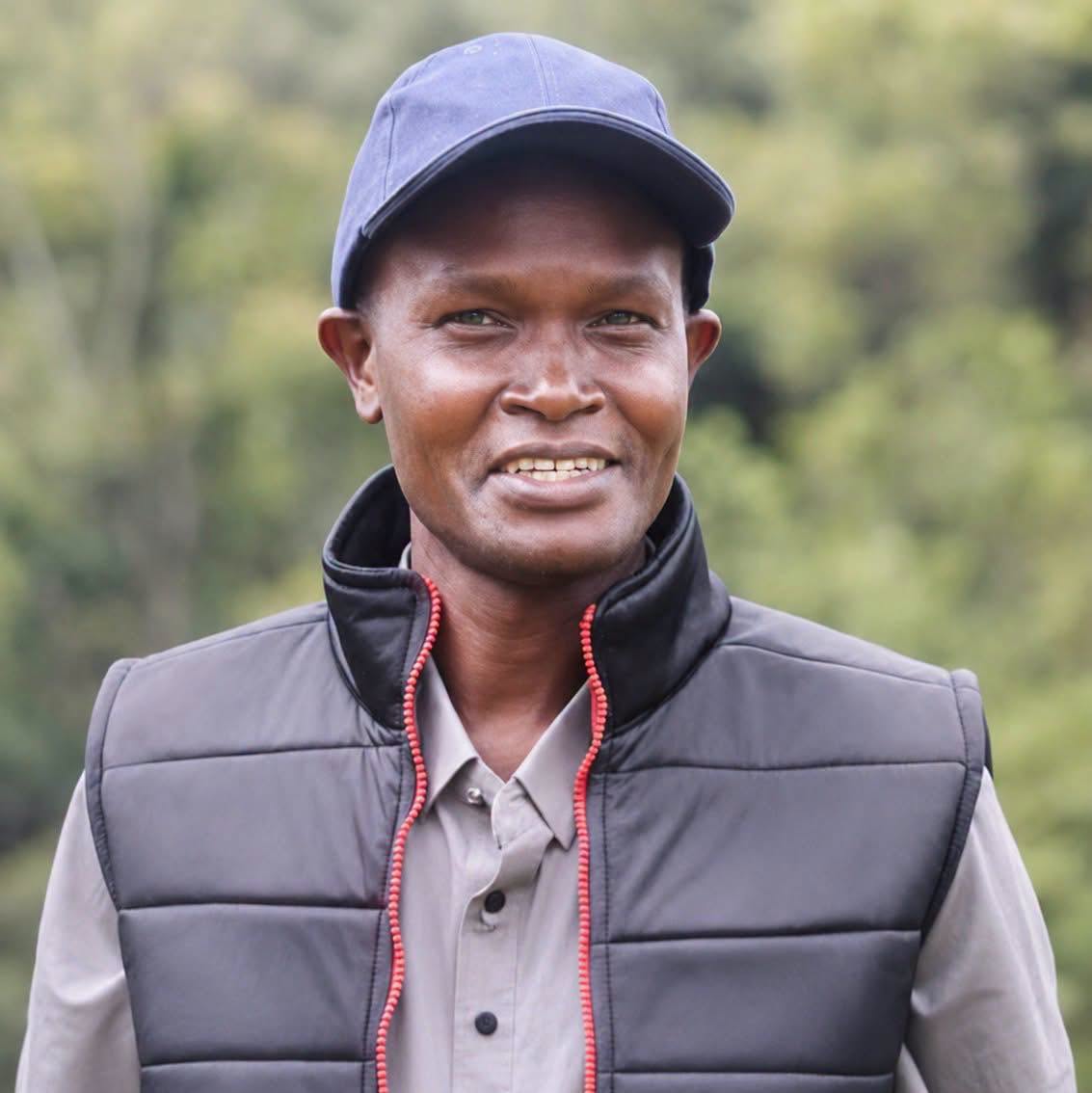
The question has become unavoidable following the alleged abduction of Standard Group Associate Editor Alex Kiprotich, who was reportedly seized by heavily armed men along the Gilgil-Nakuru Road on Tuesday night and found safe near Masinga Dam in Machakos County about nine hours later.
The National Police Service has ordered an investigation through its Anti-Abduction Unit to establish what happened and identify the armed men involved. Inspector General of Police Douglas Kanja has said the matter will be investigated and that those responsible should face justice.
That investigation must now be allowed to do its work.
But Mr President, an investigation is not an answer.
It is the beginning of the search for answers.
And Kenyans deserve those answers.
The Media Council of Kenya has raised serious concerns over the incident, saying this was the second ordeal involving Kiprotich, with the earlier incident in Nakuru County reportedly producing no arrests or progress in investigations.
The Council says it has documented several cases of crimes and violations against journalists and presented them to the Inspector General for investigation and prosecution, but with limited success. It has also raised concern over the recent trolling and profiling of editors from different media houses.
That is where the Alex Kiprotich story becomes bigger than Alex Kiprotich.
And bigger than the Standard Group.
Who is targeting journalists?
That is perhaps the most uncomfortable question facing Kenya.
We should be careful here. Nobody should be convicted in the court of public opinion before evidence is produced.
The police have not established who abducted Kiprotich.
The National Police Service has denied being behind the incident and says its investigators are trying to establish the identities of those involved.
But there are disturbing questions that cannot simply disappear because an investigation has been announced.
The Standard Group has linked the latest incident to an earlier attempt to seize Kiprotich on June 27 and has said its own investigations traced the vehicle allegedly used in that incident to the National Police Service’s Crime Research and Intelligence Bureau.
That is an allegation requiring investigation and verification — not a conclusion.
But it raises an obvious question: what happened to the June investigation?
If the two incidents are connected, who ordered them?
If they are not connected, who was behind each incident?
And most importantly, why would anybody want to intimidate a journalist?
Those questions now belong to the investigators.
They also belong to Kenyans.
Mr president, this is about Kenyans
If anybody thinks the abduction of Alex Kiprotich is simply a dispute involving one journalist and his employer, they are missing the bigger picture.
It is about every Kenyan.
A journalist who investigates corruption is asking a question on behalf of the taxpayer.
A journalist who questions the use of public money is asking a question on behalf of the citizen who pays taxes.
A journalist who investigates a government tender is asking who benefited from money belonging to the public.
A journalist who reports on police abuses is asking whether the State is protecting the very citizens it is mandated to serve.
These are not journalists’ questions.
They are Kenyans’ questions.
That is why Article 34 of the Constitution matters.
The Constitution guarantees the freedom and independence of electronic, print and other forms of media.
And press freedom is not a privilege handed to journalists by government.
It is a constitutional guarantee.
It is one of the mechanisms through which citizens receive information, scrutinise power and participate meaningfully in a democracy.
The Media Council of Kenya has itself described the media as a watchdog central to accountability, democracy and public participation. In May, the Council reported 92 verified press-freedom violations over the preceding year, ranging from threats and harassment to physical attacks.
That should concern every Kenyan.
Because when journalists are silenced, information becomes harder to obtain.
When information becomes harder to obtain, accountability suffers.
And when accountability suffers, it is the ordinary citizen who ultimately pays the price.
An investigation must lead somewhere
Mr President, Kenyans have heard promises of investigations before.
What they need now is a demonstration that investigations can produce consequences.
If those who abducted Alex Kiprotich are criminals acting independently, arrest them.
If anybody within a public institution is found to have participated in the crime, expose them and prosecute them.
If the evidence establishes that neither is true, tell Kenyans what actually happened.
But do not allow this investigation to become another file that gathers dust.
The Media Council has already warned that the lack of investigations and prosecutions is one of the major challenges confronting independent journalism and access to information in Kenya.
That warning deserves attention.
Kenya cannot simultaneously promise constitutional protection for journalists while allowing attacks against them to remain unresolved.
Journalists are still here
And perhaps this is where those seeking to intimidate journalists have misunderstood the profession.
Journalists are not fearless.
They have families.
They have children.
They have parents, spouses, friends and lives outside the newsroom.
They know the risks.
But they also know why they became journalists.
They became journalists to ask questions.
To follow stories.
To investigate.
To challenge claims.
To expose wrongdoing.
To give citizens information they cannot easily obtain for themselves.
That responsibility does not disappear because somebody threatens a journalist.
It does not disappear because somebody tries to frighten an editor.
And it certainly does not disappear because one journalist is allegedly abducted and later found alive.
If anything, such incidents remind journalists why the work matters.
So, Mr President, this is our appeal:
Protect the journalists. Protect the Constitution. Protect the right of Kenyans to know.
Let the investigation into Alex Kiprotich’s ordeal establish the truth.
Let whoever is responsible face the law.
And let Kenya demonstrate that constitutional rights are not merely words written on paper.
Because when a journalist is silenced, it is not only the journalist who loses a voice.
Millions of Kenyans lose someone who was asking questions on their behalf.
And journalists will continue asking those questions.
They may be threatened.
They may be intimidated.
They may be frightened.
But somewhere, another reporter will still follow the story.
Another editor will still ask the difficult question.
Another newsroom will still refuse to look away.
Because journalism can be threatened, but the public’s right to know cannot be abducted.