













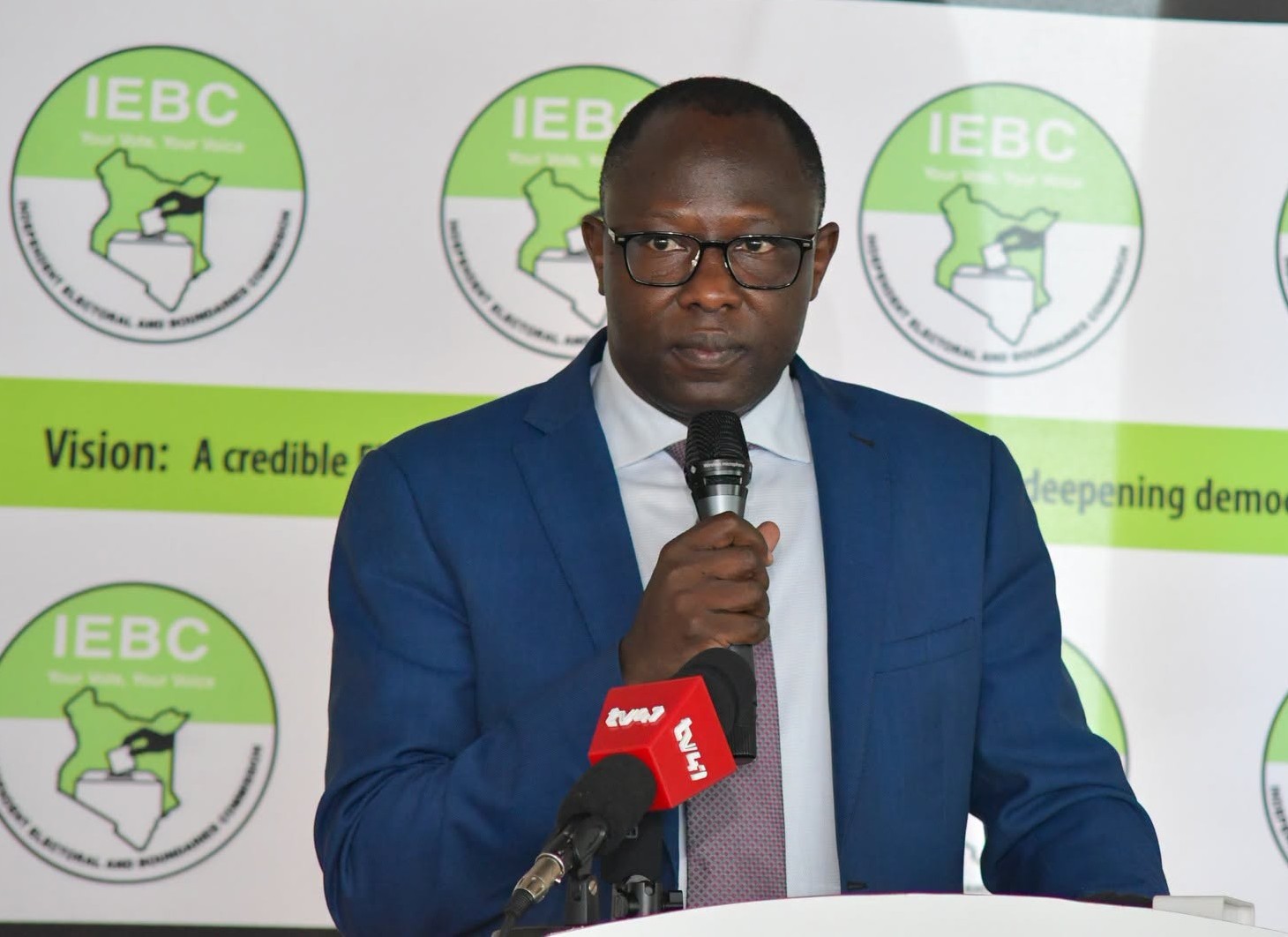
NAIROBI, Kenya—The Independent Electoral and Boundaries Commission (IEBC) has introduced new campaign-financing regulations setting spending limits for candidates and political parties while imposing tighter requirements on the management and disclosure of campaign funds ahead of the 2027 General Election.
The Election Campaign Financing Regulations, 2026, gazetted on August 7, 2026, establish the period within which campaign funds may be raised and spent, as well as the procedures candidates and political parties must follow in accounting for their finances.
Under the regulations, the campaign expenditure period will begin at least six months before the General Election and end 14 days after the conclusion of the polls.
A presidential candidate will be allowed to spend up to KSh6.11 billion during the prescribed period, while political parties will have a spending ceiling of KSh24.45 billion.
The funds may be used for authorised campaign activities, including venue hire, publicity materials, advertising, payment of campaign personnel, transportation and communication, as well as nomination fees, security, accommodation and administrative expenses.
The commission has also established different spending ceilings for candidates contesting gubernatorial, Senate, National Assembly, County Woman Representative and Member of County Assembly positions.
For county-level contests, the spending limits vary according to factors including population and geographical size.
Nairobi County has the highest county-level ceiling at KSh181.31 million, meaning candidates contesting the Governor, Senator and Woman Representative positions in the county will be subject to that limit.
Turkana follows at KSh142.07 million, while Marsabit has a ceiling of KSh127.02 million, Wajir KSh120.76 million and Kiambu KSh110.96 million.
The lowest county-level ceilings include Lamu at KSh28.69 million, Tharaka Nithi at KSh32.30 million, Elgeyo-Marakwet at KSh35.66 million, Vihiga at KSh36.68 million and Nyamira at KSh38.12 million.
The IEBC has also prescribed individual spending limits for parliamentary contests, with significant variations across constituencies.
North Horr Constituency has the highest parliamentary spending ceiling at KSh100.42 million, followed by Wajir South at KSh73.02 million.
Turkana North has a ceiling of KSh59.75 million, Laisamis KSh59.45 million and Turkana West KSh56.38 million.
At the lower end, candidates contesting the Wundanyi parliamentary seat will have a spending ceiling of KSh15.43 million, followed by Tetu at KSh15.77 million, Kieni at KSh15.82 million, Mukurweini at KSh16.16 million and Othaya at KSh16.33 million.
For MCA contests, the highest spending ceiling has been allocated to Turbi Ward in Marsabit County at KSh22.10 million.
It is followed by Maikona Ward at KSh20.92 million, Lokori/Kochodin Ward in Turkana at KSh20.37 million, Cherab Ward in Isiolo at KSh19.78 million and Garsen West Ward in Tana River at KSh19.23 million.
The lowest MCA spending limits include Ziwani/Kariokor Ward in Nairobi at KSh3.63 million, Changamwe Ward in Mombasa at KSh3.63 million, Werugha Ward in Taita Taveta at KSh3.69 million, Mahoo Ward at KSh3.75 million and Nairobi Central Ward at KSh3.77 million.
Beyond setting expenditure ceilings, the regulations introduce requirements aimed at strengthening accountability in campaign financing.
Each candidate and political party will be required to appoint an authorised person responsible for receiving campaign contributions, making expenditure and submitting financial reports to the IEBC.
A candidate may also serve as their own authorised person.
Candidates and political parties will be required to notify the commission of the person responsible for campaign financing and provide details of any supporting person or organisation intending to campaign on their behalf or contribute to their campaigns.
They will also be required to maintain a dedicated campaign-financing bank account at a financial institution domiciled in Kenya.
The account will have to be closed within three months after the declaration of election results, or upon the withdrawal or death of a candidate.
A copy of the bank statement will then be submitted to the IEBC after outstanding claims have been settled and any surplus campaign funds dealt with in accordance with the regulations.
Harambees and donor disclosure
The regulations also require candidates and parties to keep records of harambees and other fundraising activities conducted to raise campaign money.
The records must include the names of donors and contributors and the amounts contributed.
Contributors giving more than KSh20,000 must be issued with receipts.
The regulations also prohibit campaign contributions from being sourced directly from a foreign government.
Candidates and political parties may additionally establish campaign expenditure committees to assist in managing their finances.
Where a candidate, political party or referendum committee incurs campaign expenditure exceeding KSh1 million during the expenditure period, the regulations require an audited report to be prepared by an auditor holding a valid practising certificate and submitted to the IEBC.
The authorised person or expenditure committee will also be responsible for preparing and submitting preliminary and final expenditure reports to the commission.
The IEBC will scrutinise the reports and may require corrections where it identifies errors or technical omissions.
The commission may also investigate individuals or entities where it has reason to believe that campaign-financing rules have been breached.
The new framework comes as political parties and prospective candidates begin positioning themselves for the 2027 elections, with campaign fundraising and expenditure expected to become increasingly central to the electoral contest.
By combining spending ceilings with mandatory financial disclosure and reporting, the regulations place a greater responsibility on political parties and candidates to demonstrate how campaign money is raised, managed and spent.