





















The African Development Bank (AfDB) has launched a continent-wide initiative aimed at strengthening African governments’ capacity to engage credit rating agencies, improve borrowing decisions and expand access to international financing for development.
The African Development Bank Sovereign Credit Rating Initiative seeks to address gaps in financial and economic information used to assess countries’ creditworthiness, while equipping governments with the expertise needed to navigate international financial markets.
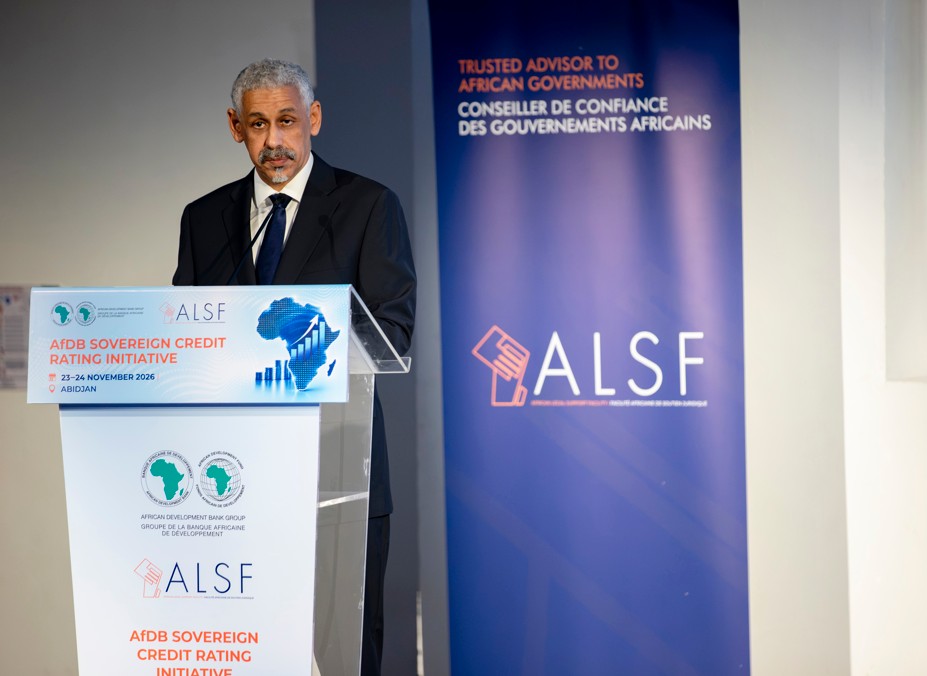
Launched in Abidjan, the initiative will be implemented by the African Legal Support Facility (ALSF), an AfDB-hosted institution that provides legal and financial advisory services to African governments.
It will offer technical support, specialised training and practical tools to help countries understand how sovereign credit ratings are determined, improve the quality of economic data and engage more effectively with international investors.
Speaking during the launch, AfDB President Dr Sidi Ould Tah said sovereign credit ratings have a direct bearing on how investors perceive African economies, the cost of borrowing and the resources available to governments for development.
“This Initiative will not engineer a rating. It will strengthen what lies behind one,” Dr Ould Tah said.
He added that African countries were not seeking preferential treatment in credit assessments but rather the institutional capacity, knowledge and confidence to engage rating agencies from an informed position.
The initiative comes amid concerns over the limited coverage of African economies by major international credit rating agencies.
According to the AfDB, only 30 per cent of African countries have ratings from all three major global agencies — Standard & Poor’s, Moody’s and Fitch — while 19 countries have no current rating from any of the three.
The gaps, the Bank says, limit some countries’ access to mainstream international bond markets and other market-based financing opportunities.
Dr Ould Tah warned that unfavourable assessments of a country’s risk profile could increase borrowing costs, leaving governments with fewer resources to finance essential services.
“If a country’s risk is judged higher than it is, more money goes to interest and less to medicines, nurses and hospital beds,” he said.
The initiative will support both countries seeking their first sovereign credit rating and those already rated, helping them prepare for assessments, improve financial reporting and strengthen institutions responsible for economic management.
However, the Bank has emphasised that obtaining a credit rating should not automatically translate into borrowing from international markets.
Governments will be encouraged to assess debt sustainability, repayment capacity, prevailing market conditions and alternative financing options before taking on commercial loans.
ALSF Executive Director Olivier Pognon said the programme would equip governments with the technical knowledge and institutional capacity required to make informed financing decisions.
“This structured, continent-wide initiative aims to equip African governments with the knowledge, institutions, information and technical support required to make good financing decisions, and engage rating agencies and markets on informed, credible and sovereign terms,” Pognon said.
The programme forms part of the AfDB’s broader New African Financial Architecture for Development (NAFAD), which seeks to strengthen coordination among African governments, financial institutions, development partners, investors and credit rating agencies.
It will also complement ongoing continental efforts to improve Africa’s financial standing, including the African Credit Rating Agency (AfCRA), launched in October 2026 by the African Union and the United Nations Development Programme.
The launch brought together government representatives, African institutions, investors, credit rating agencies and development partners to discuss financing challenges, investor expectations and the importance of reliable economic data.
Dr Ould Tah urged African countries to move beyond the launch of the initiative and translate its objectives into practical reforms.
“Let us move from launch to learning, from learning to country action, and from country action to stronger financial sovereignty for Africa,” he said.