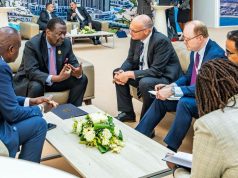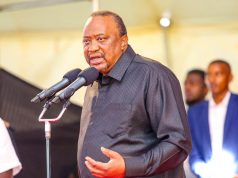





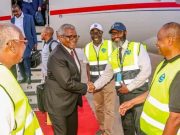
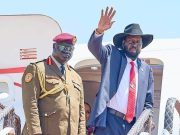







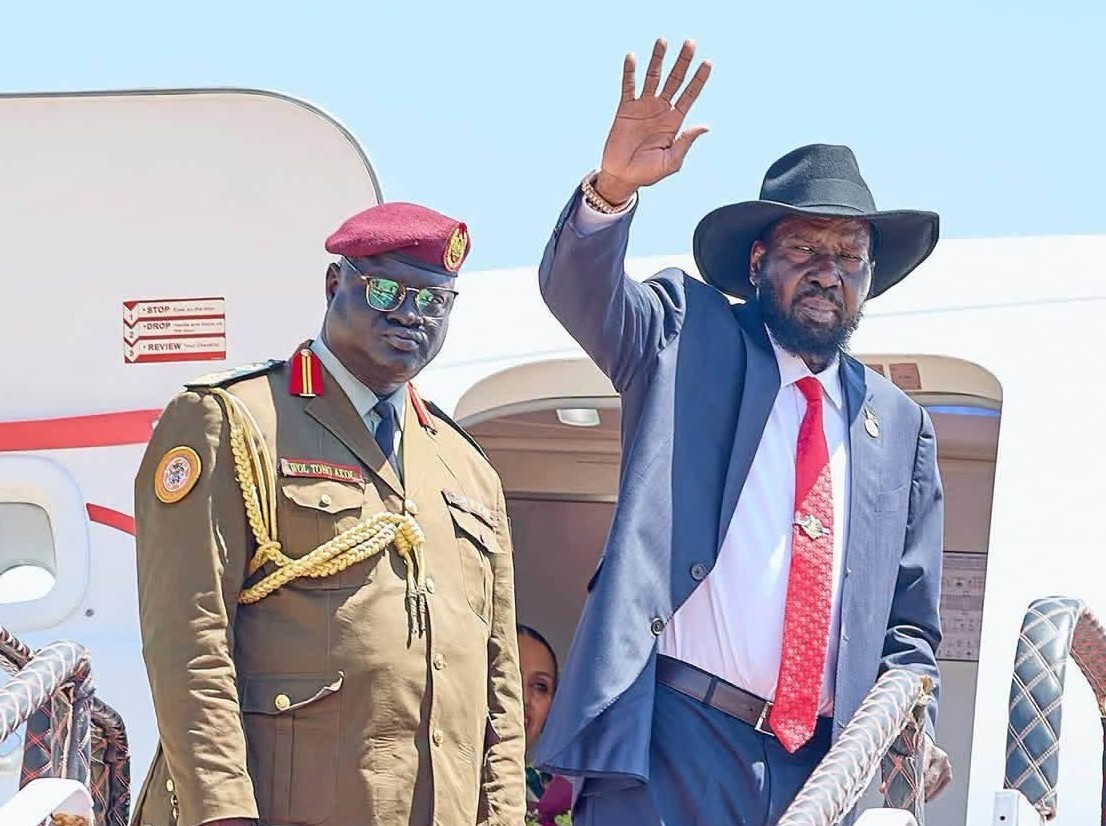
NAIROBI, Kenya—South Sudan President Salva Kiir Mayardit arrived in Nairobi on Monday for talks with President William Ruto, with his country’s December elections and potential crude oil supplies to Kenya’s planned Lamu refinery expected to feature prominently in their discussions.
Kiir’s visit comes less than two weeks after South Sudan dissolved its Transitional Government of National Unity and established a caretaker administration, making the trip his first known foreign visit since the political transition.
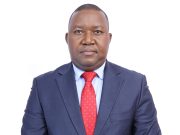
The South Sudanese leader was received at Jomo Kenyatta International Airport by Public Service Cabinet Secretary Geoffrey Kiringa Ruku and officials from the South Sudan Embassy in Nairobi.
According to South Sudan Presidential Press Secretary Arek Ajou Deng, Kiir’s talks with Ruto will focus on bilateral relations, preparations for the December 22 elections and efforts to secure regional and continental support for a peaceful and credible electoral process.
The visit comes at a critical stage for South Sudan, which is scheduled to hold its first elections since gaining independence in 2011.
The polls have been overshadowed by political and security tensions, with regional and continental actors closely monitoring developments in Juba.
The African Union, Intergovernmental Authority on Development and other partners have reaffirmed their support for South Sudan’s political transition and preparations for the elections.
Kenya has played a significant role in South Sudan’s peace and political processes, including through the Tumaini Initiative, launched in Nairobi in 2024 to bring holdout groups into negotiations aimed at advancing the country’s peace process.
Lamu Refinery Talks
Ruto and Kiir are also expected to discuss economic and infrastructure cooperation, with South Sudan’s potential role in supplying crude oil to the planned Dangote East Africa Petroleum Refinery and Petrochemicals Special Economic Zone in Lamu likely to feature prominently.
South Sudan is among the potential regional sources of crude oil for the refinery, which is being developed to serve markets across East and Central Africa.
The discussions come days after Ruto and Nigerian businessman Aliko Dangote broke ground on the Sh2 trillion Lamu refinery project.
The facility is expected to have a processing capacity of 700,000 barrels of crude oil per day and is designed to draw supplies from multiple sources rather than rely solely on Kenyan crude.
Ruto has said Kenya’s crude from Turkana will form part of the refinery’s supply chain, while the government is engaging other oil-producing countries in the region and beyond.
He has also said Kenya and Dangote have agreed on plans for a pipeline linking Turkana to Lamu to transport Kenyan crude to the refinery, with discussions continuing with neighbouring countries on additional supplies.
For South Sudan, participation in the Lamu project could provide an additional export route while deepening its economic links with Kenya, particularly through the Lamu Port-South Sudan-Ethiopia Transport (Lapsset) Corridor.
The two countries have previously committed to strengthening infrastructure links along the corridor, which is intended to provide South Sudan with access to the Indian Ocean and facilitate regional trade.
In 2023, Ruto and Kiir agreed to accelerate infrastructure projects linking the two countries, including the Nadapal-Nakodok road and a fibre-optic connection along the Eldoret-Juba route.
They also discussed expanding bilateral trade through the African Continental Free Trade Area.
Kiir’s latest visit therefore brings together two major areas of the Kenya-South Sudan relationship — Juba’s political transition and the expansion of economic and infrastructure cooperation.
The talks are expected to provide an opportunity for Nairobi to assess how it can support South Sudan as it prepares for the December elections while advancing cooperation in energy, transport, trade and infrastructure.
Kiir departed Juba on Sunday and was seen off by Caretaker Minister of Presidential Affairs Africano Mande Gedima and other senior government officials.
For Kenya, deeper engagement with South Sudan could strengthen its position as a key transport and commercial gateway for the landlocked country, while Juba stands to gain from expanded access to regional infrastructure, energy markets and the Indian Ocean.