


















![[Kenya's Interior CS Kipchumba Murkomen. Kenya is seeking stronger partnership with China and East Africa to combat terrorism. Photo/courtesy/Sept' 10, 2026].](https://jambonewsnetwork.com/wp-content/uploads/2026/09/MURKOMEN-180x135.jpg "Kenya seeks stronger China, E. Africa partnership against terrorism")


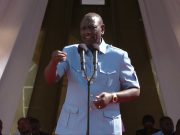
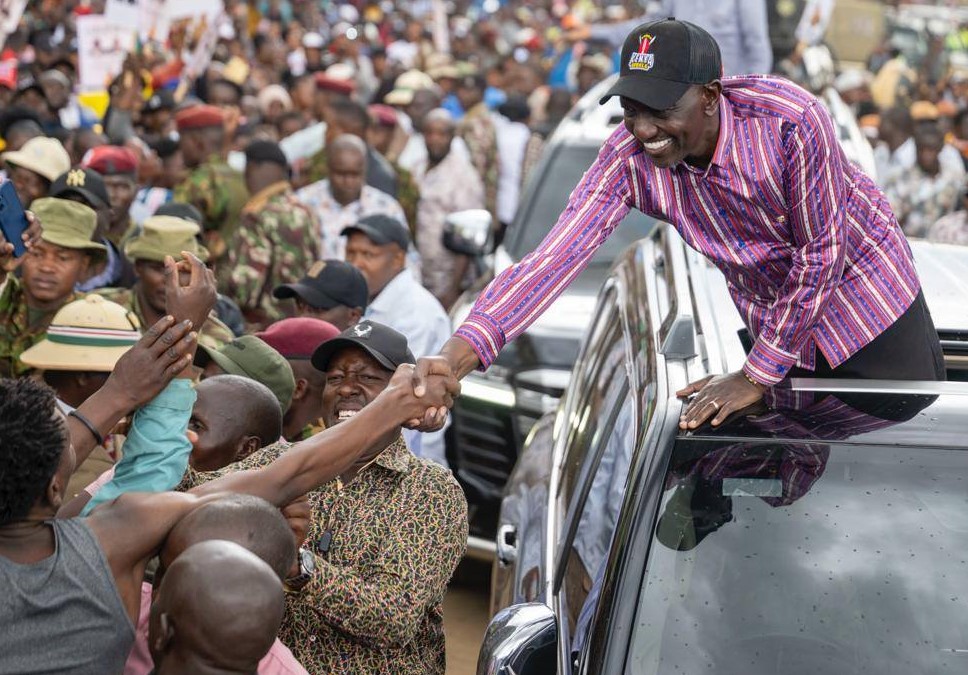
A new survey by TIFA Research has painted a complex picture of Kenya’s political landscape ahead of the 2027 General Election, showing President William Ruto retaining an early lead in the presidential race despite declining public support for both his administration and the Broad-Based Government arrangement.
The poll released on Thursday indicates that Ruto remains the most preferred presidential candidate at 24 per cent, ahead of opposition figures Kalonzo Musyoka at 19 per cent, former Interior Cabinet Secretary Fred Matiang’i at 14 per cent, Edwin Sifuna at 10 per cent and former Deputy President Rigathi Gachagua at 9 per cent.
However, the findings suggest that while Ruto currently enjoys the advantage of incumbency, his support remains far from dominant, with a large section of voters either backing rival candidates or remaining undecided.
TIFA observed that the opposition’s biggest challenge may not necessarily be Ruto’s popularity, but its inability to unite behind a single candidate.
“The absence of a clear front-runner among Opposition ranks may make such apparent vulnerability irrelevant,” the pollster noted in its report.
The survey found no clear consensus among opposition supporters on the most viable coalition ticket to challenge Ruto in 2027.
Among respondents backing opposition candidates, the pairing of Kalonzo and Matiang’i attracted the highest support at 31 per cent, followed closely by a Kalonzo-Sifuna alliance at 28 per cent.
Kenyans also appeared split on who would pose the strongest challenge to the President, with Matiang’i, Kalonzo and Gachagua receiving nearly similar ratings as the most capable opposition challenger.
The report further signals mounting discomfort with the Broad-Based Government coalition bringing together United Democratic Alliance and Orange Democratic Movement leaders.
Support for the arrangement has dropped significantly from 44 per cent in November 2025 to 30 per cent in May 2026, while opposition to the coalition has risen to 56 per cent nationally.
Within ODM itself, the survey reveals growing resistance to continued cooperation with Ruto’s administration. About 73 per cent of ODM supporters backed the “Linda Mwananchi” faction associated with Sifuna and leaders pushing for a more independent opposition stance.
The findings also point to weakening support for Kenya’s dominant political parties.
ODM’s popularity has fallen from 32 per cent during the 2022 election period to 18 per cent currently, while UDA has dropped from 38 per cent to 17 per cent.
At the same time, Gachagua’s Democracy for Citizens Party continues to gain momentum, rising from six per cent in November 2025 to 16 per cent in the latest survey.
The survey additionally reflects growing public frustration with Kenya’s political class, with nearly half of respondents saying no political party genuinely represents the interests of ordinary citizens.
The survey was conducted between May 2 and May 11, 2026 through face-to-face interviews with 2,013 respondents across all 47 counties, with a margin of error of plus or minus 2.18 per cent.