





















MOMBASA, Kenya — Community groups, fishermen and environmental conservationists have intensified efforts to restore degraded mangrove forests and tackle plastic pollution along Tudor Creek, warning that lasting environmental recovery will require sustained community action and stronger protection of the coastline.
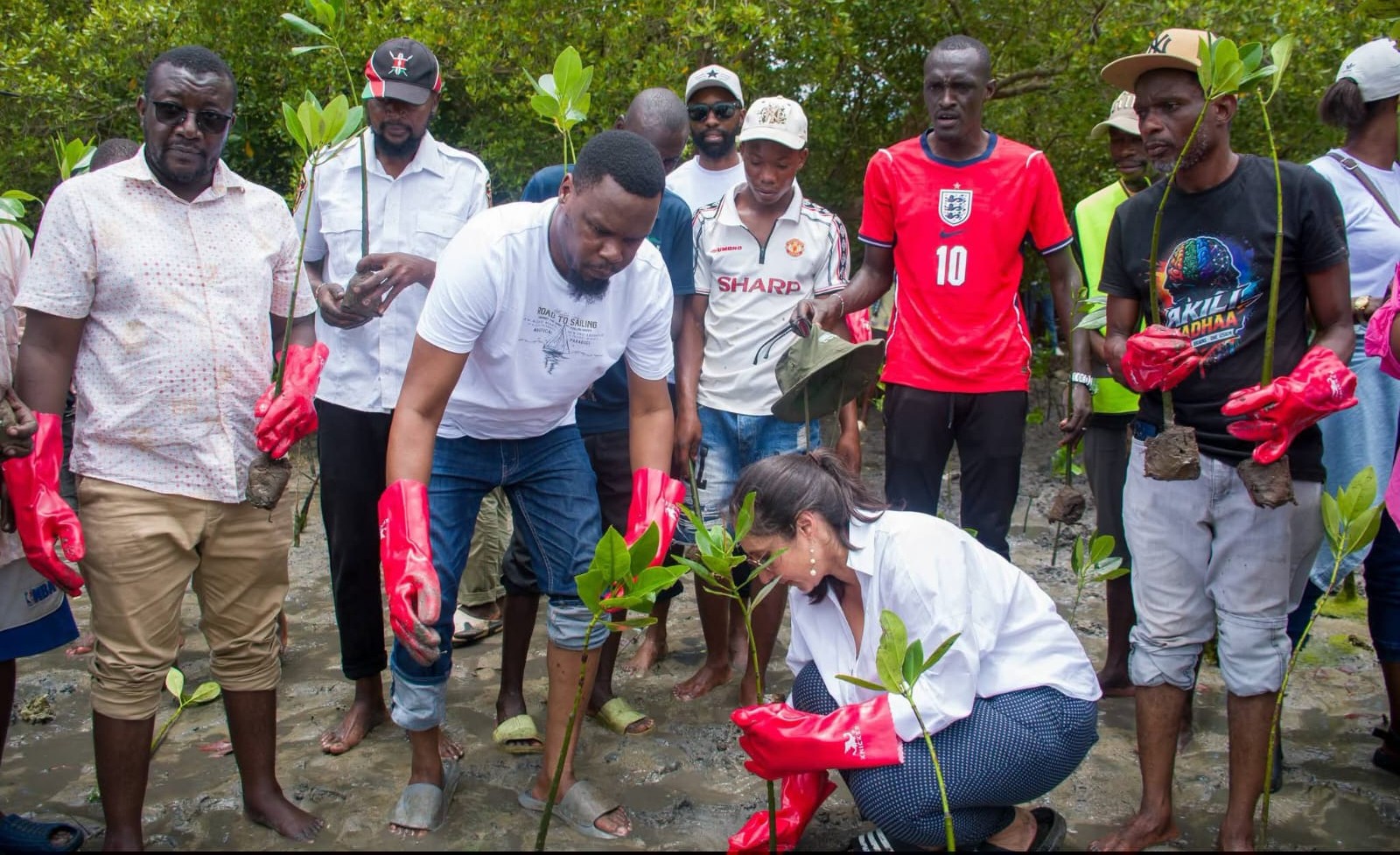
The groups joined residents of Mshomoroni in Mombasa County for a mangrove-planting and cleanup exercise on October 10, bringing together local conservationists, Kenya Business Registration Service chairman Hamisi Mwaguya and Costa Rica’s Ambassador to Kenya, Verónica García Gutiérrez.
The initiative focused on restoring degraded sections of the creek, removing plastic waste from coastal waters and protecting marine habitats that sustain fishing communities and support coastal biodiversity.
Mwaguya said the restoration work was helping revive parts of the creek previously affected by garbage dumping and extensive mangrove cutting.
He urged residents to maintain the momentum beyond National Environment Day, warning that the destruction of mangrove forests threatens fisheries, biodiversity and the resilience of coastal communities to climate change.
“Mangroves are essential to the survival of our fishing communities because they provide breeding grounds for fish,” he said, calling on residents to protect existing forests and support ongoing restoration efforts.
Organisers said more than 20,000 mangrove seedlings had been planted in the area over the past four years, with plans to expand the initiative. Participants also reported collecting more than two tonnes of plastic waste during the cleanup.
The exercise highlighted the growing role of community-led conservation in addressing environmental degradation along the coast, where mangrove ecosystems face pressure from pollution, human activities and urban development.
Costa Rica
Ambassador García Gutiérrez praised the community’s efforts, describing mangroves as vital natural assets that support livelihoods while helping protect coastal settlements from storms, flooding and other climate-related threats.
She said environmental initiatives were more likely to achieve lasting results when communities took ownership of conservation and benefited directly from the sustainable management of natural resources.
Drawing on Costa Rica’s experience, the ambassador said forest cover in her country had increased from approximately 25 per cent in the 1980s to about 60 per cent, attributing the recovery to conservation policies and community involvement.
She encouraged residents to sustain their restoration efforts, noting that the benefits of planting mangroves would extend to future generations if the seedlings survived and matured.
The ambassador also called for continued action against plastic pollution, stressing that environmental protection should go beyond annual commemorations and become a sustained commitment.
Livelihoods
For the Mshomoroni Beach Management Unit (BMU), mangrove restoration is closely tied to the economic wellbeing of fishing families who depend on healthy marine ecosystems.
BMU chairman Ali Mwaito said the community had observed improvements in fish availability and quality as restoration and cleanup activities continued.
Mangroves provide important nursery habitats for fish, offering shelter and feeding grounds for juvenile fish before they move into open waters. Their roots also help stabilise shorelines and support the wider coastal ecosystem.
Mwaito said the fishing community was encouraged by the progress but called on government agencies, private organisations and development partners to provide additional support to expand mangrove planting.
He said healthier coastal waters and thriving marine habitats were essential to sustaining fishing incomes and improving livelihoods.
Encroachment
The restoration campaign has also drawn attention to concerns over development along the creek, with local leaders questioning construction taking place close to the waterline.
One official raised concerns about developments reportedly located only a few metres from the creek and called on the Mombasa County Government to investigate construction in restricted areas.
The concerns included the potential effects of encroachment on public access, sanitation, environmental protection and the natural landscape.
Environmental advocates argue that planting new mangroves alone will not secure the creek’s future without stronger enforcement against illegal cutting, pollution and encroachment.
Community action
Juma Mashuhuri, chairperson of Pamoja Alliance, which brings together 30 community-based organisations and self-help groups in Kisauni, said sustained cleanup campaigns had helped transform sections of the creek previously used as dumping grounds.
Mashuhuri said the groups continued to collect plastic waste and plant mangroves throughout the year, organising cleanup exercises every two to three months.
He acknowledged support from public institutions, including the Kenya Maritime Authority, but said stronger partnerships were needed to expand restoration activities and tackle persistent pollution.
The groups are seeking additional support to plant thousands more seedlings and rehabilitate further sections of the creek.

[Kenya Business Registration Service Chairperson Hamisi Mwaguya and Costa Rica’s Ambassador to Kenya, Verónica García Gutiérrez addressing the press. The two joined Mshomoroni residents in Mombasa County for a mangrove-planting and cleanup exercise on October 10, to mark Mazingira Day. Photo/Ahmed Omar/Oct’ 11, 2026].
Kenya’s broader environmental restoration efforts aim to increase tree cover, rehabilitate degraded landscapes and strengthen resilience to climate change. However, conservationists maintain that success depends not only on the number of seedlings planted but also on their survival, the protection of existing forests and the availability of resources for long-term maintenance.
Along Tudor Creek, the community’s message is clear: restoration must continue beyond the celebrations.
For fishing families, protecting mangroves means safeguarding marine habitats, sustaining livelihoods and strengthening the natural defences of vulnerable coastal settlements.