



















KIRINYAGA, County—Kiharu MP Ndindi Nyoro has given President William Ruto 14 days to make public the agreement between the Kenyan government and Nigerian businessman Aliko Dangote over the proposed Sh2.2 trillion refinery in Lamu County.
Nyoro said Kenyans have a right to know the terms of major agreements entered into by the government, particularly where they could create financial or other long-term obligations for the country.
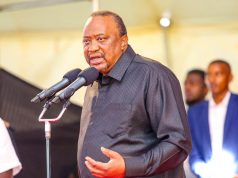
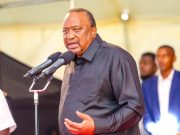
Speaking during the funeral of Mwalimu Jackson Karua in Kirinyaga on Saturday, Nyoro said the agreement should be released for public scrutiny, arguing that Kenyans needed to understand what the government had committed itself to under the deal.
The demand comes amid growing debate over the level of disclosure surrounding the proposed Dangote East Africa Petroleum Refinery, with questions increasingly shifting from the economic benefits of the project to the terms under which the investment is being undertaken.
Nairobi Senator Edwin Sifuna has separately invoked Article 35 of the Constitution, arguing that citizens have a right of access to information held by the State and that important information affecting the nation should be published and publicised.
Sifuna said the constitutional requirement was particularly important for major government agreements involving substantial financial commitments.
The senator has maintained that Parliament and the public should be able to scrutinise the commitments Kenya has made to facilitate the refinery before the country proceeds with obligations arising from the agreement.
President Ruto has defended the investment and told Sifuna that the agreement can be obtained through parliamentary procedures, maintaining that those seeking the document should use the established channels for accessing government agreements.
The disclosure dispute has emerged only days after Ruto and Dangote officially launched the refinery project in Lamu, turning what was initially presented as a major industrial investment into an increasingly contested issue involving transparency, land rights, environmental concerns and parliamentary oversight.
The proposed refinery is valued at about $16 billion, equivalent to more than Sh2.2 trillion, and is designed to process up to 700,000 barrels of crude oil per day once completed.
Dangote has said the facility will produce petrol, diesel and jet fuel for Kenya and other East African markets, reducing the region’s reliance on imported refined petroleum products.
Construction is expected to take about 40 months, with the refinery projected to become one of the largest petroleum-processing facilities on the continent. The wider investment has also been linked to the creation of about 60,000 direct and indirect jobs.
Kenya and two other East African countries have been offered a combined 30 per cent stake in the project, although the proposed government participation has itself become part of the transparency debate.
The Consumers Federation of Kenya has filed a separate legal challenge questioning aspects of the proposed government participation in the refinery and demanding disclosure of key details, including the structure of the State’s proposed investment and the terms under which it would be acquired.
The consumer lobby’s petition has added another layer to the growing scrutiny of the project, with concerns extending beyond the refinery’s commercial prospects to the potential financial obligations and public interest implications of the government’s involvement.
The project is also facing a separate dispute over land in Lamu.
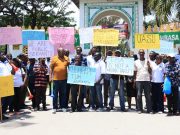
More than 130 residents from the Mvinjeni area have moved to court challenging aspects of the development, saying the land earmarked for the refinery is linked to their ancestral interests and raising concerns over compensation and resettlement.
The Environment and Land Court in Malindi ordered the parties to maintain the status quo on the disputed parcel, with the matter scheduled for further hearing on October 14.
The land case has not halted the overall refinery project, but it has introduced a legal challenge over activities on the disputed property.
The refinery has also attracted environmental and community concerns because of its location in Lamu, an area known for its marine ecosystem, mangrove forests and cultural heritage.
The project forms part of a broader ambition to position Lamu as an energy, industrial and logistics hub under the Lamu Port-South Sudan-Ethiopia Transport corridor.
For Dangote, the Lamu investment would extend the group’s refining ambitions beyond Nigeria, where it operates its large refinery in Lagos.
The Kenyan project, however, will require substantial and reliable supplies of crude oil. Kenya’s current commercial crude production is not sufficient to feed a refinery of the proposed scale, meaning the facility is expected to rely on crude from Kenya and other African producers.
Potential supplies from Uganda and other regional producers have therefore become an important part of the project’s wider regional strategy.
The proposed refinery is consequently being presented by the government not simply as a private investment, but as part of a broader plan to strengthen regional energy security, increase domestic processing and reduce dependence on imported refined petroleum products.
It is this combination of the project’s enormous financial scale, proposed government participation, land disputes and long-term implications for Kenya’s energy sector that has intensified calls for greater disclosure of the agreement.
Nyoro’s 14-day ultimatum now adds political pressure to the growing demands for transparency.
At the same time, his remarks included criticism of President Ruto’s attacks on former President Uhuru Kenyatta, urging the former Head of State not to respond and saying he and other young leaders would deal with the President politically.
The latest exchanges have therefore widened the Dangote debate beyond the refinery itself, placing access to information, public participation and parliamentary oversight at the centre of questions surrounding one of the largest proposed private investments in Kenya’s history.